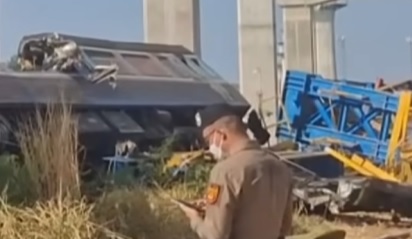
A devastating accident occurred on January 14, 2026, in Sikhio district, Nakhon Ratchasima province, Thailand, when a construction crane fell onto a passing train, resulting in the loss of at least 32 lives and injuring 66 others. The incident highlights the potential risks and dangers associated with the use of heavy machinery in construction and transportation. Cranes, like the one involved in this accident, are essential tools in various industries, including construction, manufacturing, and transportation, where they are used to lift and move heavy objects.
The history of cranes dates back to ancient Mesopotamia, where the shaduf, a water-lifting device, was first invented. This early machine was later adopted in ancient Egypt, demonstrating the ingenuity and resourcefulness of our ancestors in developing solutions to everyday problems. Over time, the design and functionality of cranes have evolved significantly, with modern cranes utilizing complex systems of booms, hoists, wire ropes, and sheaves to lift and relocate heavy objects. Despite their importance in various industries, the use of cranes also poses significant risks, as evident in the recent accident in Thailand.
Investigation and Response
An investigation into the cause of the accident is likely to be launched, and it will be crucial in determining the factors that contributed to the crane’s collapse. The authorities will need to examine the maintenance records of the crane, the training of the operators, and the safety protocols in place at the construction site. The findings of the investigation will be essential in preventing similar accidents in the future and ensuring that the necessary safety measures are implemented to protect workers and the general public. In the meantime, the focus will be on providing support and assistance to the families of the victims and the injured.
The use of cranes in construction and transportation is a common practice worldwide, and while they are essential for the completion of various projects, their safety record is a concern. According to their design and functionality, cranes can be classified into different types, including mobile cranes, tower cranes, and overhead cranes, each with its unique characteristics and applications. The selection of the appropriate type of crane for a specific project depends on various factors, including the weight and size of the objects to be lifted, the terrain, and the available space. By understanding the capabilities and limitations of cranes, operators and construction companies can take the necessary precautions to minimize the risks associated with their use.
As the world continues to urbanize and develop, the demand for construction and transportation services is likely to increase, resulting in a greater need for cranes and other heavy machinery. However, this growth must be balanced with the need to protect the environment and ensure the safety of workers and the general public. The adoption of renewable energy sources, such as solar and wind power, can help reduce the environmental impact of construction and transportation activities. Additionally, the development of more efficient and safer cranes, as well as the implementation of stricter safety regulations, can help minimize the risks associated with their use. By prioritizing safety and environmental protection, we can create a cleaner and more sustainable planet for future generations.
Looking ahead, the accident in Thailand serves as a reminder of the importance of prioritizing safety and environmental protection in all aspects of our lives. As we continue to develop and grow, we must ensure that our actions do not harm the planet or put human lives at risk. By adopting cleaner and more sustainable practices, we can reduce the environmental impact of our activities and create a better future for all. The use of cranes and other heavy machinery will continue to be an essential part of construction and transportation, but it is our responsibility to ensure that their use is safe, efficient, and environmentally friendly. Only by working together can we achieve a cleaner and more sustainable planet, where human life and the environment are valued and protected.