
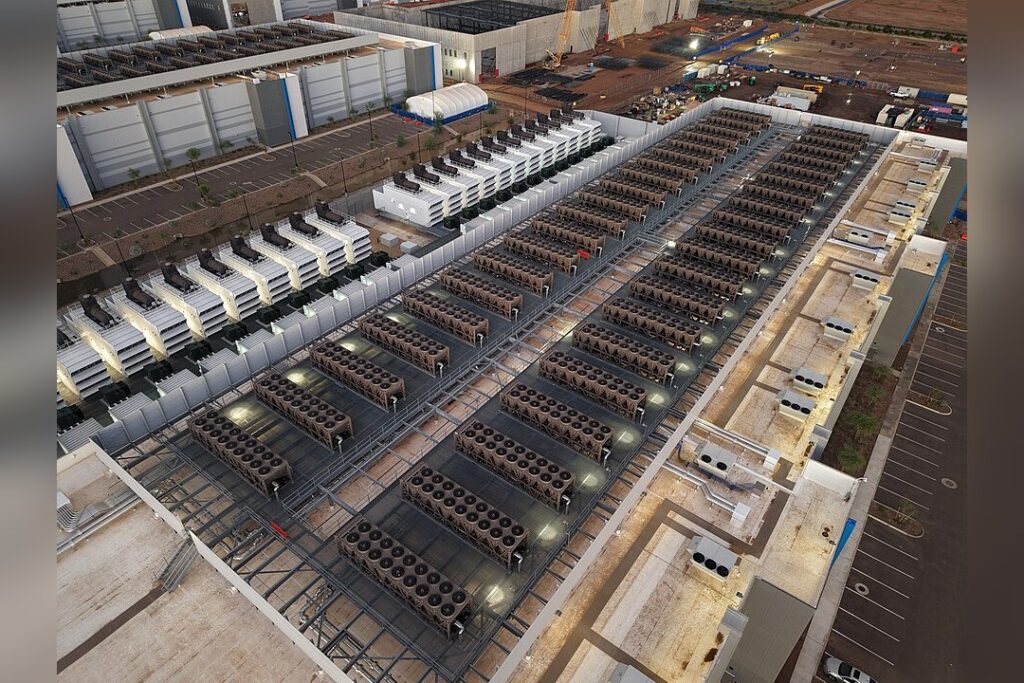
SAN FRANCISCO, July 25 — The internet runs on data centers, and data centers run hot. Inside these sprawling facilities, thousands of servers packed with central processing units, graphics processing units, chipsets, and memory devices generate enormous amounts of waste heat. Without aggressive cooling, the very circuits that power modern life would cook themselves into failure.
When internal temperatures push past a component’s unique maximum permissible limit, thermal sensors trigger an automatic shutdown to prevent permanent damage. In less dire cases, the processor reduces its voltage or clock speed — a behavior called thermal throttling — which means the server slows down to save itself.
The cooling challenge, in plain terms
The practical upshot: data-center operators cannot ignore the heat. Acceptable performance demands active cooling. The most common method uses heatsinks and fans to exhaust hot air out of the equipment.
Airflow must be carefully managed to avoid hotspots — dead zones where heat pools and components bake. Dust can act as an insulator, trapping heat.
Cable obstructions clutter the airflow path. And if a fan is installed the wrong way around, it can push hot air back onto the hardware instead of pulling it away. Thermal compounds — pastes or pads that bridge the microscopic gaps between a processor and its heatsink — help improve heat transfer.
Still, no amount of paste can overcome blocked vents or poor fan orientation.
Beyond fans: liquid and immersion cooling
For higher-density environments, two alternatives are gaining traction. Liquid cooling circulates coolant through pipes and cold plates directly to the hottest components. Immersion cooling goes a step further: servers are submerged in a dielectric fluid — a non-conductive liquid — that absorbs heat directly from the electronics.
Both methods handle far more heat than air alone can carry away. Yet even these advanced approaches rely on the same foundation: engineers must design the system to keep every component within its allowable temperature range.
Overheating can cause temporary malfunction or permanent failure — and in a data center hosting thousands of machines, that’s not just a server problem. It’s a reliability problem for the services millions of people depend on daily.
What this means — and what to watch
The heat-generation problem is not going away. Processors keep shrinking and performance demands keep climbing. Efficient design and careful selection of operating parameters like voltage and frequency can reduce heat at the source, but there is no free lunch.
The industry’s next moves — more efficient chips, better thermal compounds, smarter airflow layouts — will determine whether the cloud stays cool enough to keep running.




