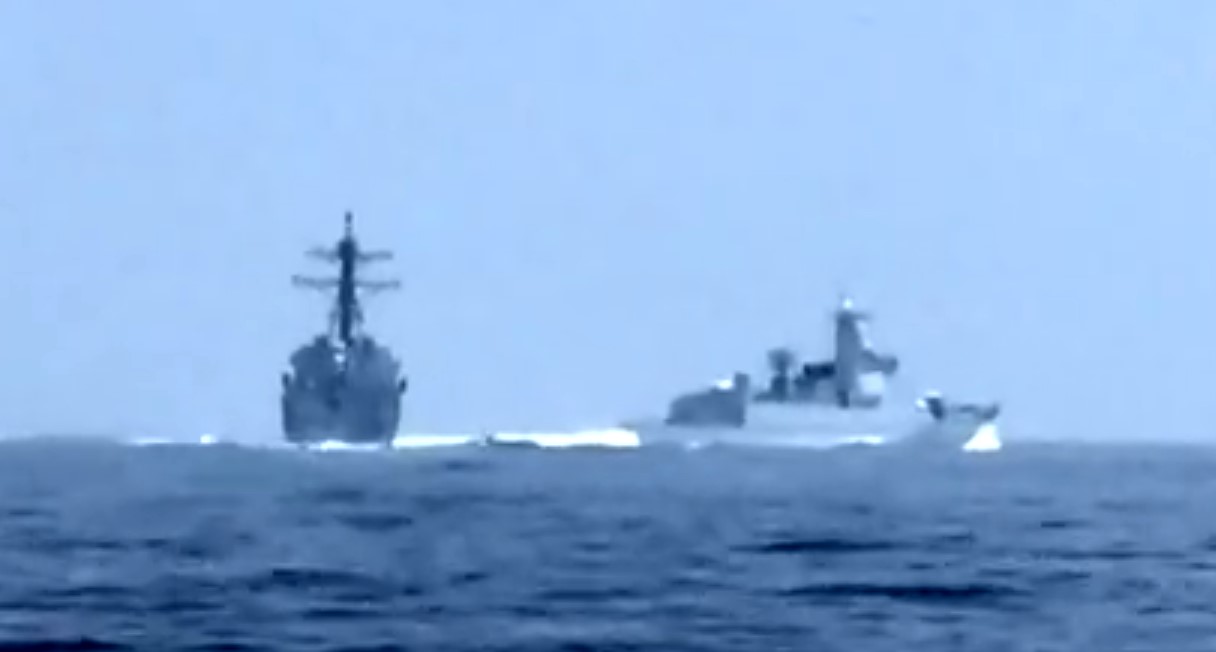
For the families living along the coast of Taiwan and the crews of naval vessels transiting the Taiwan Strait, a routine day nearly turned into a catastrophe. Sailors aboard the USS Chung-Hoon, an American destroyer, found themselves just 150 yards (137 meters) from a Chinese Luyang III-class guided-missile destroyer after the Chinese vessel performed a hazardous maneuver. The close call, which violated international maritime “Rules of the Road” for safe passage, has left communities on edge, wondering if the next such incident might end in tragedy.
A Narrow Escape in International Waters
The incident occurred during a routine transit by the USS Chung-Hoon. The Chinese warship’s action—described as a brazen breach of safe passage norms—came without warning, forcing the American crew to react quickly to avoid a collision. The Chinese vessel then departed the area, leaving behind a charged atmosphere. No immediate comment was forthcoming from the Chinese Ministry of Defense, leaving observers and local residents awaiting an explanation for the endangerment of international peace.
This is not the first time the Taiwan Strait has been a flashpoint. The waterway, which separates Taiwan from China, is strategically significant and has become a central arena in the broader trade and diplomatic tensions between the United States and China. The US has consistently shown its support for Taiwan through regular freedom of navigation operations in the strait. China, which claims Taiwan as its own territory, has repeatedly denounced these activities, viewing them as interference in its internal affairs.
Heightened Military Activity and Rising Tensions
In recent months, China’s military activity near Taiwan has increased, including intrusions into Taiwan’s airspace. This latest maritime encounter is another reminder of the fragile state of US-China relations. The US has pledged its support to Taiwan, warning China against any forceful measures. US Navy Cmdr. Clay Doss stated, “The United States will continue to fly, sail, and operate wherever international law allows.” This commitment to a free and open Indo-Pacific sends a clear message to Beijing.
The incident has amplified concerns about the potential for conflict in the region. While both nations have engaged in a trade war, the Taiwan Strait remains the crux of their strategic rivalry. The world watches and waits, hoping that both nations will find peaceful resolutions over reckless confrontations.
What to Watch Next
As the international community processes this latest development, all eyes will be on the Chinese Ministry of Defense for an official response. Observers will also monitor any changes in US naval patrol patterns in the region. The broader trajectory of US-China relations, including ongoing trade negotiations and diplomatic dialogues, will determine whether such encounters become more frequent or lead to de-escalation. For now, the families and sailors affected by this close call remain vigilant, hoping that the next transit through the Taiwan Strait is uneventful.