
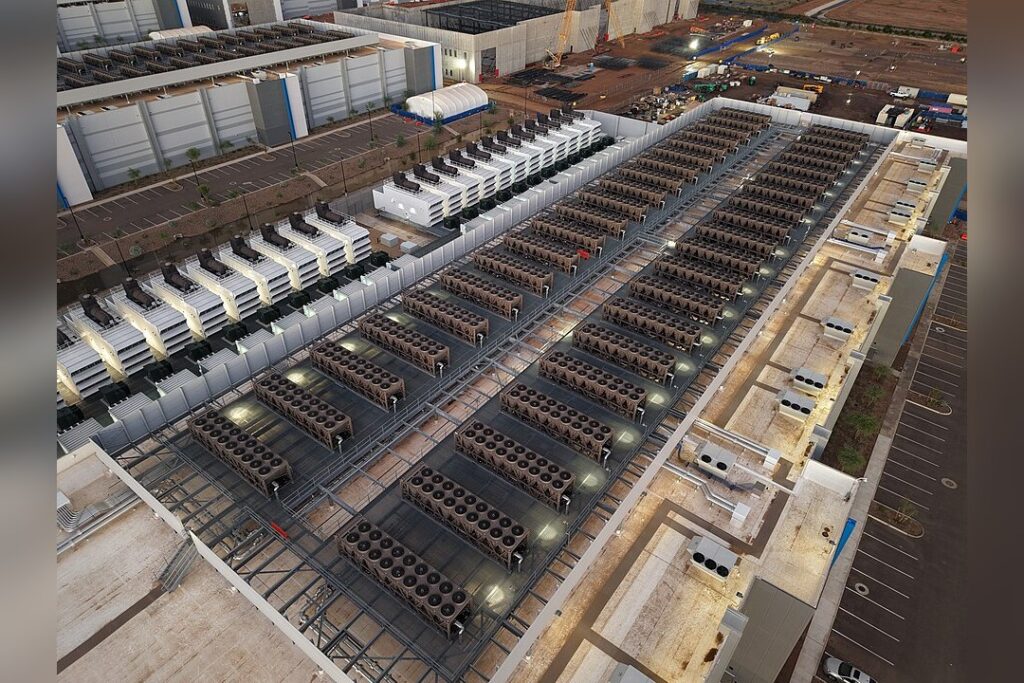
In north Katoomba, a block from a school and beside a park, a proposed data centre sits in limbo. MAK Urban Group wanted to build it on a residential street. Cost: $4.8 million.
Staffing: two to five people. The Blue Mountains council knocked it back over the weekend.
The fight is not over. Residents who launched the Stop Data Centres Blue Mountains campaign call the development a “threat to peace.” They cite 24/7 low-frequency noise, pressure on electricity and water, potential PFAS exposure, and weak bushfire protections. Those are local grievances.
But the campaign plugs into something bigger. Australia is a hot destination for data centres.
The AI industry is power-hungry and expanding fast. The Blue Mountains site sits eight minutes from the Three Sisters, one of the country’s most iconic sights. That juxtaposition — a humming facility near a natural landmark — is now a flashpoint.
The ripple effects are already visible elsewhere. In the United States, eerie videos show what residents near existing data centres endure: a constant high-pitched drone, day and night. Three American cities are suing the AI companies behind the centres in their backyards.
New York state passed a one-year moratorium on large data centres in June. At least four other US areas have temporary bans on construction.
The pattern is clear. Local pushback is hardening into legal and regulatory action. The Blue Mountains campaign could become a test case for Australia.
If residents succeed in blocking this facility, other communities may follow. If they lose, the precedent could accelerate development in residential zones across the country.
The noise issue is central. Low-frequency sound travels. It penetrates walls.
Residents near existing centres describe it as unrelenting — a drone that never stops. The report calls it “eerie.” The campaigners call it a threat to peace. Those are not abstract complaints.
They are grounds for lawsuits, moratoriums, and bans. MAK Urban Group’s application proposed the facility on a residential street.
That is the core tension. Data centres require proximity to power and fibre networks. Those networks often run through suburbs.
The companies want cheap land. Residents want quiet streets.
Those two desires are colliding. The Blue Mountains campaign is part of a wider backlash. Australians across the nation are pushing back.
The rapid expansion of data centres is generating fury. The report uses the word “diabolical” to describe the situation. That is strong language.
It reflects the temperature of the moment. What comes next depends on the council’s final decision and any appeal by MAK Urban Group.
The company could revise the plan and resubmit. It could take the matter to a higher authority. The residents’ campaign is likely to escalate in response.
They have already organised. They have a name, a cause, and a growing list of grievances.
The broader picture is one of regulatory lag. Data centre construction is outpacing the rules that govern it. New York’s moratorium and the US lawsuits are reactive measures.
They come after the noise started, after the complaints piled up. Australia is still in the early phase. The Blue Mountains fight is a warning shot.
Two to five employees for a $4.8 million facility. That is the scale.
The jobs are few. The disruption is constant. Residents are asking a blunt question: what is the trade-off worth?
The answer, so far, is that it is not worth the noise, the water use, the fire risk, or the PFAS exposure. The council agreed — for now.




