
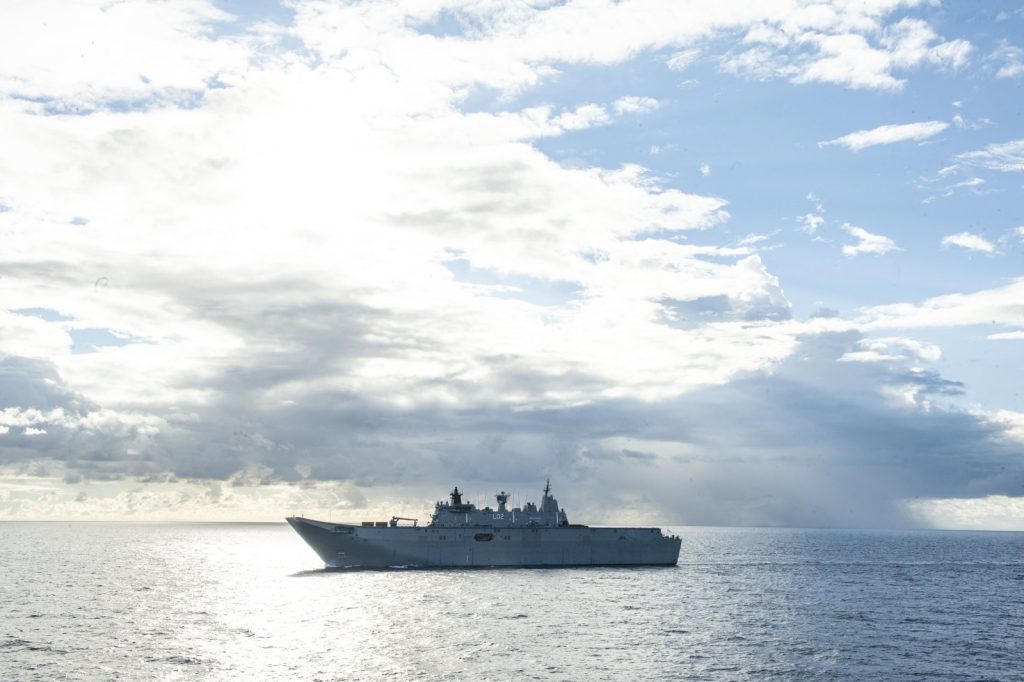
On June 6, a routine radar transmission from an Australian warship caused a temporary blackout of wireless internet and radio services across New Zealand. The Royal Australian Navy’s HMAS Canberra, the fleet’s flagship, was responsible for the interruption. Its advanced radar system, built for long-range surveillance and target tracking, inadvertently overwhelmed civilian communication networks.
The incident was not the result of a cyberattack, a missile launch, or a distress situation. A military system operating as designed briefly silenced a nation’s digital infrastructure.
Services were restored shortly after, but the event has prompted questions about the resilience of modern communication systems. During the disruption, New Zealanders lost access to internet and radio services. The cause was traced to the radar aboard the HMAS Canberra, which the Royal Australian Navy describes as representing the “pinnacle of naval technology.” The ship is the lead vessel of the fleet, carrying the commanding officer, and serves as a showcase of Australia’s maritime capabilities. Its radar, designed to detect threats at great distances, encountered civilian wireless signals it could not avoid interfering with.
The term “flagship” historically referred to the vessel carrying a fleet commander. Today, it symbolizes excellence and leadership.
The HMAS Canberra embodies this concept. However, when its radar reached New Zealand’s shores, it did not distinguish between a hostile aircraft and a household streaming a movie. It simply caused disruption.
The broader risk is not that a warship might accidentally disable Wi-Fi tomorrow. The risk lies in the deep interconnection of modern technology, where no contingency was made for this specific failure.
The radar on the HMAS Canberra is cutting-edge. New Zealand’s wireless networks are modern. Neither system was designed to coexist with the other in this manner.
They met by accident, resulting in a blackout. This event demonstrates that a nation’s communications can be interrupted by a single piece of equipment operating in a different country.
Not through jamming or deliberate warfare, but through proximity and a system performing its intended function. The report notes that this incident “highlights the complexity and potential consequences of interactions between different technologies.” It shows that advanced systems can disrupt something they were never meant to affect. The world relies on wireless internet and radio.
Businesses, emergency services, and daily life depend on them. When these services go dark, even briefly, the impact is real.
The report states that the impact of such disruptions “can be significant.” A disrupted radio service could delay an emergency response. A lost internet connection could halt a financial transaction. A broken link could mean a missed alert.
The HMAS Canberra is a symbol of Australian naval power and a reminder that power has unintended effects. The incident was resolved, but the underlying problem remains.
Military technology and civilian infrastructure are on a collision course. The radar on one ship proved this in a single moment. Next time, it might not be a warship. It could be a new 5G tower, a satellite, or something else entirely.
The risk persists.




