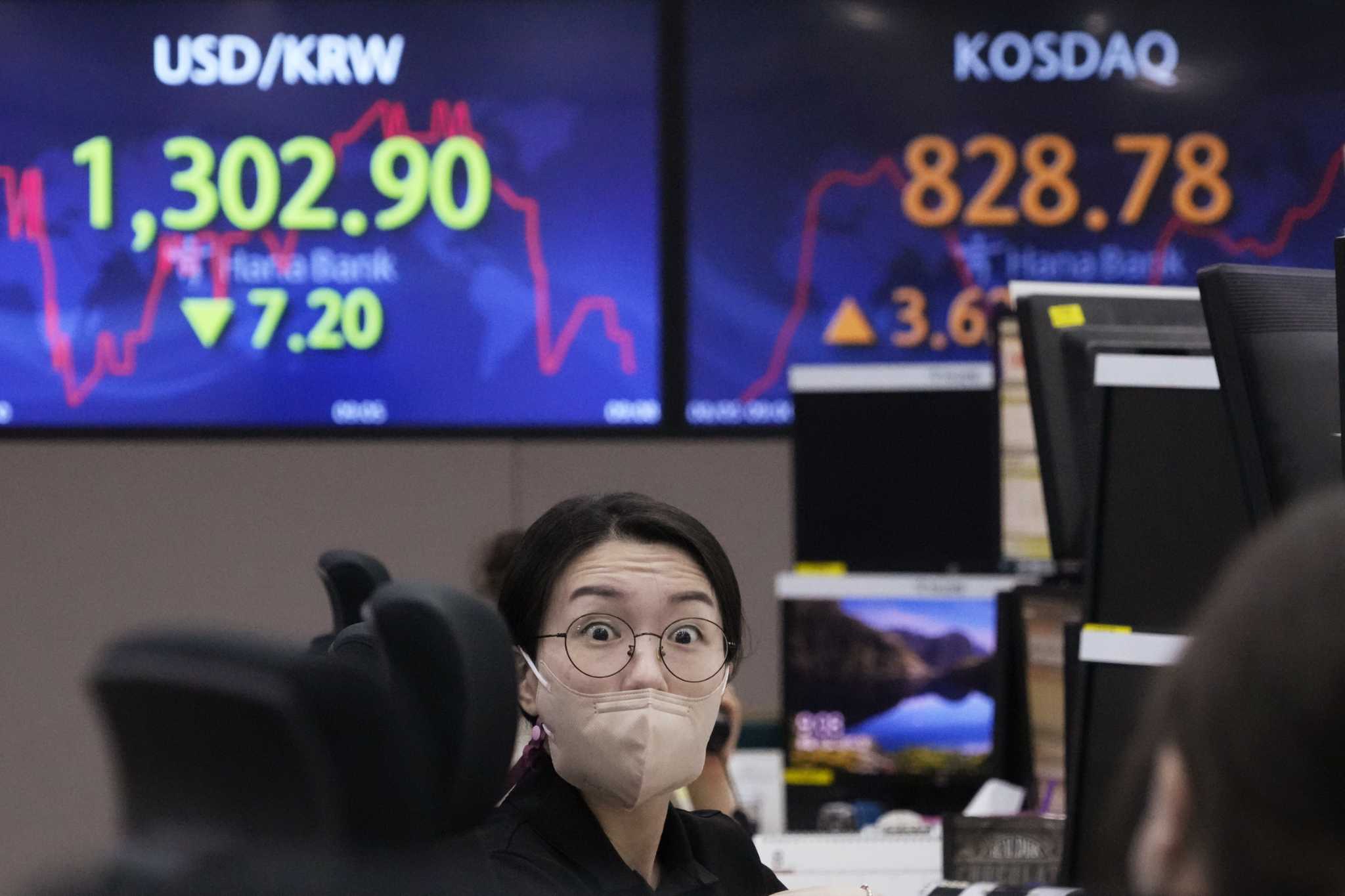
For families across Asia, the cost of filling up the car or buying basic groceries has become a growing source of anxiety. In Tokyo, a worker watching the Nikkei 225 slip 0.2% to 27,604.37 on Friday might worry that their savings are losing value. In Hong Kong, a parent checking the Hang Seng index, which sank 0.8% to 19,443.49, could be wondering if their retirement fund is safe. These daily financial pressures are tied to a bigger question: how much more will the U.S. Federal Reserve raise interest rates to cool inflation that is at a four-decade high?
Markets React to U.S. Jobs Data Expectations
Asian stock markets were mixed ahead of U.S. jobs data that might influence Federal Reserve plans for more interest rate hikes. Shanghai and Seoul advanced while Tokyo and Hong Kong retreated. The Shanghai Composite Index added 0.1% to 3,189.09, while the Kospi in Seoul advanced less than 0.1% to 2,417.25. Sydney’s S&P-ASX 200 declined less than 0.1% to 6,844.80. New Zealand and Jakarta gained while Singapore declined.
Investors looked ahead to U.S. data on August hiring to see how the economy is responding to four earlier rate hikes. A strong reading would give ammunition to Fed officials who say higher interest rates are needed to slow economic activity and reduce upward pressure on consumer prices. If the figures show more than 300,000 jobs were added in August, it “could likely reinforce further lean towards” a rate hike as big as 0.75 percentage points at this month’s Fed meeting, said Yeap Jun Rong of IG in a report.
Oil Prices and Wall Street Rebound
Oil prices rose more than $1.50 per barrel, adding to the cost pressures that households already face. U.S. crude oil gained $1.88 to $88.26 per barrel in electronic trading on the New York Mercantile Exchange. The contract had tumbled from $2.94 to $86.61 on Thursday. Brent crude, the price basis for international oil trading, gained $1.64 to $94 per barrel in London. It plunged $3.28 the previous session to $92.36 a barrel.
On Wall Street, the benchmark S&P 500 index rose 0.3% to 3,966.85, rebounding from a four-day string of declines. It ended August with a 4.2% loss after surging the previous month on expectations the Fed might ease off rate hikes due to signs U.S. economic activity was cooling and inflation might be leveling off. Those hopes were dashed last week when chair Jerome Powell said the Fed needs to keep rates elevated enough “for some time” to slow the economy. The only question for many investors is how much and when the next hike will be.
The Labor Department reported that there were two jobs for every unemployed person in July, giving ammunition to Fed officials who argue for rate hikes. On Thursday, it reported unemployment claims fell last week in another sign of a strong job market. The Dow Jones Industrial Average finished up 0.5%.
In currency markets, the dollar rose to 140.32 yen from Thursday’s 140.23 yen. The euro gained to 99.60 cents from 99.45 cents.
What to Watch Next
All eyes will be on the U.S. jobs report for August, due out later Friday. If the numbers come in strong, it could set the stage for another significant rate hike at the Fed’s meeting this month. For families and investors across Asia, the outcome will help determine whether the cost of borrowing and the price of everyday goods will keep rising in the months ahead.