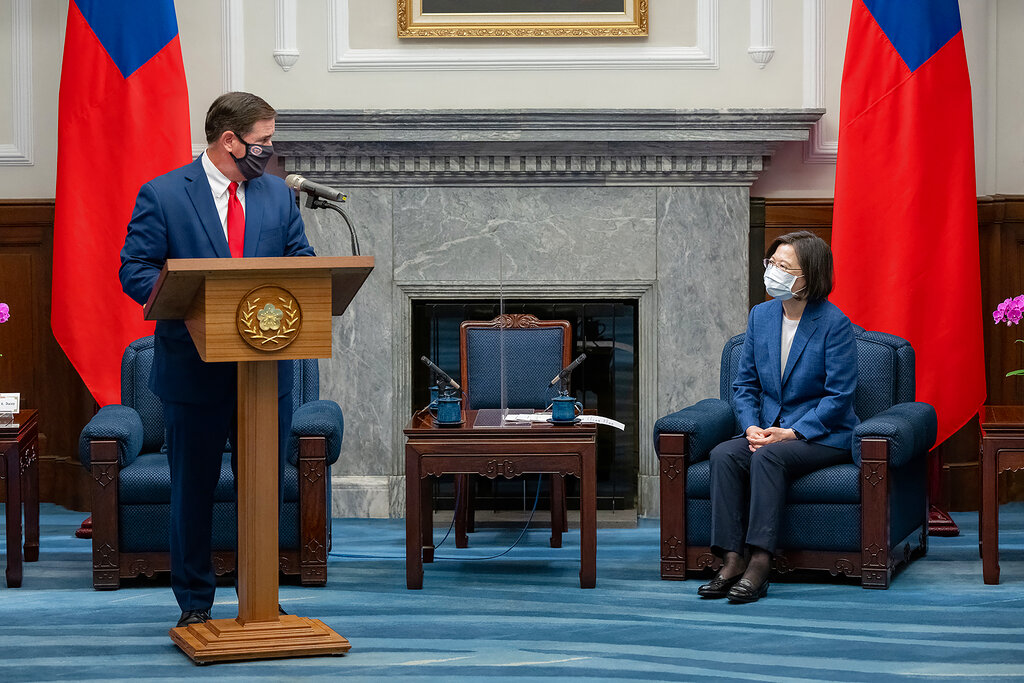
Arizona Governor Doug Ducey met with Taiwanese President Tsai Ing-wen in Taipei on Thursday to celebrate a $12 billion investment by Taiwan Semiconductor Manufacturing Co. in his state, marking a major step in economic and educational cooperation between Arizona and Taiwan. The visit, part of a series of U.S. political leaders’ trips to the island, drew sharp condemnation from China, which claims Taiwan as its own territory and opposes all official foreign contacts with Taipei.
A $12 billion bet on Arizona’s semiconductor future
The centerpiece of the visit was TSMC’s massive investment in a new chip fabrication plant in Phoenix, Arizona. The facility is expected to create 2,000 jobs and will train many future workers in Taiwan before the plant becomes operational. Arizona is also home to a base that trains Taiwan’s F-16 fighter pilots, a critical component of the island’s defenses against a potential Chinese blockade or invasion.
“Arizona and Taiwan have many shared economic strengths specifically in technology and advanced manufacturing industries,” Ducey said. “Both Arizona and Taiwan are global semiconductor leaders and it is in this industry where our partnership is the greatest. (The investment) has elevated the potential of what’s possible between Arizona and Taiwan.”
The governor spoke during a meeting with President Tsai, where both leaders highlighted the deepening ties without directly mentioning China. Arizona plans to open a state representative office in Taipei, and the two sides have signed an agreement on cooperation in higher education.
Taiwan’s president frames partnership as a democratic bulwark
President Tsai framed the expanded economic links as a response to rising authoritarianism and post-pandemic economic challenges. She did not name China directly but made clear the geopolitical context driving the collaboration.
“In the face of authoritarian expansionism and the economic challenges of the post-pandemic era, Taiwan seeks to bolster cooperation with the United States in the semiconductor and other high-tech industries,” Tsai said. “This would help build more secure and more resilient supply chains. We look forward to jointly producing democracy chips to safeguard the interests of our democratic partners and create greater prosperity.”
Taiwan is a global leader in semiconductor production. The tiny chips power everything from smartphones to military hardware. The island has become a central battleground in the technology competition between the United States and China.
A history of Arizona-Taiwan ties
Close links between Arizona and Taiwan date back decades. The state’s former senators Barry Goldwater and John McCain were conservatives who were strongly critical of Beijing. Their legacy continues to shape Arizona’s pro-Taiwan stance.
The visit comes weeks after U.S. House Speaker Nancy Pelosi made a trip to Taiwan in early August, the highest-ranking American official to visit in 25 years. China responded by launching missiles over the island and sending ships and planes across the midline of the Taiwan Strait.
The U.S. recently sent a pair of missile cruisers through the 180-kilometer-wide strait in a rejection of Chinese protests. Despite lacking formal diplomatic relations, the U.S. remains Taiwan’s main source of political and military support. Federal law requires Washington to ensure the island can defend itself against Chinese threats.
The TSMC investment represents a concrete step in that commitment. It brings high-tech manufacturing jobs to Arizona while strengthening a key democratic ally in Asia. For Ducey, the trip was a chance to show his state as a hub for advanced industry and a partner in the global semiconductor supply chain.
The governor’s visit to Taipei show how local and state-level diplomacy can advance American interests abroad. It also highlights the growing economic interdependence between the U.S. and Taiwan, even as Beijing ratchets up military pressure. The partnership between Arizona and Taiwan is not new, but the scale of the TSMC investment makes it more consequential than ever.