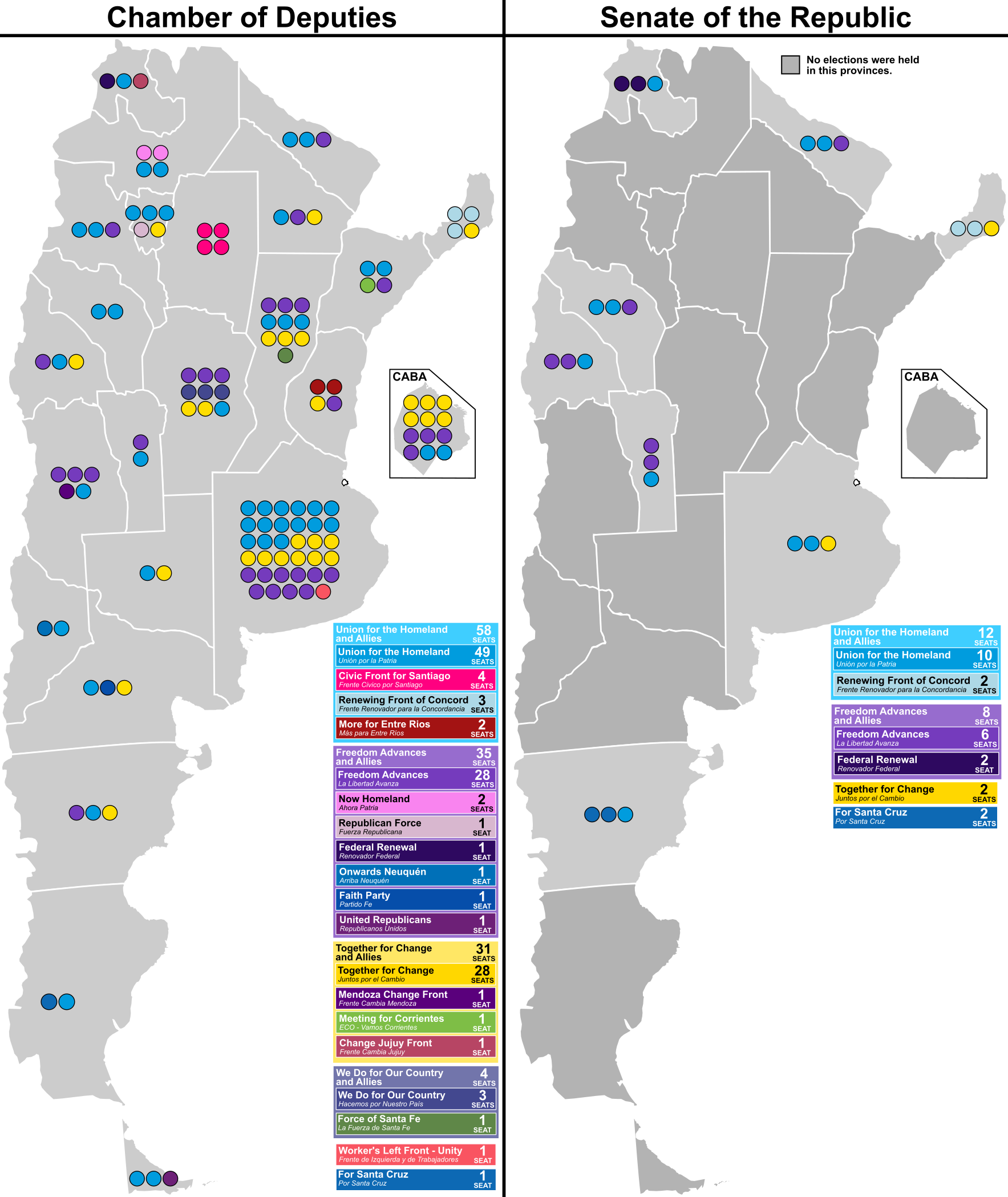
Argentina’s general elections, held on October 22, 2023, have set the stage for a runoff between two presidential candidates, Javier Milei and Sergio Massa. The first round of voting saw Massa, the Economy Minister, come in first with 36% of the vote, while Milei, a Buenos Aires Deputy, trailed closely behind with 30%. This outcome was unexpected, given Milei’s lead in polls prior to the election and the severe inflation that occurred during Massa’s tenure as economy minister.
The ruling centre-left Union for the Homeland, led by Massa, had been expected to face significant challenges due to the country’s economic woes. However, Massa’s victory in the first round has given his campaign a boost, despite the unpopularity of the current government. Incumbent president Alberto Fernández and vice president Cristina Fernández de Kirchner, both eligible for re-election, chose not to run, paving the way for new leadership. The fact that Massa was able to secure the most votes in the first round, despite the economic difficulties, suggests that his campaign was able to tap into the desires of Argentine voters for stability and continuity.
Milei, on the other hand, represents the right-wing Liberty Advances party, which has been gaining traction in recent years. His campaign has focused on free market economics and a more limited role for government, which has resonated with many voters disillusioned with the current system. As the runoff approaches, it will be interesting to see how Milei’s message is received by the broader electorate. With 30% of the vote in the first round, he has a significant base of support, but he will need to expand his appeal to win the presidency.
The elections have also highlighted the complexities of Argentine politics, where traditional party loyalties are being challenged by new movements and candidates. The fact that both Fernández and Fernández de Kirchner chose not to run for re-election suggests that they recognized the need for fresh faces and new ideas. As the country prepares for the runoff, it will be important to watch how the different candidates and parties position themselves and respond to the concerns of voters. The outcome of the election will have significant implications for Argentina’s relationships with other countries, including the United States, and will be closely watched by observers around the world.
The United States, in particular, will be interested in the outcome of the election, given its long-standing relationship with Argentina. The U.S. has traditionally been a key partner for Argentina, and the new government will likely be seeking to strengthen ties with the U.S. and other Western countries. As the runoff approaches, it will be important to see how the candidates position themselves on issues such as trade, security, and human rights, all of which are critical to the U.S.-Argentina relationship. The U.S. president and his administration will likely be watching the election closely, looking for opportunities to engage with the new government and promote American interests in the region.
As Argentina prepares for the runoff, the country is bracing itself for a potentially significant shift in its political landscape. The election has already produced some surprises, and it is likely that there will be more twists and turns before the final outcome is known. With the candidates gearing up for the next round of voting, it will be important to watch how they respond to the challenges facing the country, from inflation to corruption. The eyes of the world will be on Argentina as it chooses its next leader, and the implications of the election will be felt far beyond the country’s borders. As the campaign enters its final stages, one thing is certain: the outcome of the election will have a profound impact on Argentina’s future, and will be closely watched by observers around the world.
Looking ahead to the runoff, there are many factors that will influence the outcome. The ability of the candidates to mobilize their supporters, the effectiveness of their campaigns, and the issues that they choose to emphasize will all play a role in determining the winner. The international community, including the U.S., will be watching the election closely, looking for signs of what the new government’s priorities and policies will be. As the people of Argentina prepare to make their choice, the world will be waiting to see what the future holds for this important country in the Western Hemisphere. With the election just around the corner, it is clear that the next few weeks will be critical in shaping the course of Argentine history.