
Divergent Strategies in the Satellite Internet Race
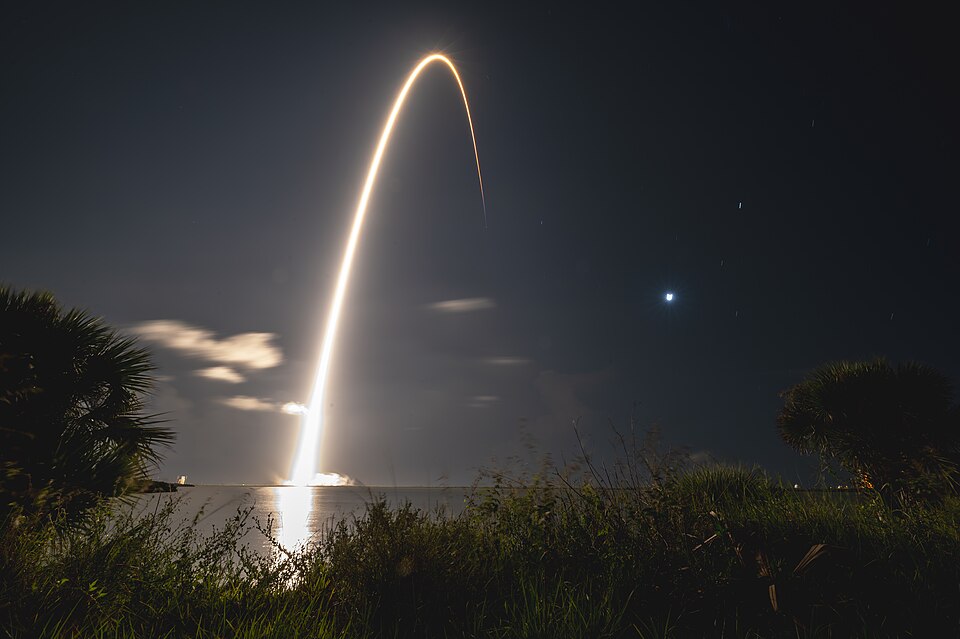
SpaceX has taken an early lead with its Starlink constellation, which as of 2024 had already launched over 5,000 satellites. The service currently provides internet to more than 2 million customers globally. SpaceX relies on its own Falcon 9 rockets to deploy these satellites, giving the company significant control over its launch schedule and costs. This vertical integration has allowed Starlink to scale rapidly while maintaining a tight grip on deployment cadence.
Amazon’s Project Kuiper follows a different path. The constellation received approval from the Federal Communications Commission in 2020, and Amazon plans to deploy over 3,200 satellites. The company began launching prototypes in 2023. Unlike SpaceX, Amazon has awarded launch contracts to multiple providers, including Blue Origin—Bezos’s own space company—as well as United Launch Alliance and Arianespace. This diversified approach spreads risk across several launch partners but may also introduce scheduling and cost complexities as Amazon works to close the gap with Starlink.
Regulatory Battles and the Stakes for Broadband from Space
The two companies are competing not only for customers but also for orbital slots and spectrum rights, leading to regulatory and legal disputes. In 2021, SpaceX filed a complaint with the FCC regarding Amazon’s orbital plans. Amazon has responded with its own filings, pushing back against SpaceX’s concerns. The potential collision here is not physical but competitive: both companies aim to dominate the broadband-from-space market, which analysts project will be worth tens of billions of dollars annually by 2030. The FCC will remain a key battleground as both companies press their cases over orbital slots and spectrum rights.
The broader stakes extend beyond corporate rivalry. Both constellations seek to connect millions of users worldwide, especially in underserved regions. The outcome of this race will shape global broadband access, spectrum policy, and the balance of power among commercial space operators. For readers, the contest highlights how private spaceflight has evolved from cargo runs to building the infrastructure that could define internet connectivity for decades.
From Setbacks to Scale: The Background of Space-Based Ambitions
SpaceX began in 2002 with the stated aim of lowering the cost of spaceflight and making orbital access routine. The company’s early years were marked by repeated setbacks, including three consecutive launch failures between 2006 and 2008 that nearly ended the venture. After securing NASA cargo contracts, SpaceX achieved the first private supply mission to the International Space Station in 2012. Breakthroughs in reusable rockets followed, culminating in the first successful landing of an orbital-class booster in 2015 and the first reflight of a used booster in 2017. These milestones shifted the economics of space transportation, enabling rapid, repeated launches that underpin today’s satellite internet ambitions.
SpaceX is an aerospace and telecommunications company whose core business spans launch services, human and robotic spaceflight, and satellite-based internet through its Starlink constellation. Its operations touch national security, scientific missions, and commercial satellite networks, giving it a central role in the emerging space economy. The company’s reusable rockets and high flight cadence have redefined industry benchmarks for cost and reliability.
With Starlink already serving millions and Kuiper still in its prototype phase, the race is far from settled. Amazon must accelerate its deployment to close the gap, while SpaceX continues to expand its customer base and satellite count. Which company ultimately wins the broadband-from-space market will depend on execution in the years ahead.




