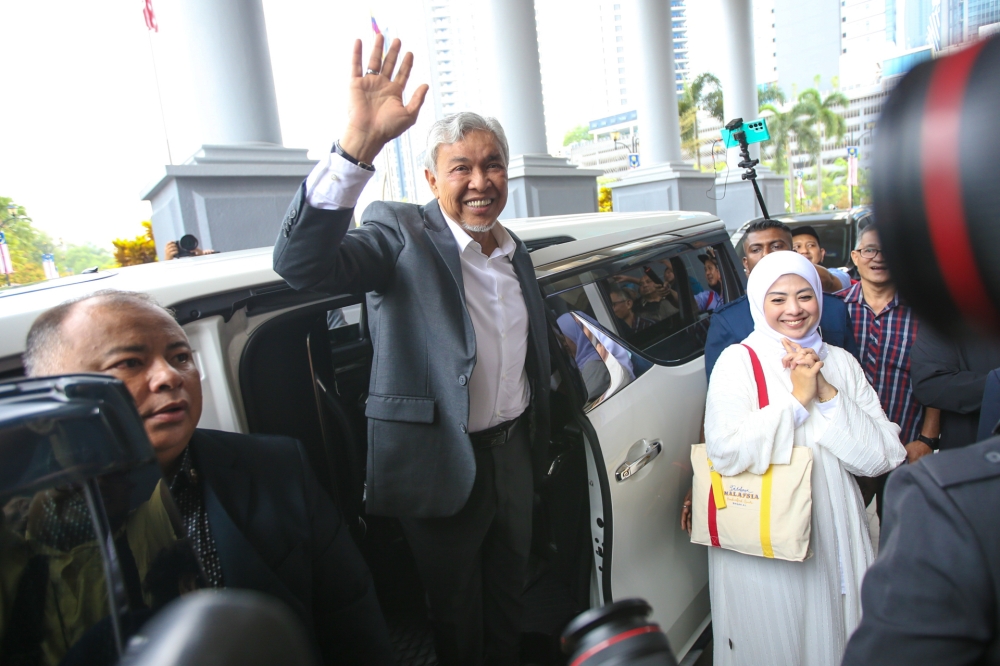
According to Malay Wikipedia and local-language media reports, Ahmad Zahid Hamidi, the Deputy Prime Minister of Malaysia, has been granted a discharge-not-amounting-to-acquittal in 47 corruption charges. As the Deputy Prime Minister of Malaysia from 2015 to 2018, and again since 2022, Ahmad Zahid Hamidi holds significant influence in the country’s politics.
As a prominent figure in Malaysian politics, Ahmad Zahid Hamidi has held various roles, including Minister of Defense from 2009 to 2013 and Minister of Home Affairs from 2013 to 2018. He is also the Member of Parliament for Bagan Datuk in Perak and the president of the United Malays National Organisation (UMNO). His career in politics began as a Senator and Chairman of the National Savings Bank, before becoming the head of UMNO’s youth wing. After the 2004 general election, Zahid became a Deputy Minister under the government of Abdullah Ahmad Badawi. During his tenure as Deputy Minister, he was awarded a Doctor of Philosophy degree from Universiti Putra Malaysia (source: https://ms.wikipedia.org/wiki/Ahmad_Zahid_Hamidi).
This development matters for English-speaking readers because it highlights the complexities of Malaysian politics and the ongoing issues of corruption within the country’s government. As a significant player in Malaysian politics, Ahmad Zahid Hamidi’s case has far-reaching implications for the country’s governance and rule of law. The discharge-not-amounting-to-acquittal verdict may have significant consequences for his future in politics, and English-speaking readers should be aware of the potential impact on Malaysia’s political landscape.
As the president of UMNO, Ahmad Zahid Hamidi plays a crucial role in shaping the party’s direction and policies. His experience in various ministerial positions has equipped him with a deep understanding of the country’s governance and administration. However, the corruption charges against him have raised concerns about the integrity of Malaysia’s political system. The fact that he has been granted a discharge-not-amounting-to-acquittal may be seen as a victory for his supporters, but it also underscores the need for greater transparency and accountability in Malaysian politics.
Background and Career
Ahmad Zahid Hamidi’s career in politics spans several decades, with notable positions including Minister of Defense and Minister of Home Affairs. His appointment as Minister of Defense in April 2009 marked a significant milestone in his career, demonstrating his growing influence within the Malaysian government. As Minister of Home Affairs, he was responsible for overseeing the country’s internal security and law enforcement agencies. His experience in these roles has provided him with a unique understanding of Malaysia’s security and governance challenges.
As the Member of Parliament for Bagan Datuk in Perak, Ahmad Zahid Hamidi represents the interests of his constituents and plays a vital role in shaping the country’s legislative agenda. His presidency of UMNO has also given him a platform to influence the party’s policies and direction. However, the corruption charges against him have raised questions about his leadership and the party’s commitment to good governance. The outcome of his case will likely have significant implications for UMNO’s reputation and its prospects in future elections.
As English-speaking readers continue to follow this story, they should watch for further developments in Ahmad Zahid Hamidi’s case and their potential impact on Malaysian politics. The country’s governance and rule of law will likely remain under scrutiny, and the actions of its leaders will be closely monitored by domestic and international observers. With the discharge-not-amounting-to-acquittal verdict, the focus will shift to the next steps in the legal process and the potential consequences for Ahmad Zahid Hamidi’s political career. What happens next will be crucial in determining the future of Malaysian politics and the country’s progress towards greater transparency and accountability.