
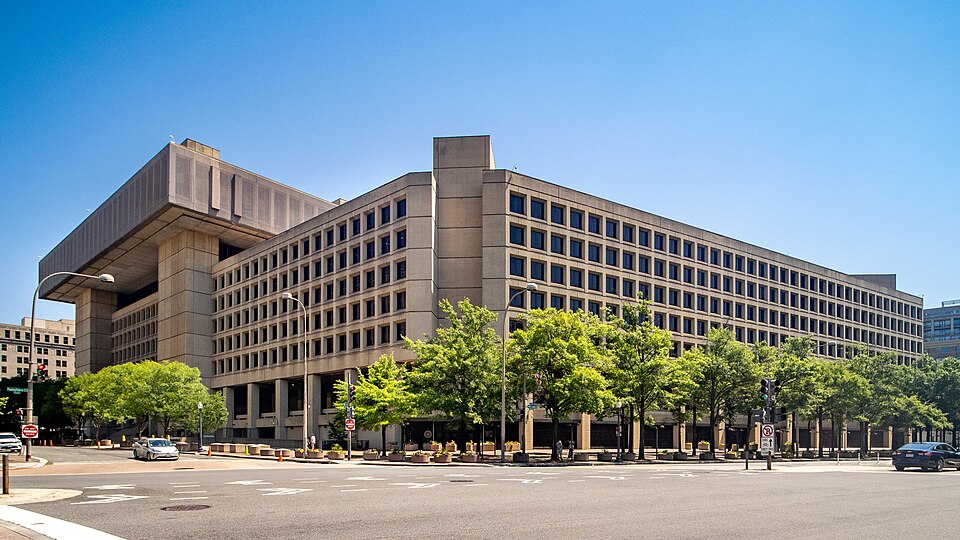
WASHINGTON, September 19 — The FBI’s reach into foreign jurisdictions runs through a quiet architecture most Americans never see: legal attaché offices, known inside the bureau as legats, planted in more than sixty countries and wired into host-nation police, Interpol and local prosecutors. That machinery is the backdrop to the recent arrests of fraud suspects overseas announced by FBI Director Kash Patel, cases the bureau has linked to its international fugitive apprehension push.
The administration of President Donald Trump has made immigration and fraud enforcement a priority, and Patel has placed international fugitive apprehension near the top of his agenda.
A network built on treaties, not badges
Interpol itself does not arrest anyone. Founded in 1923 as the International Criminal Police Commission and renamed in 1956, the organization facilitates information sharing among 196 member countries. It has no arrest powers.
When a fugitive is picked up abroad, the hands on the cuffs belong to local authorities acting on US provisional arrest warrants. Extradition is the other half of the equation, and it is never automatic.
The United States holds extradition treaties with more than a hundred countries, alongside mutual legal assistance treaties that govern evidence-sharing. A request can be refused if the offense is not a crime in both countries — the principle of dual criminality — or if the suspect faces the death penalty. Political offenses are another ground for denial.
Notable extraditions include the 2010 capture of arms dealer Viktor Bout in Thailand and the 2013 arrest of Silk Road founder Ross Ulbricht in San Francisco. The process can take years.
Where the money and muscle come from
The State Department’s Bureau of International Narcotics and Law Enforcement Affairs provides funding for some transfers. The FBI’s Hostage Rescue Team and SWAT units can assist in captures, though most foreign arrests are carried out by local police. In 2023, the legal attaché network helped secure the return of fugitives from countries including Mexico, Spain and Thailand.
The recent fraud arrests announced by Patel likely involved similar coordination, though without specific country details the exact mechanisms remain unclear. The cases of Manjit Singh Bedi, Khalid Ahmed Satary, Said Abdullahi Ereg, Emylee Thai, Elaine Angene Escoe and Herbert Leon Kimble may illustrate these efforts.
No further information has been released on their cases. What to watch next is whether the bureau releases the country-by-country details that would show precisely how each suspect was located and returned — or whether the legat network keeps working, as it long has, out of public view.




