
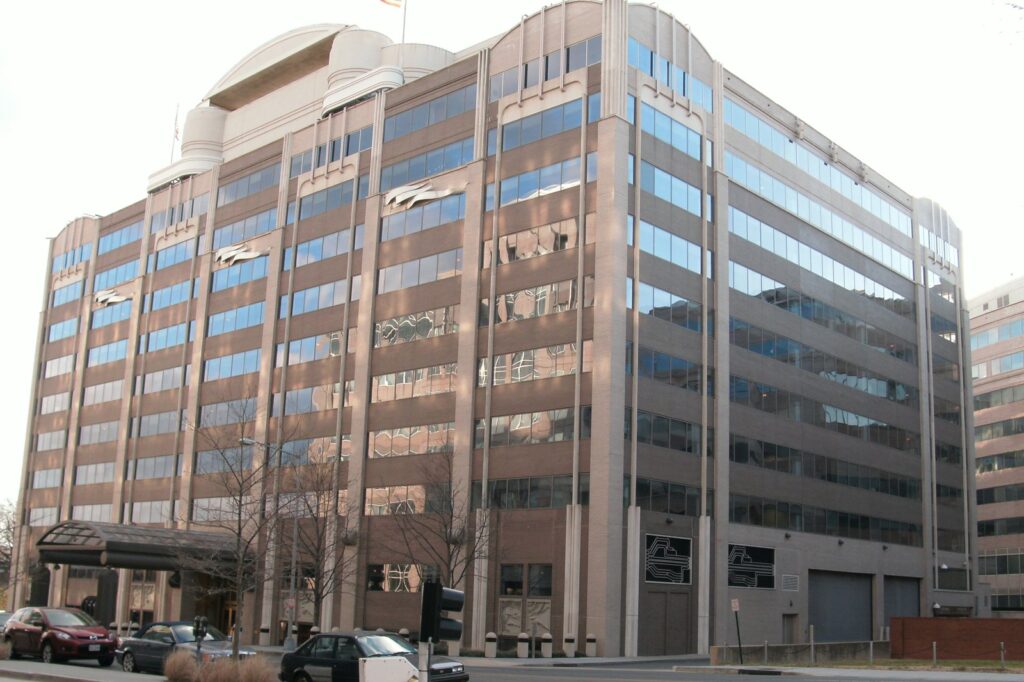
WASHINGTON — The Federal Communications Commission is expected to vote by the end of 2024 on a rulemaking that would exempt satellite constellations from environmental review under the National Environmental Policy Act. The proposal, advanced in April 2024, argues that satellite reentries have minimal environmental impact. The FCC contends that NEPA reviews would slow down innovation and deployment of broadband services.
The public comment period on the proposal closed in July 2024. Environmental groups including the Union of Concerned Scientists and the Environmental Defense Fund filed comments in June 2024 challenging the agency’s reasoning.
Those groups argue that the cumulative impact of thousands of satellite reentries warrants a full environmental impact statement. The FCC’s previous authority over satellite licensing was affirmed by the D.C. Circuit Court in 2022 in the case of SpaceX v. FCC.
The D.C. Circuit’s 2022 ruling upheld the commission’s jurisdiction over satellite licensing, a decision that underpins the current proposal to narrow environmental review. The environmental groups’ comments represent opposition to the rule.
The Union of Concerned Scientists and the Environmental Defense Fund have both called for the FCC to prepare a full environmental impact statement covering the entire constellation licensing regime. The FCC has not yet scheduled a vote. The commission is expected to vote on the rule by the end of 2024.
The proposal would mark a shift in how the FCC applies NEPA to commercial space activities. Historically, the commission has required environmental reviews for individual satellite licenses. The FCC’s filing states that NEPA reviews would slow down innovation and deployment of broadband services.
Environmental groups counter that the scale of planned constellations — involving thousands of satellites — represents a new category of potential environmental harm. The comments filed in June 2024 detail concerns about atmospheric effects from satellite reentries and the accumulation of debris in orbit.
The D.C. Circuit’s 2022 decision in SpaceX v. FCC remains a key legal foundation for the commission’s approach. That ruling affirmed the FCC’s authority to license satellite systems, including the conditions under which those licenses are granted.
The public comment period closed without the commission issuing a timeline for a final vote. The rulemaking represents the latest chapter in a broader debate over the environmental costs of space-based infrastructure.
As satellite constellations grow in number and scale, the question of how to assess their cumulative impact has become increasingly contested. The FCC’s proposal would effectively exempt entire constellations from case-by-case NEPA review. The environmental groups’ comments argue that such an approach ignores the scientific evidence of potential harm.
The commission has not indicated whether it will respond to the comments before voting. The 2022 D.C. Circuit decision provides the legal framework for the FCC’s current action. In that case, the court upheld the commission’s licensing authority against a challenge from SpaceX, which had argued that the FCC lacked jurisdiction over satellite operations.
The environmental groups’ June 2024 comments represent the most detailed critique of the proposal. The Union of Concerned Scientists and the Environmental Defense Fund both submitted comments arguing that the cumulative impact of satellite reentries requires a full environmental impact statement.
The FCC’s argument that satellite reentries have minimal environmental impact is based on the agency’s assessment of current data. The environmental groups counter that the data is insufficient to support such a conclusion, particularly given the projected growth in satellite numbers. The commission is expected to vote on the rule by the end of 2024.
The outcome will determine whether the FCC adopts the exemption or modifies the proposal in response to the comments. The rulemaking has drawn attention from both industry and environmental advocates.
The FCC’s decision will set a precedent for how the agency balances innovation and environmental review in the commercial space sector.




