
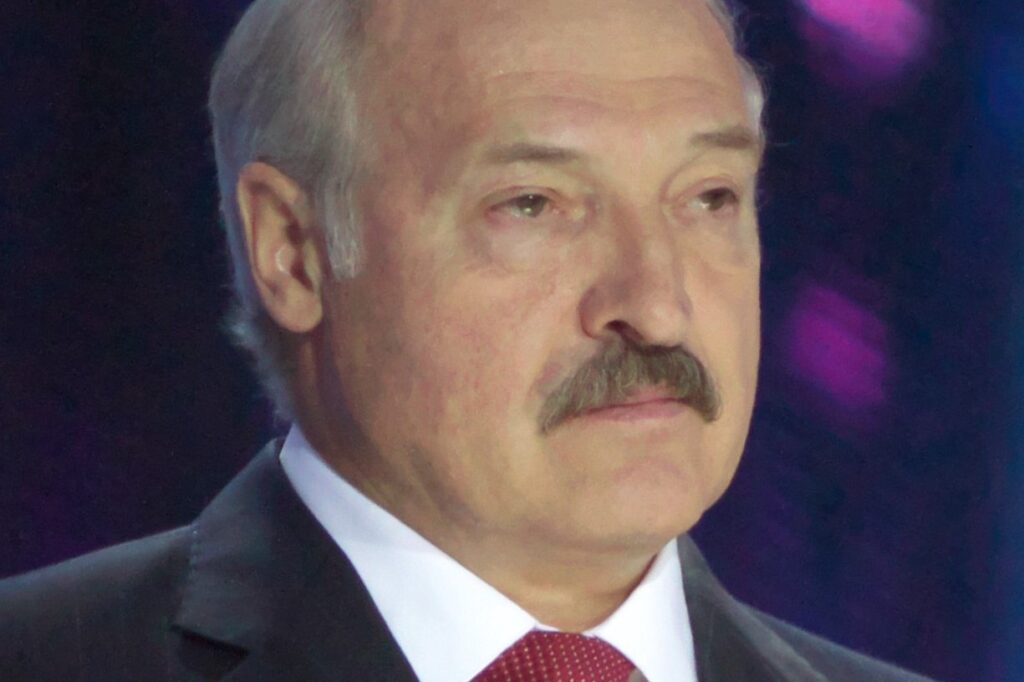
On November 22, 2024, Belarusian President Alexander Lukashenko addressed students and faculty at the Minsk State Linguistic University, a prominent institution established in 1948 as a foreign language pedagogical institute. During this speech, he threatened to cut off internet access if mass demonstrations arise ahead of the upcoming presidential election.
The university, which offers courses in 18 foreign languages and trains translators and teachers, served as the backdrop for this warning. The choice of location carried symbolic weight. Universities traditionally serve as spaces for idea exchange, and the Linguistic University is specifically centered on communication.
Lukashenko used this platform to assert that communication remains permissible only as long as it does not challenge his authority. This message follows the pattern of the previous election, which saw widespread unrest and street demonstrations met with government response.
The threatened internet shutdown would function as a broad measure, affecting all users indiscriminately. Citizens relying on digital services for banking, news, or contact with relatives abroad would lose access entirely. As Belarus has become increasingly dependent on digital communication and information exchange, this reliance now presents a vulnerability.
The strategy appears straightforward: preventing protest organization rather than confronting demonstrations directly. Modern movements use the internet for coordination, sharing video evidence, and communicating their narratives globally.
Disrupting internet access would effectively suffocate a movement’s capacity to operate. However, implementing such a shutdown carries significant consequences. It would reinforce perceptions that the government views the internet as a threat rather than a utility.
Additionally, it would signal Lukashenko’s willingness to further isolate Belarus, even from its own population. The previous election revealed substantial discontent; the next may reveal the lengths authorities will go to contain it.
The Minsk State Linguistic University, which teaches Russian and Belarusian as foreign languages and attracts students from Belarus and abroad, has historically hosted discussion and debate. Lukashenko’s speech there created a notable contrast: a venue dedicated to language and free exchange became the setting for a warning to silence it. The outcome depends on the election’s circumstances.
Without mass protests, the threat remains theoretical. If demonstrations emerge, Lukashenko has stated his response in advance.
The uncertainty lies in whether this measure would halt unrest or push it into less monitorable channels. The previous election showed people’s willingness to take to the streets; the next will test the government’s willingness to face the repercussions of a blackout. Lukashenko has clearly framed internet access as a revocable privilege rather than a right.




