
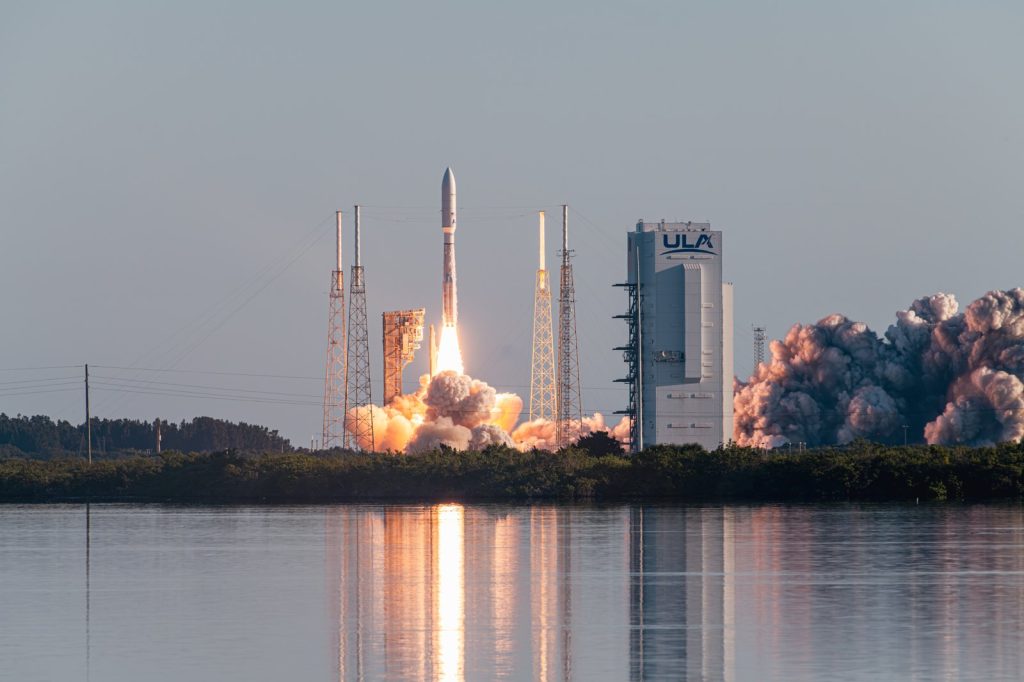
The race to dominate satellite internet from low-Earth orbit has reached a decisive point, with Amazon’s Project Kuiper facing a regulatory deadline that will determine whether its network of 3,236 spacecraft becomes a viable competitor to SpaceX’s Starlink system. The Federal Communications Commission requires Amazon to deploy and operate 1,618 satellites by July 2026, a milestone that will test the company’s ability to execute on a multibillion-dollar space endeavor.
Regulatory Pressure and the Orbital Clock
Amazon first announced its entry into the satellite internet market in 2019, founding a subsidiary then code-named Project Kuiper, which was later renamed Amazon Leo in late 2025. The FCC authorized Amazon to deploy more than three thousand satellites in July 2020, imposing strict milestones: half the fleet must be launched and operational by July 2026, with the remainder in orbit by July 2029.
The company has aimed for a commercial service launch in 2024 and full deployment of the entire network by 2029. To meet these targets, Amazon has purchased more than nine dozen rocket launches from United Launch Alliance, ArianeGroup, and Blue Origin — the latter founded by Amazon’s executive chairman. The total cost of those launches exceeds ten billion dollars.
In 2023, Amazon also bought three launches from SpaceX, its direct competitor. These regulatory deadlines matter now because the window for new entrants is narrowing.
Orbital slots and radio frequencies are finite resources, and international bodies such as the International Telecommunication Union are tightening oversight. If Amazon cannot meet its 2026 deadline, its license could be at risk.
The Competitive Landscape and Market Implications
SpaceX, meanwhile, is moving faster. The company began launching its Starlink constellation in 2019 and plans to continue launches toward a goal of 12,000 satellites by 2027.
It already has a head start — and a live conflict proving its utility. Since 2022, SpaceX has provided Starlink services to Ukraine. The U.S. Department of Defense has expressed interest in both constellations for military communications, signaling that these networks are no longer just about consumer broadband.
The Pentagon’s interest is a telling signal: SpaceX already has a track record in Ukraine, and Amazon will need to demonstrate similar capability if it wants a piece of that business. A satellite internet constellation is a large network of spacecraft operating in low Earth orbit, designed to provide low-latency broadband connectivity to users anywhere on the ground.
Traditional satellite internet relied on a handful of large satellites in much higher orbits, which produced noticeable delays. Constellations at lower altitudes reduce that lag and can serve more customers, but they require many more satellites and complex coordination to avoid collisions and interference. Spectrum sharing disputes are likely to escalate as more constellations reach for the same bandwidth.
If Kuiper reaches orbit on schedule, potential outcomes are concrete. Market competition could drive down prices for consumers who currently have few choices for high-speed satellite internet.
Regulatory challenges over spectrum sharing will test both companies. The competitive dynamic between Amazon and SpaceX adds a strategic dimension to what was once purely a consumer broadband play. The next few months will determine whether Kuiper becomes a real competitor or a cautionary tale about the gap between ambition and orbital reality.




