
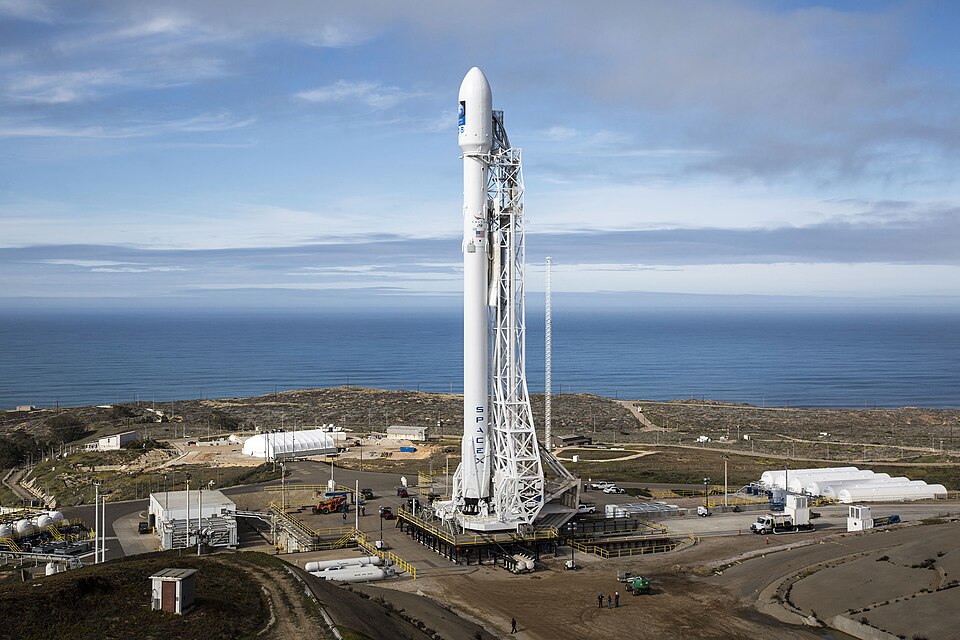
ISLAMABAD, July 15 — The race to blanket the globe with high-speed internet from space is no longer a theoretical contest. Two of the world’s most ambitious satellite constellations, Starlink and Project Kuiper, are now locked in a technical and regulatory struggle that will determine how billions of people connect in the years ahead. Starlink, operated by SpaceX, began launching its satellites in 2019.
As of 2024, the company had placed more than 5,000 satellites in low Earth orbit, or LEO, and was serving over 2 million subscribers across more than 60 countries. It has already met the deployment milestones set by the Federal Communications Commission, the US regulator that oversees satellite licensing.
Project Kuiper, Amazon’s answer to Starlink, received FCC approval in 2020 to deploy a constellation of 3,236 satellites. Amazon launched two prototype satellites in October 2023 and plans to begin full production launches in 2024. The company has set its sights on starting commercial service in 2025.
The FCC has imposed clear deadlines for Amazon. The company must deploy half of its satellites by 2026 and the full constellation by 2029.
Those milestones will test whether a company better known for e-commerce and cloud computing can execute a space program at scale.
Orbital congestion and the collision question
Both constellations operate in low Earth orbit, at roughly 550 kilometers altitude. That altitude is prized because it reduces latency — the delay between sending and receiving data — compared with traditional geostationary satellites that sit much farther out. For users in remote areas, that speed difference can mean the difference between a usable video call and a frustrating wait.
The technical challenge of avoiding collisions in increasingly crowded orbits has become a central issue. With thousands of satellites already in LEO and thousands more planned, the risk of close approaches grows with each launch.
Both companies are developing autonomous collision avoidance systems designed to steer their satellites out of harm’s way without waiting for ground control. The encouraging part is that these systems are becoming more sophisticated. But early findings suggest that as constellations grow, so does the complexity of keeping them safely separated.
Spectrum disputes and regulatory filings
The two companies have filed competing requests with the FCC over spectrum and orbital slots. SpaceX has argued that Amazon’s plans interfere with Starlink’s operations. Amazon, for its part, has pushed back, insisting that its constellation can coexist without causing harmful interference.
These disputes are not merely technical. Spectrum rights are a finite resource, and orbital slots at the most desirable altitudes are limited.
The FCC must weigh the public interest in competition against the risk of signal interference that could degrade service for millions of subscribers. SpaceX already has a significant head start. Its satellites are in orbit, its subscriber base is growing, and it has demonstrated that its system works.
Amazon is still in the prototype phase, though its deep pockets and experience building global infrastructure should not be underestimated. Patients — or rather, consumers — should watch these developments closely.
More competition in the satellite internet market could mean lower prices and better service, especially for those in rural or underserved areas where terrestrial options are limited or nonexistent. For now, the FCC remains the referee. How it rules on the competing requests will shape the orbital landscape for years to come.
And as both constellations grow, the question of whether the sky can accommodate both — safely and without interference — will only become more urgent. Talk to your internet provider about what options are available in your area. The technology is advancing quickly, and what was impossible a few years ago may soon be routine.
Sources
{“@context”: “https://schema.org”, “@type”: “NewsArticle”, “headline”: “Starlink and Project Kuiper Battle for Satellite Supremacy”, “description”: “ISLAMABAD, July 15 — The race to blanket the globe with high-speed internet from space is no longer a theoretical contest. Two of the world’s…”, “datePublished”: “2026-07-15T09:30:00+00:00”, “author”: {“@type”: “Person”, “name”: “Muhammad Asim”}, “publisher”: {“@type”: “Organization”, “name”: “InfoPulse Today”, “url”: “https://newsfeed.infopulsetoday.com/”}, “citation”: [{“@type”: “CreativeWork”, “url”: “https://en.wikipedia.org/wiki/Starlink”}]}




