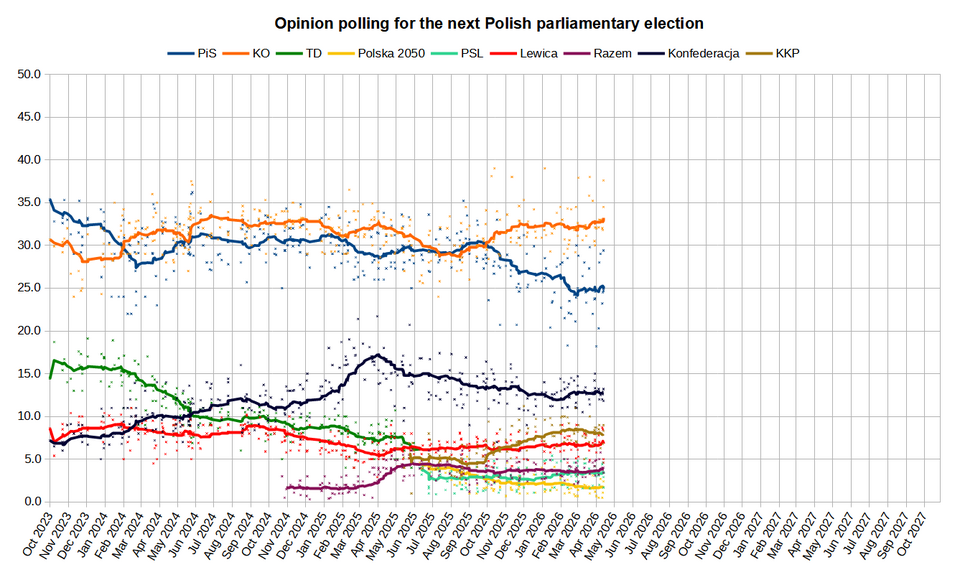
As Poland looks to its next parliamentary election, scheduled for 2027, various organizations have begun conducting opinion polls to gauge the voting intentions of the Polish electorate. These polls, which started after the previous parliamentary election held on October 15, 2023, aim to provide insights into the potential performance of different political parties and coalitions in the upcoming election.
The Polish parliamentary election system requires electoral committees registered as political parties to reach an electoral threshold of 5% to be represented in parliament. Meanwhile, those registered as coalitions must achieve a higher threshold of 8%. This system is designed to ensure that only parties and coalitions with significant public support are represented in the parliament, thereby maintaining stability and preventing fragmentation.
Opinion polls play a crucial role in understanding the dynamics of the Polish political landscape. By analyzing the results of these polls, observers can identify trends and patterns in public opinion, which can influence the strategies of political parties and coalitions. The polls also provide valuable information for voters, enabling them to make informed decisions about which parties and candidates to support.
As the polls continue to gauge voting intentions, it is essential to recognize that the results may fluctuate over time due to various factors, including changes in government policies, economic conditions, and social issues. The ability of political parties and coalitions to adapt to these changes and respond to the concerns of voters will likely impact their performance in the next election.
The upcoming parliamentary election in 2027 is expected to be highly competitive, with several political parties and coalitions vying for seats in the parliament. The polls will likely continue to be closely watched by politicians, analysts, and voters alike, as they provide a snapshot of the current state of public opinion and potential trends in the election.
As the election approaches, it will be essential to monitor the opinion polls and other developments in the Polish political landscape. The ability of political parties and coalitions to build momentum, respond to challenges, and connect with voters will be critical in determining the outcome of the election. With several years to go before the next parliamentary election, the situation remains fluid, and it is likely that the polls will continue to evolve, reflecting changes in public opinion and the political environment.
Looking ahead, the next few years will be crucial in shaping the outcome of the 2027 Polish parliamentary election. As opinion polls continue to provide insights into voting intentions, it will be important to watch for key developments, including shifts in public opinion, the emergence of new political forces, and the responses of established parties to changing circumstances. By closely following these developments, observers can gain a deeper understanding of the complexities of the Polish political landscape and the factors that will influence the outcome of the next election.