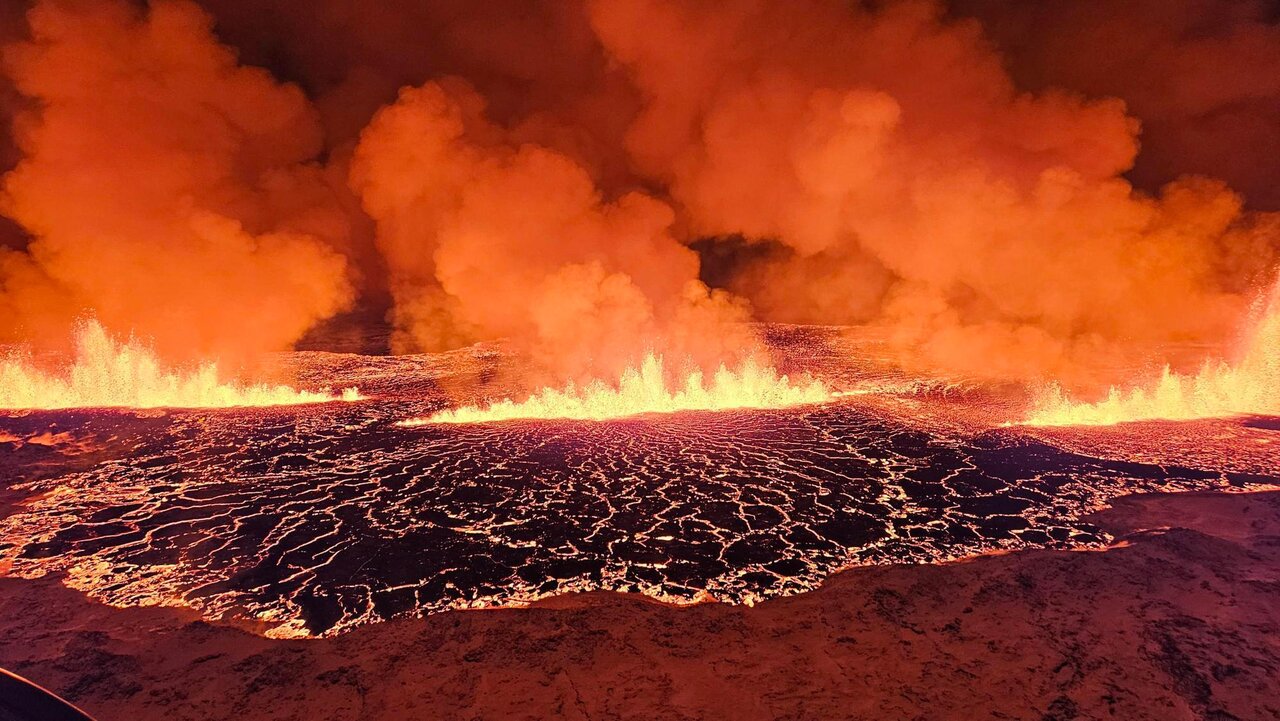
Iceland has declared a state of emergency following a series of earthquakes near the Fagradalsfjall volcano on the Southern Peninsula, prompting concerns of a potential eruption in the coming days. The Icelandic Meteorological Office has been closely monitoring the situation, providing updates on the increased seismic activity in the region. This development has put the country on high alert, with authorities preparing for a possible eruption that could have significant implications for the environment and local communities.
The Fagradalsfjall volcano, located on the Reykjanes Peninsula, has a history of volcanic activity, with the most recent eruption occurring in 2021. The volcano’s proximity to the capital city of Reykjavík and the country’s main international airport, Keflavík, makes it a significant concern for authorities. The Icelandic Meteorological Office has reported that the earthquakes are occurring at a depth of around 5-10 kilometers, indicating that magma is moving beneath the surface. This increased seismic activity has led to concerns that an eruption could occur, potentially disrupting air travel and impacting the local environment.
Iceland’s unique geology, situated on the Mid-Atlantic Ridge between the Eurasian and North American tectonic plates, makes it prone to volcanic eruptions and earthquakes. The country’s volcanic plateau, characterized by sand and lava fields, is a result of this geologic activity. The interior of Iceland is largely uninhabited, with the majority of the population residing in the coastal regions. This has led to a delicate balance between preserving the country’s natural environment and ensuring the safety of its residents. As the situation at Fagradalsfjall continues to unfold, authorities are working to minimize the potential risks to both people and the environment.
The potential eruption of Fagradalsfjall has significant implications for the local ecosystem. Iceland’s unique and fragile environment is home to a diverse range of flora and fauna, including several endangered species. The country’s geothermal areas, characterized by hot springs and geysers, are also an important part of its natural heritage. An eruption could potentially disrupt these ecosystems, causing long-term damage to the environment. As such, authorities are working to mitigate the potential risks, while also ensuring that the country’s natural beauty is preserved for future generations.
As Iceland prepares for a potential eruption, the country is also focusing on renewable energy sources to reduce its reliance on fossil fuels. Iceland’s geothermal energy, harnessed from the country’s volcanic activity, provides a significant portion of its energy needs. This focus on renewable energy not only helps to reduce the country’s carbon footprint but also provides a reliable and cost-effective source of energy. As the world looks to transition to more sustainable energy sources, Iceland’s approach serves as a model for other countries to follow. By prioritizing renewable energy and preserving its natural environment, Iceland is working towards a more sustainable future.
Looking ahead, the situation at Fagradalsfjall will continue to be closely monitored by the Icelandic Meteorological Office and local authorities. As the country prepares for a potential eruption, it is also an opportunity to reflect on the importance of preserving our planet’s natural environment. By prioritizing sustainability and renewable energy, we can work towards a cleaner and more secure future for all. As the people of Iceland wait with bated breath for the outcome of the situation at Fagradalsfjall, the international community is reminded of the importance of protecting our planet’s unique and fragile ecosystems.