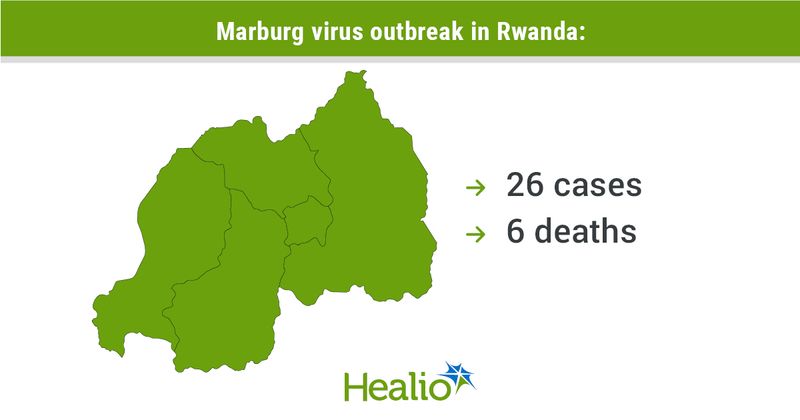
The World Health Organization (WHO) received a report of the first-ever outbreak of Marburg virus disease (MVD) in Rwanda on 28 September 2024, marking a significant public health concern for the country. This outbreak is notable not only for being the first recorded instance of MVD in Rwanda but also for its scale, ranking among the largest Marburg outbreaks ever documented.
The impact of the outbreak was particularly pronounced among healthcare workers, with a significant proportion of cases occurring in this group, especially those working in intensive care units. This highlights the risks faced by medical professionals on the front lines of disease outbreaks and underscores the importance of robust infection control measures in healthcare settings. The concentration of cases among healthcare workers also suggests potential gaps in protective protocols or the need for enhanced training and equipment to safeguard against highly infectious diseases like MVD.
Geographically, the outbreak was not uniformly distributed across Rwanda. Cases were reported in seven out of the country’s 30 districts, with the City of Kigali being particularly affected. Within Kigali, three districts accounted for the highest number of cases, indicating localized hotspots of transmission. This spatial distribution of cases can provide valuable insights for public health officials, helping to target interventions and resources where they are most needed.
As of 10 October 2024, the outbreak had resulted in 58 confirmed cases and 13 fatalities, according to reports. These numbers are a stark reminder of the severity of Marburg virus disease, which is known for its high case fatality rate. The response to the outbreak involved close collaboration between the WHO and the Rwandan government, aiming to contain the spread of the disease, provide care to those affected, and implement measures to prevent future outbreaks.
The declaration of the outbreak’s end by the WHO and the Rwandan government on 20 December 2024, following 42 days without any new cases, marked a significant milestone. This declaration was made in accordance with standard public health protocols, which require a period of sustained absence of new cases before an outbreak can be considered over. The successful containment of the outbreak is a testament to the effectiveness of coordinated public health responses and the importance of vigilance in monitoring for potential resurgence.
Looking forward, it will be crucial to monitor Rwanda’s public health landscape for any signs of Marburg virus disease reemergence. Additionally, efforts to enhance preparedness and response capabilities, including training for healthcare workers and strengthening of infection control practices, will be essential. The experience gained from responding to this outbreak can also inform strategies for addressing future public health challenges, not only in Rwanda but also in the broader region. As global health authorities and local governments continue to work together to prevent and respond to infectious disease outbreaks, the lessons learned from Rwanda’s experience with Marburg virus disease will play a valuable role in guiding these efforts.
The international community’s response to the outbreak, led by the WHO, demonstrates the importance of global cooperation in combating public health threats. The swift and coordinated action taken to support Rwanda in managing the outbreak highlights the critical role of international partnerships in enhancing national capacities to respond to health crises. As the world continues to navigate the complexities of infectious disease management, the collaboration and solidarity shown in response to the Marburg virus disease outbreak in Rwanda serve as a model for addressing future global health challenges.