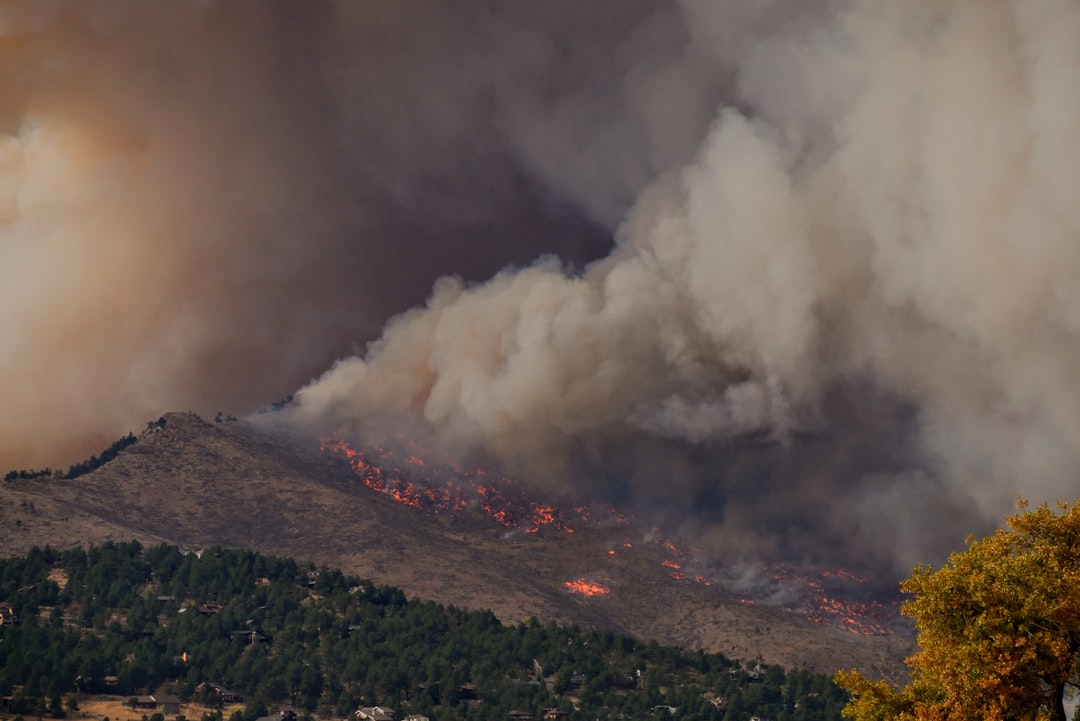
What began as a mid-May spark in the Canadian Shield grew into a national crisis that kept burning for months. The 2025 Canadian wildfire season, which started with over 160 fires across Manitoba, Ontario, and Saskatchewan, eventually consumed more than half its total burned area in just two provinces: Manitoba and Saskatchewan. That single fact tells the story of where the season hit hardest.
Two civilians died in the town of Lac du Bonnet, northeast of Winnipeg, during that initial outbreak. By late May, both Manitoba and Saskatchewan had declared states of emergency—Manitoba on May 28, Saskatchewan the following day. These were not precautionary measures. The fires were spreading fast, threatening whole communities and the surrounding environment.
The season did not let up. As summer wore on, new fires ignited in British Columbia, Alberta, Quebec, Newfoundland and Labrador, the Yukon, and the Northwest Territories. But the geographic center of severity remained fixed on the prairies. In July, Manitoba declared a second state of emergency. A fresh wave of fires had hit the region. The province was fighting a two-front war: the first wave in spring, the second in midsummer.
That second declaration is worth pausing on. It signals something beyond a bad fire season. It suggests a breakdown in the usual rhythm of wildfire response. A single state of emergency is a crisis. Two, in the same province, in the same season, means the crisis kept renewing itself faster than resources could be rotated or rest. The report does not give numbers on acreage or containment rates, but the fact that Manitoba needed to re-declare emergency status is a blunt indicator of sustained pressure.
By early August, the threat shifted east. Atlantic Canada faced heat waves and extreme fire conditions. Nova Scotia, New Brunswick, and the island of Newfoundland all saw outbreaks. This was a new phase. The fires were no longer a western and central problem. They had jumped geography, reaching provinces that typically do not see this kind of prolonged fire danger.
The report does not say how many total fires burned by season’s end, nor does it give a final acreage figure. But the sequence of events—mid-May start, two states of emergency in Manitoba, one in Saskatchewan, then an Atlantic expansion—traces a fire season that did not behave like a single spike. It behaved like a series of overlapping waves, each one hitting a different region while the previous wave still smoldered.
What is clear is that the environmental and ecosystem impacts were broad. The report notes that the fires were “not only a concern for local communities but also had a broader impact on the environment and ecosystem.” That is a careful way of saying the smoke, the carbon release, and the habitat destruction did not stop at provincial borders.
No single cause is given for why the season was so severe. The report does not mention drought, lightning, human activity, or climate change. It simply records what happened: a cascade of fires that started early, hit the prairies hardest, doubled back on Manitoba, and then spread east. The facts speak for themselves.
For the people of Lac du Bonnet, the season began with two deaths. For Manitoba and Saskatchewan, it meant living under emergency orders for months. For Atlantic Canada, it meant a late-summer surprise. The 2025 wildfire season was not one fire. It was many fires, in many places, over many months. And the hardest-hit provinces had to declare emergency not once, but twice.