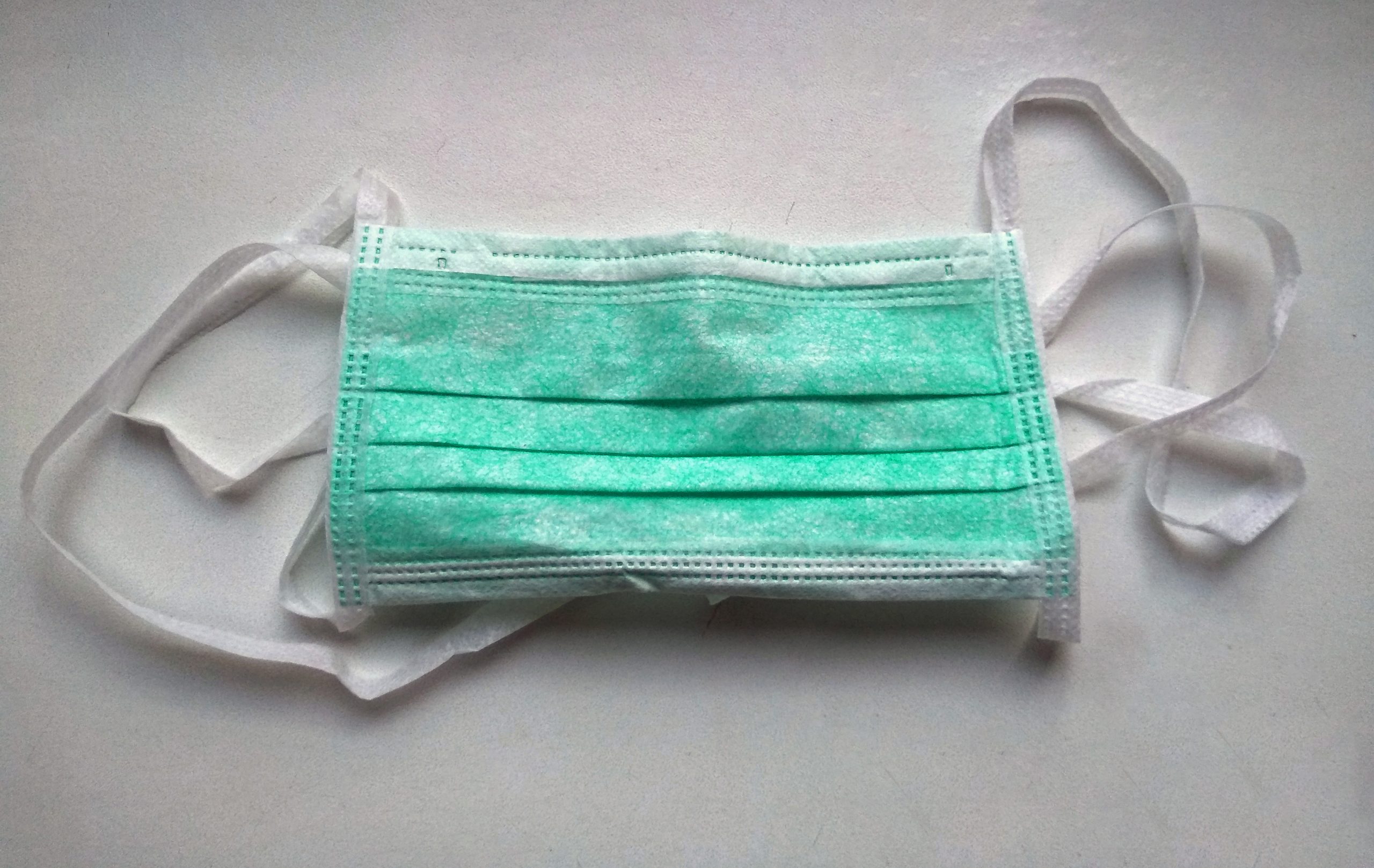
A review of 25 published studies led by Karolinska Institutet and McMaster University and released on 20 August 2020 in Mayo Clinic Proceedings concludes that well-made cloth masks cut the emission of virus-laden particles and lower the wearer’s own inhalation risk. The authors say the findings justify public masking as a COVID-19 control measure even though no placebo-controlled trial has been, or is likely to be, completed.
How the review was done
The team searched peer-reviewed literature up to June 2020 for any paper that measured filtration by woven fabrics fashioned into face coverings. They accepted laboratory studies using aerosol generators, smoke boxes, fit-test rigs and coughing manikins, but excluded modelling papers that inferred mask efficacy without direct filtration data. Twenty-five articles met the criteria, covering materials from T-shirt jersey to vacuum-cleaner bags. None had been designed to meet medical-device certification standards, so the authors standardised the results to the percentage of particles blocked at 0.2-5 µm, the size range thought to carry SARS-CoV-2.
Pooling the data showed single-layer cotton blocked 20-40 % of fine particles, while three-layer cotton-flannel sandwiches reached 70-90 %, overlapping the range reported for surgical masks. Thread count mattered: fabrics woven to at least 100 threads per inch performed markedly better than looser weaves, and muslin, an unfinished, tightly woven cotton, matched disposable medical masks when stacked in four layers.
Evidence for source control and self-protection
Because SARS-CoV-2 spreads mainly through respiratory particles, the review treats masks as a mechanical barrier working in two directions: outward to protect bystanders and inward to protect the wearer. Historic work cited by the authors includes a 2013 study in American Journal of Infection Control that found a four-layer muslin mask reduced airborne colony-forming units by 99 % relative to no mask, equal to a modern surgical mask. More recent laser-visualisation experiments from the New England Journal of Medicine showed homemade cotton masks cut forward-projected droplets by 80 % at speaking distance.
Juan Jesús Carrero, professor of epidemiology at Karolinska Institutet and the review’s corresponding author, says the combined picture is persuasive. “We have no direct proof that face masks reduce the transmission of SARS-CoV-2, as this would require a randomised clinical trial that would be unethical to conduct,” he told InfoPulseToday. “However, the literature we found clearly shows that face masks can reduce the spread of viruses and protect the wearer, some of them highly effectively. This evidence should be more than sufficient to recommend their use, particularly given the difficulty in controlling the ongoing pandemic.”
Best fabrics and layering tips
Muslin, standard quilting cotton and flannel emerged as the top choices. A three-layer mask combining one layer of tightly woven cotton with two layers of flannel reached 85 % particle removal, only ten percentage points below a certified surgical mask tested on the same rig. Poly-cotton blends performed worse, and thin T-shirt material needed at least four layers to exceed 50 % filtration. The authors caution that fit rivals fabric: gaps at the cheeks can drop filtration by half, while a simple nose-wire restores much of the loss.
For people unable to source medical masks, the message is pragmatic. “Use of disposable medical masks in the community further threatens the supply of personal protective equipment for healthcare and other high-risk workers,” Carrero notes. A washable, three-layer cotton-flannel mask, laundered daily, offers “a sustainable alternative that still gives meaningful protection,” he adds.
Alignment with global guidance
The review lands four months after the World Health Organization reversed its earlier scepticism and advised cloth masking in public settings where physical distancing is hard. The U.S. Centers for Disease Control and Prevention issued similar guidance in April 2020. Both agencies cite the same mechanistic logic the Swedish-Canadian team now underpins with data: if everyone wears a decent mask, the community dose of virus-laden aerosol falls.
The authors emphasise masking is additive, not a substitute. Hand hygiene, two-metre spacing and surface disinfection remain essential. Yet in crowded buses, food markets or homeless shelters, a cloth barrier can be the only realistic line of defence. “In our judgement, the use of face masks should be a key component of reducing the spread of COVID-19, which is in line with current recommendations from the WHO and the CDC in the United States,” Carrero says.
Taken together, the 25 studies offer a practical blueprint: choose 100-TPI cotton, add flannel layers, ensure a snug fit, and wash daily. While no single study proves cloth masks halted a SARS-CoV-2 outbreak, the accumulated evidence shows they shrink the aerosol cloud everyone exhales, tipping the odds in society’s favour until vaccines arrive.