Farmers on five continents began the 2022 spring planting season staring at wheat futures that had jumped 30 percent since Russia invaded Ukraine on 24 February, yet most told traders and government officials they would not deviate from plans set months ago. The two warring states normally ship one of every three exported tons of wheat and barley through Black Sea ports; those terminals have been closed or mined since the first week of the invasion. With importers from Egypt to Bangladesh scrambling for replacement supplies on 22 March, growers in the United States, Canada, Australia, Argentina and the European Union said higher prices were being offset by drought, record fertilizer costs and diesel that had touched all-time highs.
Planting decisions locked in before bombs fell
North Dakota farmer and first vice-president of the North Dakota Grain Growers Association, Paul Kessel, said he might seed “a few more acres” into wheat and sunflowers once the ground thaws, but the calendar had already sealed the bulk of his rotation. “Honestly, it probably will help us plant a few more wheat acres. We’ll put a few more acres into wheat and a few more into sunflowers,” Kessel told reporters on 21 March, adding that drought losses and soaring fuel bills still outweigh the futures rally. In Manitoba, Doug Martin said his family’s 5,000-acre program was set in February. “Most producers have a set idea of what they are seeding and will probably stick to that,” Martin said. The same refrain came from Kansas to Queensland: fertilizer was bought, land rented and seed delivered while the ground was still frozen and the Black Sea was quiet.
Export gap dwarfs any quick switch in acreage
The International Grains Council warned in its 17 March monthly report that “extra grain exports from anywhere will likely only partially offset lower Black Sea shipments over the remainder of the current season.” Taken together, Ukraine and Russia were expected to ship 57 million tons of wheat and 24 million tons of barley before 30 June; analysts now doubt whether half of that volume will leave the region. Arnaud Petit, the council’s executive director, noted that Australia and India have lifted sales, yet “there’s little room for others to immediately do the same” because the northern hemisphere crop is still four months from harvest and South American silos are nearly empty. U.S. growers produced 44 million tons in 2021-22, down from more than 50 million two seasons earlier, a drop Petit blamed on drought and a drift toward more profitable maize and soybeans.
Sanctions and port closures tighten the noose
Western sanctions have not formally targeted Russian grain, but banks, shippers and insurers are backing away from the state-owned vessels that carry the cargoes. Ukraine’s ports of Odessa, Chornomorsk, Mykolaiv and Mariupol are either blockaded or too damaged to load; more than 100 foreign-flagged bulk carriers remain trapped, according to Lloyd’s List Intelligence. The Kremlin has hinted it could curb exports in retaliation for the freezing of its foreign reserves, a move that would remove the world’s top wheat shipper from the market at the same time Ukraine’s fields risk going unharvested if fighting persists into summer. Meanwhile, Russia is also the largest exporter of the nitrogen, potash and phosphate fertilizers that farmers elsewhere need to raise yields, and those flows are stalling. “With cheaper fertilizers, it could have been possible to grow our way out of a global food security problem. But nutrients are anything but affordable or even accessible right now,” said Sylvain Charlebois, professor in food distribution and policy at Dalhousie University.
Humanitarian buyers lose their cheapest supplier
The World Food Program purchases roughly half of its annual wheat needs from Ukraine because the country’s deep-water ports and low production costs keep prices below those of most competitors. “It will impact millions and millions of people, particularly in the poorest countries of the world,” Executive Director David Beasley said on 19 March while touring a refugee centre in Lviv. WFP trucks that once carried Ukrainian grain to Yemen, Ethiopia and Sudan are now delivering emergency flour to displaced civilians inside western Ukraine, shrinking the supply pool for import-dependent states already hit by currency devaluations and energy inflation. Egypt, Lebanon, Tunisia, Pakistan and Indonesia have each tendered for replacement cargoes since late February, pushing benchmark Chicago wheat to an intraday record of $13.63 per bushel on 7 March, double the level of a year earlier.
High commodity prices fail to outrun soaring costs
Even where weather permits an acreage shift, profit margins are narrowing. Urea fertilizer prices quoted by Argus Media have climbed above $900 per ton, up from $500 at harvest time, while retail diesel in the U.S. Midwest touched $4.85 a gallon last week, according to the Energy Information Administration. Canadian growers face canola bids near record levels, and Argentine farmers are watching domestic corn prices pegged to export caps, giving them little incentive to chase wheat. “There are other crops that are going to get good returns,” Martin noted, summing up the mood among growers who remember the 2008 price spike that collapsed once credit markets seized. Grain merchants in Paris and Chicago report that forward sales for the 2022-23 marketing year remain below the pace set in 2021, a sign that producers are hedging cautiously or not at all.
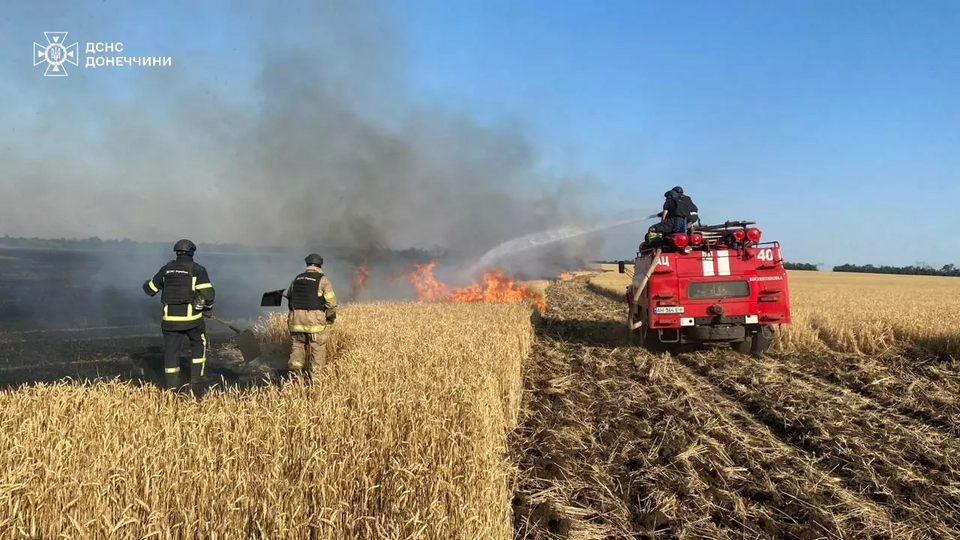
The net result is a world food system that entered 2022 with the lowest global grain stockpile since 2012 and now confronts a war that could idle one quarter of its cheapest export surplus. Farmers outside the conflict zone can theoretically expand wheat area for harvest 2023, but only if credit, fertilizer, weather and politics align, conditions that look increasingly remote as the war grinds past its fourth week and planting windows close across the northern hemisphere.