
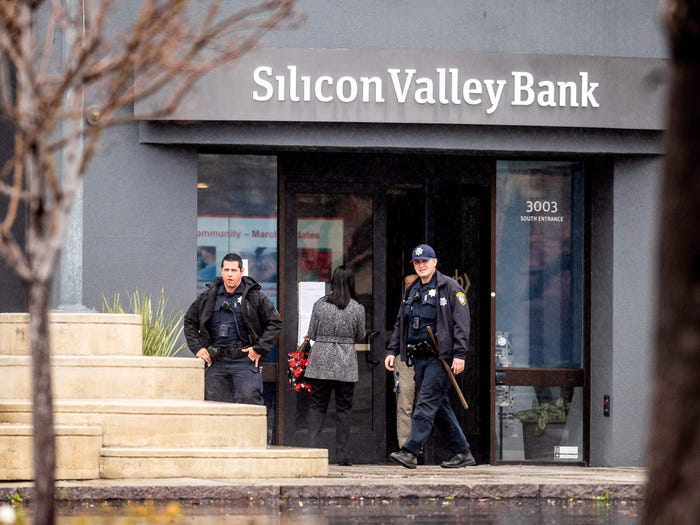
The collapse of Silicon Valley Bank (SVB) has upended the lives of entrepreneurs and employees at startups who suddenly faced uncertainty about their payroll and operations. For founders like Benedikt von Thüngen, whose healthcare startup Sanome relied on the bank, the experience was a nerve-wracking tightrope walk. “It was a tightrope,” he said, describing the difficult decision to withdraw funds from a lender he otherwise supported, driven by a fiduciary duty to protect his business.
VC Rifts Exposed by the Bank Run
The failure of Silicon Valley Bank (SVB) has exposed deep differences within the typically close-knit venture capital (VC) industry. With some investors blaming their rivals for causing a panic that led to the demise of a cherished upstart business partner. Many venture capitalists urged their companies to withdraw their cash from the ailing lender during the tumultuous early hours of the bank run on SVB. Following Friday’s events, several investors publicly criticized their sector for its part in stoking the fires.
Brad Svrluga, a seed investor, tweeted, “I’d like to officially thank my colleagues in the venture community. Whose superb leadership over the past 48 hours provoked a run on deposits at SVB. Ultimately collapsing one of the most significant institutions in our ecosystem.” There isn’t a definite agreement on whether to applaud or criticize VCs who advised founders to withdraw their funds. Some investors clearly grappled with what to do as SVB started to fall. In a tweet, Hustle Fund investor Eric Bahn urged businesses to move their money out of SVB. He later deleted the tweet and made the joke that Twitter CEO Elon Musk should shut down the website entirely. “Would be nice if @Elon Musk would stop tweeting until the banking crisis was under control,” he wrote. “So much FUD here!”
Divisions Among Investors and Politicians
VCs frequently band together. They enjoy making investments in the same businesses. Adhering to the same business trends, and even donning the same performance vests. In light of this, it is noteworthy how strongly the industry has been divided in the days since the bank run. Hemant Taneja, CEO of General Catalyst, warned over the weekend that panicking was not the appropriate response. Investors widely referred to the circumstances leading to the bank’s failure as a test for the business sector. Together, politicians from opposing parties came to the conclusion that they disliked tech millionaires. A popular anti-VC editorial was published in the political and cultural journal Slate.
Nassim Nicholas Taleb, the man who first used the phrase “black swan event,” lamented the behavior of internet investors even as others used his writings to explain the catastrophe. The VCs who advised founders to pull funds now face criticism from peers like David Sacks of Craft Ventures and others who argue the panic was self-inflicted. Hussein Kanji, a London-based investor, noted the unusual public finger-pointing within a community that typically presents a united front.
What to Watch Next
Looking ahead, the fallout from SVB’s collapse is likely to reshape how startups and their investors approach banking relationships. More scrutiny may fall on the role of social media in amplifying financial panic, as Twitter CEO Elon Musk’s platform became a flashpoint for conflicting advice. The debate over whether VCs acted responsibly—or exacerbated a crisis—will continue, with regulators and lawmakers in Washington closely monitoring the ripple effects. The industry’s ability to restore trust and cohesion, while navigating new oversight, will determine whether this episode becomes a turning point or a temporary fracture.






















 has upended the lives of entrepreneurs and employees at startups who suddenly faced uncertainty about their...)