Iran has threatened to disrupt the internet by targeting undersea internet cables in the Arabian Gulf and Red Sea, in coordination with the Houthi militia, according to intelligence reports. This potential move could endanger global communications, particularly in the Gulf region, where countries rely heavily on submarine fiber-optic networks for internet connectivity and digital services.
Background And History
The use of submarine communications cables dates back to the 1850s, when the first transatlantic telegraph cable was laid, establishing instant telecommunications links between continents. Since then, these cables have evolved to carry telephone traffic, data communications, and now, digital data, including telephone, internet, and private data traffic. Modern cables use optical fiber technology and are typically about 25 mm in diameter, weighing around 1.4 tonnes per kilometer for deep-sea sections. The first submarine communications cables were laid to carry telegraphy traffic, and by 1872, all continents except Antarctica had been linked by submarine telecommunications cables.
How It Works
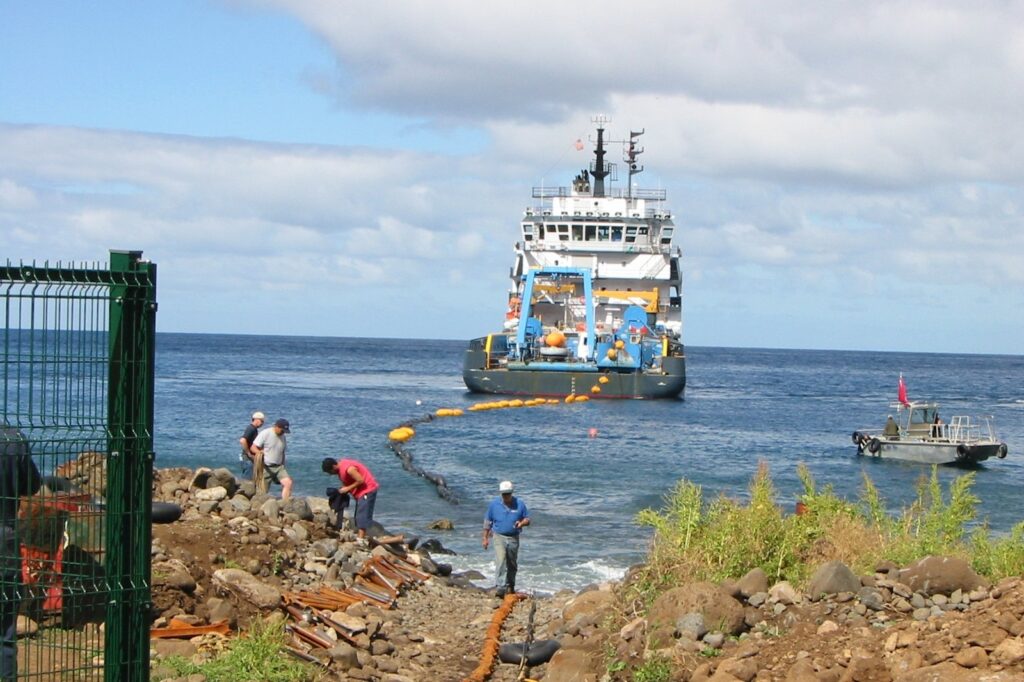
Submarine communications cables are laid on the seabed between land-based stations to carry telecommunication signals across stretches of ocean and sea. The cables are designed to withstand the harsh marine environment, with modern cables using optical fiber technology to carry digital data. The cables are typically buried or laid on the seabed, and their routes are carefully planned to avoid areas with high risk of damage, such as fishing grounds or areas with high ship traffic. However, the cables can still be damaged by accidents, fishing gear, or intentional acts of sabotage.
The Numbers
There are several undersea communications cables that pass through the Strait of Hormuz, a narrow waterway connecting the Persian Gulf with the Gulf of Oman. According to telecommunications research company TeleGeography, six undersea communications cables currently pass through the Strait of Hormuz, with three additional cables under construction. Any disruption to these cables could affect not only domestic communications but also financial transactions, cloud computing, online commerce, and other digital services throughout the region.
What It Means Now
The potential disruption of global communications by Iran and the Houthi militia has raised concerns about the vulnerability of communications infrastructure in the Gulf region. Intelligence reports warn of potential Iranian plans to target undersea internet cables in the Arabian Gulf and Red Sea, which could cause widespread disruptions in internet services, financial transactions, and digital systems. The US military has expanded its cybersecurity presence in Hawaii and set up a regional center to better detect threats and disruptions to its Pacific communications networks. However, the US has no wartime repair and restoration strategy for a campaign of simultaneous cable failures across multiple theaters.
Key Players And Repair Capabilities
The Houthi militia, backed by Iran, has been linked to unusual maritime movements of ships near undersea communications cables in the Gulf of Oman. At least four vessels linked to Iran have been observed following unusual routes and lingering above undersea communications cables, raising suspicions that they may have been mapping the infrastructure or preparing to place explosives or naval mines nearby. The repair of damaged submarine cables is a complex process that requires specialized ships and equipment. There are approximately 22 ships in the world equipped to repair subsea cables, but the repair capability depends on several factors, including access, ship location, flag, and the availability of spare cable and trained crew.
What Comes Next
Nordic research networks are planning a 10,000-kilometer Polar Connect cable from Sweden across the Arctic Ocean to Japan and North America, a route intended to provide an alternative path to the Red Sea. The planned route runs close to Svalbard, where Russia recently rehearsed disrupting cables. The US military has expanded its cybersecurity presence in Hawaii, but the US has no wartime repair and restoration strategy for a campaign of simultaneous cable failures across multiple theaters. As the situation develops, the ability to repair and restore damaged cables will be crucial in maintaining global communications. According to the source, proposals for a submarine cable landing station in Puerto Rico are due on December 7.
Sources
- Iran Threatens to Disrupt the Internet: Houthis at the Heart of a Scenario Endangering Three Continents. What's the Story? | Sabq
- Submarine communications cable
- BNamericas – Puerto Rico tenders landing station for up t…
- US beefs up Pacific cyber defences as concerns grow over risk to undersea cables
- Iran-linked ships spotted hovering over subsea internet cables after threats, report says
- Who Repairs the Internet in Wartime?
Photo: The Official CTBTO Photostream (CC BY 2.0)