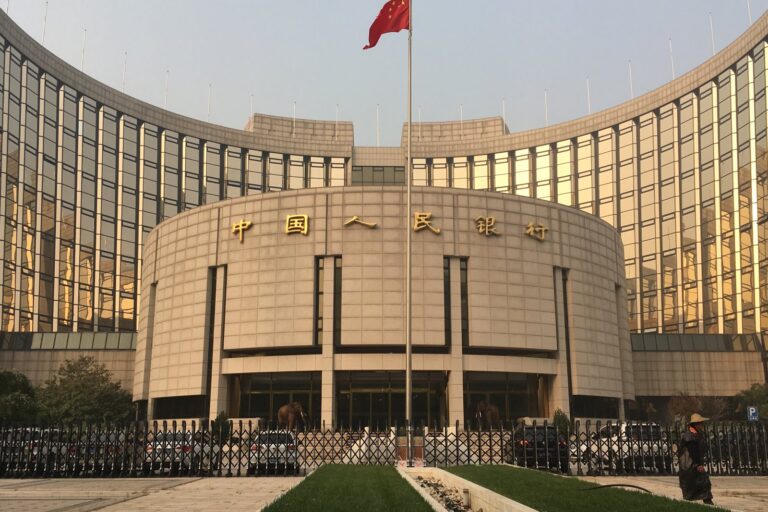
MOSCOW, November 8, 2026 — The Bank of Russia opens a legal path for retail investors to buy Bitcoin, Ethereum, and USDT starting November 17, but caps purchases at 300,000 rubles per intermediary annually. The mechanism relies on broker-level enforcement and Moscow Exchange infrastructure to police the limit, creating a technical barrier designed to contain capital flight.
The Mechanics: Intermediary Cap, Not National Limit
The regulation sets a 300,000-ruble ceiling — roughly $3,662 at the November 8 exchange rate — on what a non-qualified investor can purchase through any single licensed intermediary in a year. The catch is that the limit applies per broker, not per citizen. A retail investor with accounts at multiple brokers could theoretically exceed the cap in aggregate, according to the framework described by The Defiant. The rules cover only Bitcoin, Ethereum, and Tether’s USDT, the three largest assets by market position.
Follow the Money: Moscow Exchange as the Tracking Layer
Enforcement does not sit in the rulebook alone. Intermediaries must integrate with Moscow Exchange’s systems to monitor aggregate exposure per citizen across the regulated venue. That technical integration is the actual constraint. Without a unified registry, the per-intermediary cap is porous; with it, the exchange becomes the choke point for tracking retail flow. Moscow Exchange is targeting a December 1 rollout for its own crypto trading platform, though the date remains a target rather than a confirmed deadline. The short window between the November 17 regulatory start and the exchange’s launch creates a period where the rules are live but the central tracking infrastructure may not yet be fully operational.
Two Gates: Testing and Broker Discretion
Non-qualified investors must pass a mandatory knowledge test before accessing the market, adding a suitability screen on top of the financial cap. Qualified investors face no purchase limits under the framework. Brokerages decide how much money ultimately flows into crypto, as the regulation sets the rules but leaves enforcement execution to the intermediaries. In October, the Bank of Russia authorized Sberbank, the country’s largest bank, to provide crypto exchange services, signaling that major financial institutions will act as the primary on-ramps.
Capital Flight and the Offshore Arbitrage
The framework aims to create a controlled route into crypto while mitigating capital flight risks. The intermediary-level cap, combined with the exchange-level tracking requirement, raises the friction for moving large sums offshore. A retail investor seeking to bypass the limit would need multiple brokerage accounts, each integrated with the exchange’s monitoring system, and would need to pass the knowledge test at each. Restrictions on moving coins to private wallets — noted as a potential feature of the regulated structure — would further reduce the utility of the regulated route for capital flight. US-listed crypto stocks such as Coinbase and Strategy Inc. showed minimal reaction to the news, with Coinbase falling 1.5% and Strategy dipping 0.3% in early November trading, suggesting the market prices limited near-term impact on global liquidity.
Historical Context: A Reversal of Liberalization
The move follows a history of capital controls that eased after 2006 as confidence in the ruble improved, only to reverse sharply after the 2022 invasion of Ukraine. The Bank of Russia has since tightened the screws: hiking rates to 18% in July 2024, mandating exporter currency conversion, and closing over-the-counter currency market statistics. The crypto framework fits this pattern — a regulated pressure valve rather than an opening.
Next Steps
Moscow Exchange targets December 1 for its platform rollout. The number of licensed brokers at launch and a demand forecast have not been disclosed. The 300,000-ruble cap per intermediary takes effect November 17.
Sources
- Russia Is Opening Bitcoin and Ethereum to Retail Investors This Month. Can a 300,000-Ruble Cap Move the BTC and ETH Price?
- Central Bank of Russia
- Bank of Russia Crypto Trading Rules Start Nov. 17
- UAE Ambassador Meets with Head of the Central Bank of Russia
- Russia reinforced its forces on the left bank of the Kherson region during
- Ukraine’s Marines Cross the Dnipro—Storm Russian Positions and Gain Ground
Photo: Fitiss (CC BY-SA 3.0)