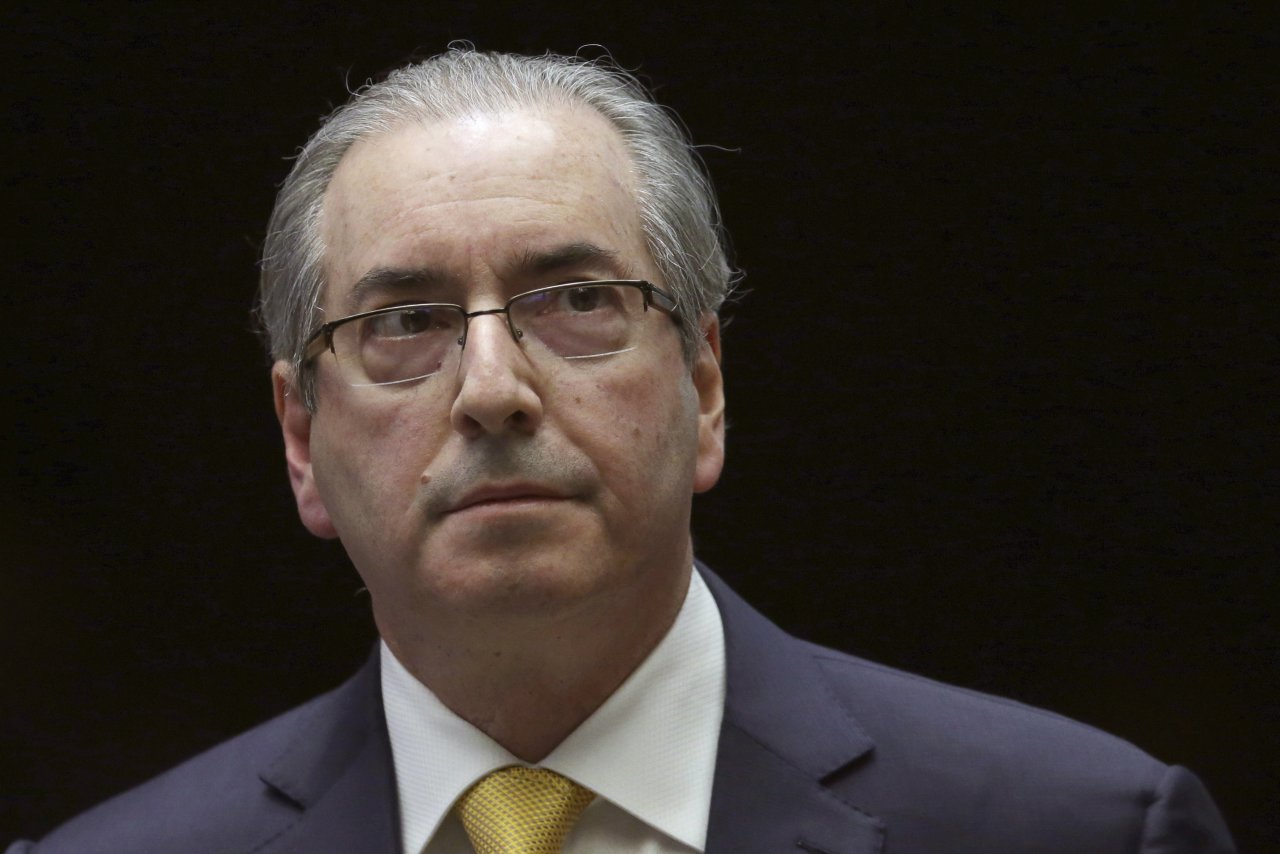
According to Portuguese Wikipedia and local-language media reports, Eduardo Cosentino da Cunha, a Brazilian economist, radio host, and politician, has been a prominent figure in the country’s politics. Currently affiliated with the Republicanos party, Cunha has held various roles, including deputado federal, a position he held from February 2003 to September 2016, when his mandate was revoked by the plenário da Câmara dos Deputados.
Cunha served as the president of the Câmara dos Deputados from February 1, 2015, until his resignation on July 7, 2016. During this period, he played a significant role in the country’s political crisis and was instrumental in initiating and conducting the impeachment process of President Dilma Rousseff. As a member of the Assembleia de Deus, Ministério de Madureira church, Cunha was also part of the evangelical bench in the Câmara. This matters for English-speaking readers because it highlights the complex and often tumultuous nature of Brazilian politics, which can have far-reaching implications for the country’s economy and international relations.
Cunha’s career in politics began when he first ran for office in 1998, becoming a substitute state deputy for Rio de Janeiro. He later assumed a position in the Assembleia Legislativa do Estado in 2001. He was elected as a federal deputy for the first time, marking the beginning of his tenure in national politics. Prior to his time as a federal deputy, Cunha held positions in various state-level roles, including president of the Telecomunicações do Rio de Janeiro (TELERJ) during the Collor government and commander of the Companhia Estadual de Habitação under Governor Anthony Garotinho. For more information on Cunha’s background and career, readers can refer to the original source (source: https://pt.wikipedia.org/wiki/Eduardo_Cunha).
As the former speaker of the Brazilian House, Cunha’s actions and decisions had significant consequences for the country’s political landscape. His involvement in the impeachment process of President Rousseff, for example, was a pivotal moment in the country’s history. Understanding the context and complexities of Brazilian politics is essential for English-speaking readers who may not be familiar with the country’s internal dynamics. By examining the careers and actions of key figures like Cunha, readers can gain a deeper understanding of the factors that shape Brazil’s politics and economy.
Cunha’s affiliation with various political parties, including the Partido da Reconstrução Nacional (PRN) and the Partido Progressista Brasileiro (PPB), also reflects the complex and often shifting nature of Brazilian politics. As a member of the evangelical bench in the Câmara, Cunha’s role highlights the significant influence of religious groups in Brazilian politics. This intersection of politics and religion is an important aspect of the country’s political landscape, and understanding its implications is crucial for readers interested in international affairs.
The conviction of Eduardo Cunha in the Lava Jato corruption probe is a significant development in the ongoing efforts to address corruption in Brazil. As a prominent figure in the country’s politics, Cunha’s case serves as a reminder of the need for transparency and accountability in government. For English-speaking readers, this story matters because it illustrates the challenges and complexities of addressing corruption in a major emerging economy. As Brazil continues to navigate its political and economic challenges, readers can expect to see further developments in the country’s ongoing efforts to address corruption and promote transparency.
As the situation continues to unfold, readers can expect to see further updates on the implications of Cunha’s conviction and the ongoing Lava Jato investigation. To stay informed, readers should watch for further developments in the Brazilian media and international news outlets, which will provide ongoing coverage of the country’s political and economic landscape. By following these developments, readers can gain a deeper understanding of the complex factors that shape Brazil’s politics and economy, and how they may impact the country’s future.