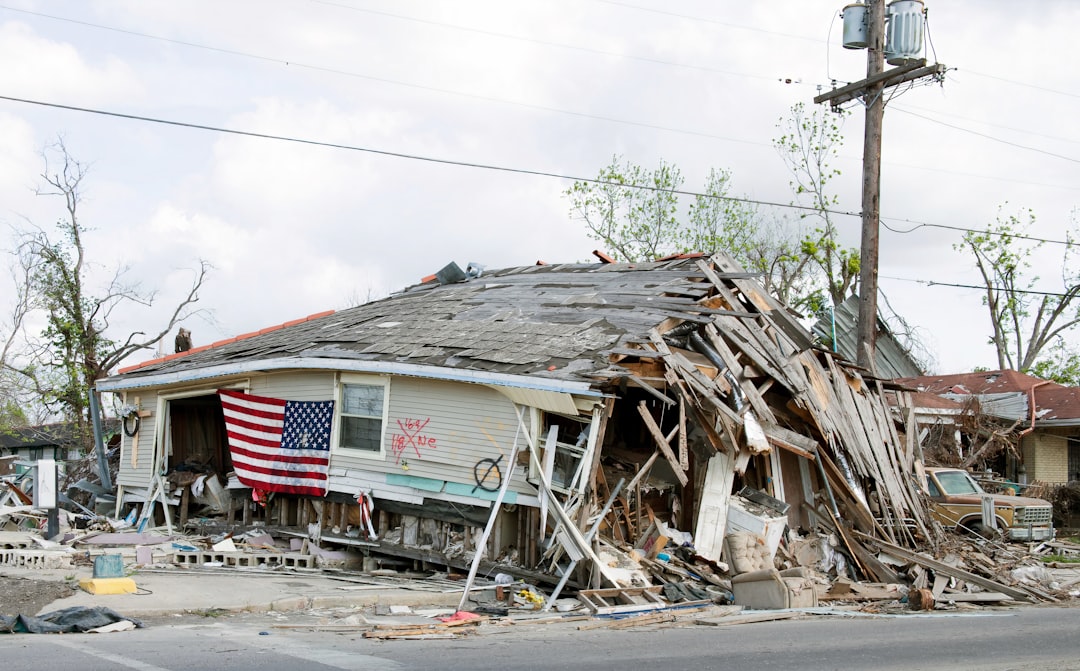
Kharkiv’s emergency crews had barely cleared the last rubble from the previous attack when the new year’s eve bombardment began. Russian drones and artillery hit the city center Sunday, wounding at least 26 people and leveling multiple residential buildings. The assault unfolded over hours, not minutes.
The wounded included people caught inside their homes and others on the street when the barrage started. Hospitals treated shrapnel wounds and blast injuries. Some victims were listed in critical condition. The Ukrainian Air Force said it intercepted 21 of 49 attack drones launched by Russian forces. That left 28 drones plus artillery fire to hit their targets. A 43 percent interception rate sounds respectable until you count the ones that got through.
Apartment blocks and private homes took direct hits. This was not an attack on a military depot or a rail yard. These were civilian structures in the center of a city far from the front lines. Kharkiv has endured repeated shelling since the full-scale invasion began. Sunday’s barrage was one of the heaviest in recent weeks.
What is at stake here is the basic assumption that cities behind the front lines offer safety. Kharkiv is not Bakhmut or Avdiivka. It is a major city in northeastern Ukraine, still under Ukrainian control, still functioning as a hub for civilians. If Russian forces can hit the city center with this frequency and this accuracy, no urban area in Ukraine is secure. The pattern is clear: Moscow is willing to strike population centers far from the fighting.
Western analysts point to Russia’s advantage in missile and drone stocks. The strategy appears to be attritional. Degrade Ukrainian morale. Damage infrastructure. Force Kyiv to spend scarce air-defense munitions on salvos that keep coming. The United States and allies have supplied Patriot batteries and other systems, but Ukraine’s government has repeatedly called for more interceptor missiles and longer-range weapons to hit launch sites.
The numbers tell a grim story. Forty-nine drones launched. Twenty-one shot down. Twenty-eight got through. Add artillery shells on top of that. The math does not favor the defender when the attacker can afford to lose more than half his ordnance and still inflict damage.
Sunday’s attack came as Ukrainian forces faced mounting pressure along multiple sectors of the front, particularly in the east and south. The bombardment of Kharkiv suggests Russia is not conserving its long-range strike capability for purely tactical targets. It is using them to hammer cities, period.
For residents, the night was relentless explosions. Emergency crews worked through the rubble. The wounded were pulled from collapsed structures. Hospitals ran triage on new year’s eve. This is the concrete reality of a war that shows no sign of ending soon.
The stakes are straightforward. If Russia can bombard Kharkiv at will, it can do the same to any Ukrainian city within range. The question is whether Ukraine’s air-defense network can be reinforced fast enough to change that calculation. The answer, so far, is no.