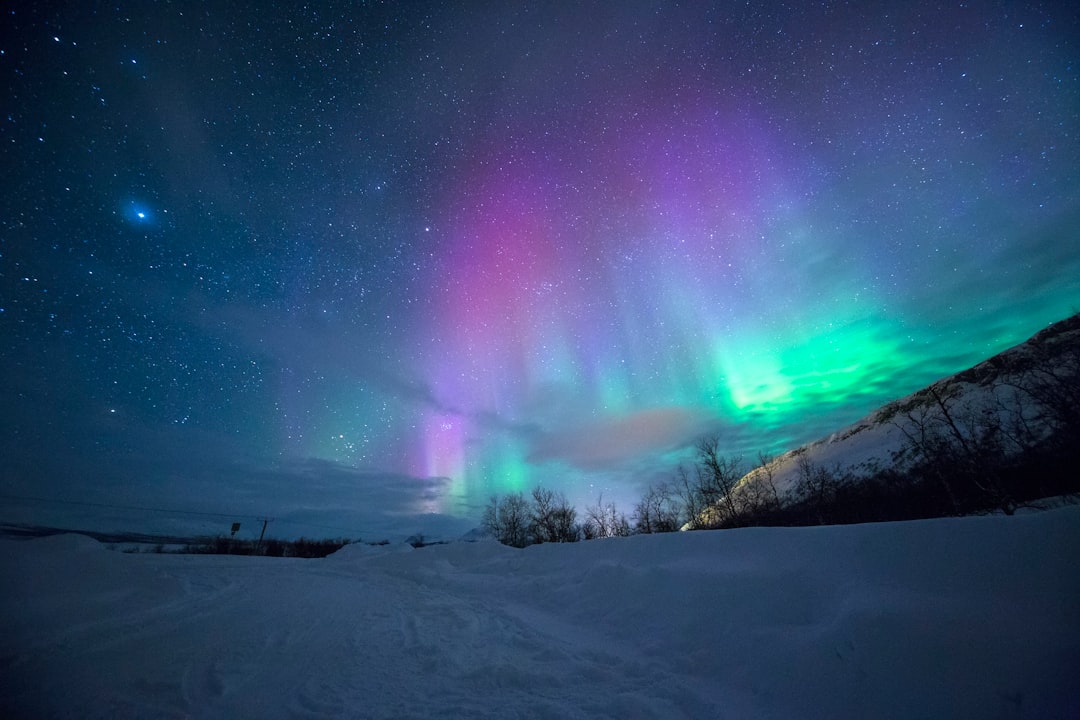
For three nights in May, the sky turned green and pink over places that had never seen such a thing. People in Texas, Florida, and southern Europe looked up at aurorae that, under normal circumstances, belong to the Arctic. The cause was a series of solar storms that struck Earth from May 10 to 13, 2024. Scientists now call it the Gannon storm. The name belongs to space physicist Jennifer Gannon, whose work on solar activity and Earth’s magnetic field gave the event its label.
The storms were the most powerful geomagnetic event since March 1989. That year, a similar storm knocked out Quebec’s power grid for nine hours. This time, the damage was less dramatic but real. Communication systems faltered. Navigation signals wavered. Airlines rerouted flights away from polar routes. Farmers using GPS-guided equipment found their tractors drifting. Emergency radio operators reported static and dead zones.
The effects are not over. The storms injected energy into the upper atmosphere. That heat causes the atmosphere to expand. Satellites in low Earth orbit feel that expansion as drag. Their orbits decay faster. Operators must burn fuel to keep them aloft. For some small satellites, the fuel budget is tight. A few may already be lost.
Power grids took a hit. Geomagnetically induced currents flow through long transmission lines. They can saturate transformers. Grid operators in northern latitudes cut voltage to protect equipment. That means less electricity moving through the system. No blackouts were reported, but the margin was thinner than many realize.
Jennifer Gannon has spent years studying how solar activity disturbs the magnetic field. Her research helped predict the intensity of this storm. But prediction only goes so far. The storm arrived fast. Forecasters had about 18 hours of warning from the time the first solar flare erupted to the moment the charged particles hit Earth. That is not enough time to shut down sensitive systems safely.
The aurorae were the visible payoff. People in Rome and Mexico City posted photos. Social media lit up. For many, it was a once-in-a-lifetime sight. But the beauty came with a cost. The same magnetic disturbances that create the lights also induce currents in pipelines. Corrosion rates accelerate. Oil and gas companies are now checking their infrastructure for damage.
This storm happened during solar cycle 25, which began in 2019. The sun is approaching its peak activity period. That peak was expected to be mild. Instead, the sun has been more active than forecast. The May 2024 storm may not be the last. More flares and coronal mass ejections are likely in the next two years.
Scientists are now reviewing data. They want to know why this storm was so strong. The solar flares that preceded it were extreme. The magnetic field of the incoming cloud of particles was oriented southward, which aligns with Earth’s field and allows maximum energy transfer. That alignment is rare. It happened here.
The event is a reminder that the same magnetic field that protects life from cosmic radiation also flexes and cracks under pressure. The field is not a static shield. It is a dynamic system. When it buckles, the effects ripple down to the ground. Airline schedules shift. Satellite orbits change. Pipelines corrode. Radios go quiet.
Jennifer Gannon’s name is now attached to this storm. But the work of understanding it belongs to many. Teams are modeling the storm’s path through the magnetosphere. They are mapping the currents that flowed through the ground. They are counting the satellites that lost altitude. The answers will shape how utilities, airlines, and space agencies prepare for the next one.