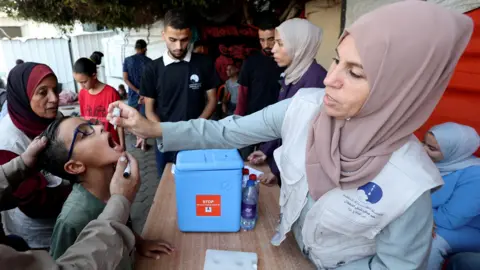
The Gaza Strip is facing a significant public health challenge with the emergence of an outbreak of circulating vaccine-derived poliovirus type 2 (cVDPV2), first discovered on July 16, 2024. This development marks a concerning turn of events, as it represents the first occurrence of poliovirus in the region in 25 years, since the virus was previously eradicated. The outbreak has been officially declared an epidemic by the Gaza health ministry, highlighting the gravity of the situation and the potential risks it poses to both the local population and neighboring countries.
The Gaza health ministry has emphasized that the epidemic presents a substantial risk to the citizens of Gaza and to those in bordering countries, underscoring the need for immediate and coordinated action to contain the outbreak. Furthermore, the ministry has characterized the outbreak as “a setback to the global polio eradication program,” indicating the broader implications of this development for international health efforts. The World Health Organization (WHO) has also weighed in on the situation, stating that it is “very likely” that polio cases are infecting citizens of Gaza and spreading among the population.
However, detecting and confirming cases of polio in the Gaza Strip is expected to be challenging due to the asymptomatic nature of the virus in most cases. Additionally, Israeli medical blockades are likely to hinder the confirmation of cases, further complicating efforts to assess the scope of the outbreak and implement effective response measures. Despite these challenges, the WHO and other international health organizations are working closely with local authorities to monitor the situation and develop strategies for mitigating the impact of the epidemic.
The emergence of this outbreak in the Gaza Strip serves as a reminder of the ongoing challenges faced by the global community in achieving the goal of polio eradication. The fact that the virus has reappeared in a region where it was previously eradicated highlights the need for sustained vigilance and cooperation among governments, health organizations, and other stakeholders. The Gaza health ministry’s declaration of the epidemic as a significant risk to the local population and neighboring countries underscores the importance of a prompt and coordinated response to the outbreak.
As the situation continues to unfold, it is essential to recognize the potential consequences of the epidemic for the health and well-being of the population in the Gaza Strip and beyond. The international community will be closely watching the developments in the coming days and weeks, with a particular focus on the efforts of the Gaza health ministry, the WHO, and other organizations to contain the outbreak and prevent further spread of the virus. The effectiveness of these efforts will depend on a range of factors, including the ability of local authorities to detect and respond to cases, as well as the level of cooperation and support provided by the international community.
Looking ahead, the key to addressing the 2024 Gaza Strip polio epidemic will lie in the ability of local and international health authorities to work together to implement effective response measures, including vaccination campaigns, surveillance, and other public health interventions. As the situation continues to evolve, it will be crucial to monitor developments closely and to be prepared to adapt response strategies as needed. The international community will be watching closely to see how the outbreak is managed and what steps are taken to prevent further spread of the virus, both within the Gaza Strip and beyond its borders.