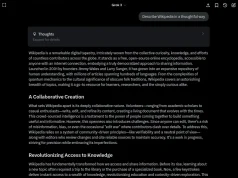
Anthropic, the American software company behind the large language model series Claude, has achieved a significant milestone with the upgrade of Claude 3.5 Sonnet. As of October 22, 2024, this advanced AI model is now capable of operating a desktop computer on its own, marking a new era in artificial intelligence development. This breakthrough is the result of Anthropic’s relentless pursuit of innovation in the field of AI, particularly in the area of constitutional AI, a technique designed to improve ethical and legal compliance in AI systems.
The introduction of computer use to Claude 3.5 Sonnet represents a substantial leap forward in the capabilities of the Claude series, which was first released as an AI chatbot in March 2023. Since then, Claude has been utilized not only in chatbot applications but also in AI-assisted software development, showcasing its versatility and potential for growth. The Claude series, including its various models such as Haiku, Sonnet, and Opus, has been at the forefront of AI research and development, with each generation building upon the successes of the previous one to offer more advanced and sophisticated language understanding and generation capabilities.
Anthropic’s approach to AI development, focusing on constitutional AI, aims to ensure that its models are aligned with human values and legal standards. This methodology has been instrumental in the development of Claude and its successive upgrades, including the latest enhancement to Claude 3.5 Sonnet. By enabling the AI to operate a desktop computer independently, Anthropic has demonstrated its commitment to pushing the boundaries of what is possible with AI, paving the way for more complex and autonomous applications in the future.
The significance of this achievement cannot be overstated, as it opens up new avenues for the application of AI in various sectors. The ability of Claude 3.5 Sonnet to use a computer on its own could lead to more efficient and automated processes in software development, customer service, and other areas where AI-assisted tools are increasingly being adopted. This development also underscores the rapid progress being made in the field of artificial intelligence, with companies like Anthropic at the vanguard of innovation, driving the technology forward with each new breakthrough.
As the AI landscape continues to evolve, advancements like the one achieved by Anthropic with Claude 3.5 Sonnet will be crucial in shaping the future of technology and its interaction with society. The potential for AI to augment human capabilities, automate tasks, and solve complex problems is vast, and developments such as this one bring us closer to realizing that potential. With Anthropic’s continued commitment to advancing AI in a responsible and ethical manner, the prospects for future innovations are promising, setting the stage for even more exciting developments in the years to come.
Looking ahead, the successful integration of AI models like Claude 3.5 Sonnet into everyday applications and systems could have a profound impact on productivity, innovation, and economic growth. As companies and researchers continue to push the boundaries of what AI can achieve, we can expect to see more sophisticated and autonomous AI systems that not only perform tasks with greater efficiency but also contribute to the creation of new industries and opportunities. The future of artificial intelligence, as demonstrated by Anthropic’s latest achievement, is one of limitless possibility and promise, where human ingenuity and technological advancement come together to create a brighter, more capable tomorrow.