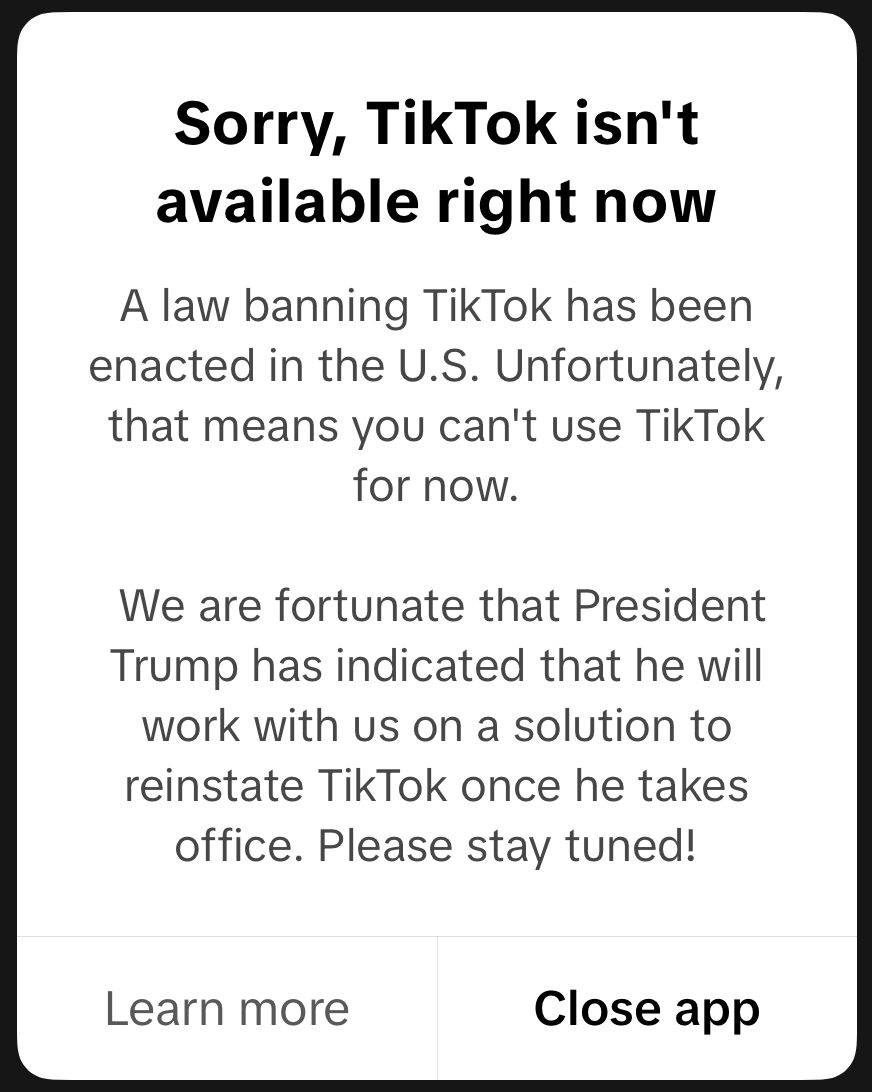
The United States government has implemented a de jure nationwide ban on the short-form video-hosting service TikTok, effective January 19, 2025, due to concerns over potential user data collection and influence operations by the government of the People’s Republic of China. This ban follows a series of events and discussions surrounding the security risks associated with the app, which is owned by the China-based company ByteDance.
Prior to the nationwide ban, various individual states, cities, universities, and government-affiliated devices had already restricted the use of TikTok. This was largely driven by concerns over the potential for data collection and the influence of the Chinese government on the app. In 2020, President Donald Trump proposed a ban on TikTok, citing it as a potential national security risk. He signed an executive order instructing ByteDance to divest from the app, but this order was blocked by a court with an injunction in September of the same year.
The Biden administration later reversed the order in 2021, but concerns over the security of TikTok continued to be raised by lawmakers and federal agencies. In 2024, the Protecting Americans from Foreign Adversary Controlled Applications Act (PAFACA) was introduced in Congress, which aimed to address these concerns. The bill was passed by Congress and signed into law by President Joe Biden, setting a deadline for ByteDance to sell the app. When ByteDance refused to meet this deadline, the ban on TikTok came into effect.
Background on the Ban
The ban on TikTok is a result of the US government’s concerns over the potential for data collection and influence operations by the Chinese government. The fact that ByteDance, the parent company of TikTok, is based in China has raised concerns about the potential for the Chinese government to access user data or use the app for influence operations. The US government has been seeking to mitigate these risks, and the ban on TikTok is the latest development in this effort.
It is worth noting that the ban on TikTok is not the first time that the app has faced scrutiny from the US government. As mentioned earlier, President Donald Trump proposed a ban on the app in 2020, and there have been ongoing discussions and debates about the security risks associated with the app. The introduction of PAFACA and the subsequent ban on TikTok represent the latest steps in the US government’s efforts to address these concerns.
Looking ahead, it will be important to watch how the situation with TikTok develops in the coming months. The ban on the app is currently in effect, but it remains to be seen how this will be enforced and what the long-term implications will be for users and the company itself. As the US government continues to grapple with the security risks associated with TikTok, it is likely that there will be further developments and updates on this issue.