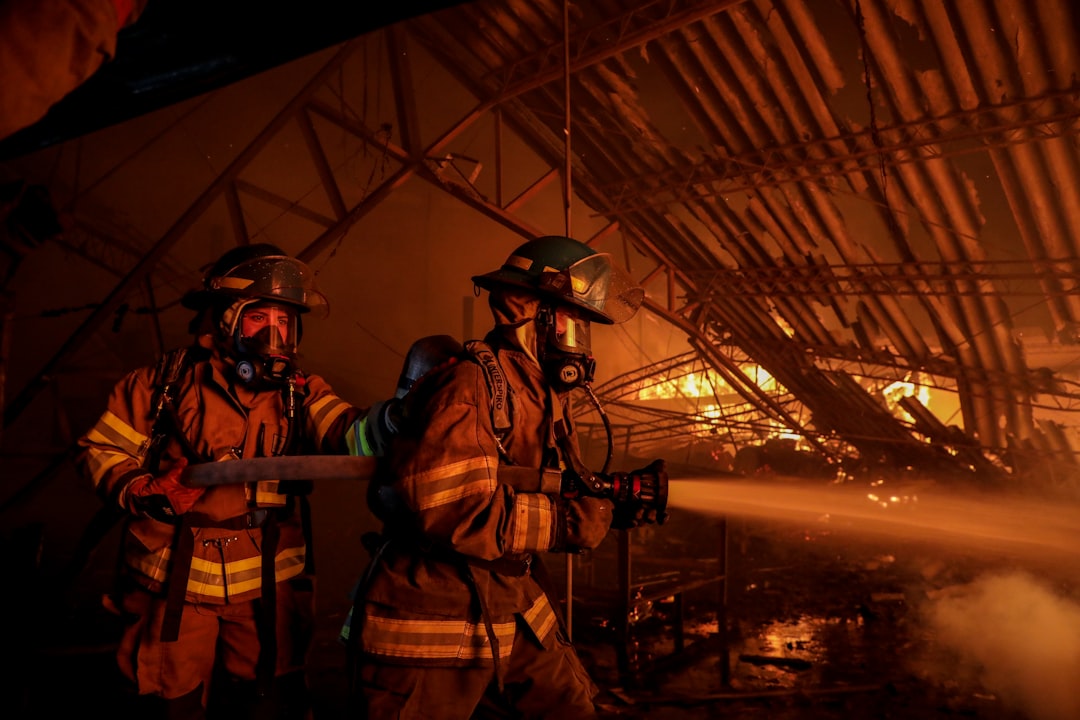
The night of February 4th bled into the early hours of February 5th before flames tore through a madrasa in Kaura Namoda, Zamfara State. At least 17 people died. The dead are students. The building was an Islamic school, a type of institution with deep roots in the Muslim world, dating back centuries. In Nigeria, these schools are common. They teach the Quran. They also teach other subjects. They serve communities that have few other options.
Now the question is not what a madrasa is. The question is what happens when one burns down.
Seventeen dead. That is the number. The report from the scene gives no names, no ages, no breakdown of who the children were. They are simply the dead. The fire happened at night, which means the students were likely asleep. A night fire in a residential school building is a specific kind of horror. It leaves little time. No one has said how the fire started. The investigation is ongoing. That is the standard phrase. It means no one knows yet, or no one is saying yet.
But the report makes something else clear. It points to safety. Working fire alarms. Sprinkler systems. Emergency evacuation procedures. These are not luxuries. They are basics. The report says the madrasa system faces challenges: limited resources, outdated infrastructure. That is a polite way of saying the buildings are not safe. If a school has no fire alarm, no sprinklers, no clear way out, then a fire is not a question of if. It is a question of when.
This is not a new problem. Fires in boarding schools, in dormitories, in places where children sleep in groups, happen with grim regularity across the world. They happen in rich countries too. But in places like Zamfara State, where resources are thin and infrastructure is old, the margin for error is razor-thin. A single spark at night, and the count goes to seventeen.
The madrasa system has a long history. It has preserved Islamic knowledge. It has educated the poor. It has given children a start when the state could not or would not. That is worth something. But the report does not shy away from the other side. It says the system faces challenges. It says the infrastructure is outdated. It says students and staff are at risk. Those are not abstract concerns. They are the direct conditions that made this fire deadly.
Prevention is the word the report uses. Prevention means fire alarms that work. Prevention means drills. Prevention means buildings that do not go up like kindling. None of that is expensive compared to the cost of seventeen lives. But in a place where the school itself is running on a shoestring, where the priority is keeping the doors open and the students fed, fire safety can fall to the bottom of the list. It falls until a fire makes it the only thing on the list.
The community in Kaura Namoda is struggling to come to terms with the loss. That is a human reaction. There is no coming to terms with seventeen children dead in a fire. There is only grief and anger and then, maybe, action. The report says attention must turn to how such incidents can be prevented. That is the only useful direction to look. Backward is just counting the dead. Forward means asking what was missing. A fire alarm. An exit. A building code enforced. A basic standard of care.
Seventeen dead. The school was a madrasa. The fire was at night. The investigation continues. The rest is a question of what happens next. Whether the alarms get installed. Whether the next school is safer. Or whether, in a few years, another report will be written about another fire in another place where children slept and did not wake up.