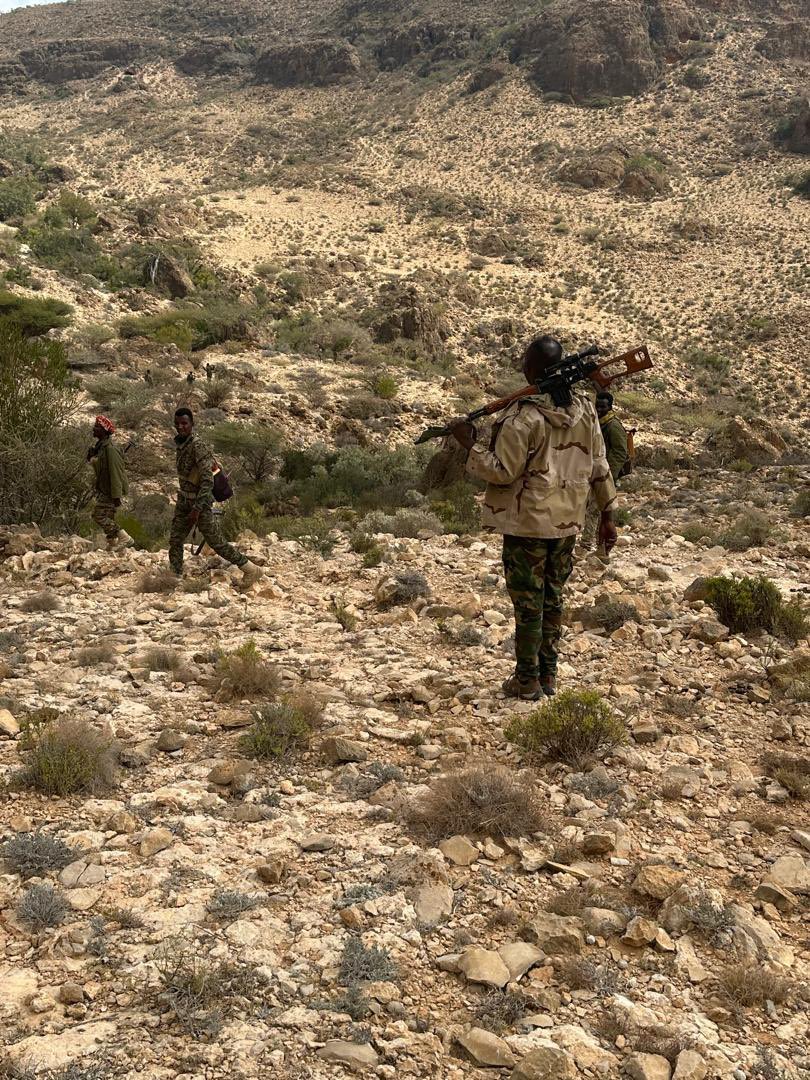
A joint airstrike conducted by the Puntland armed forces and the U.S. Africa Command has resulted in the deaths of at least three IS–Somalia fighters in the Cal Miskaad mountains of the Bari Region of Puntland, Somalia. The operation, which took place on February 23, 2025, targeted IS militants hiding in the mountainous region. This latest development is a significant blow to the Islamic State – Somalia Province (IS–SP), an affiliate of the Islamic State that has been operating in the region since 2015.
The IS–SP, also known as Abnaa ul-Calipha or the Islamic State of Somalia, first emerged in the latter half of 2015 when pro-Islamic State fighters within al-Shabaab defected and pledged allegiance to IS caliph Abu Bakr al-Baghdadi. The group has been responsible for multiple attacks across the country and is estimated to have between 500–700 fighters. Despite its relatively small size, the IS–SP has managed to capture the attention of international authorities, particularly in 2016 when it briefly seized control of the port of Qandala. The group’s ability to operate in the mountainous regions of northern Somalia has made it a challenging target for security forces.
Background and Context
The IS–SP’s operational area is largely confined to the sparsely populated regions of northern Somalia, where it has managed to maintain a small but significant presence. The group’s control of this territory has allowed it to launch attacks against civilian and military targets, causing instability and insecurity in the region. The U.S. Africa Command’s involvement in the joint airstrike is a testament to the ongoing commitment of the United States to supporting its partners in the region and combating terrorist organizations. Under the leadership of President Biden, the U.S. has continued to prioritize counter-terrorism efforts in Africa, working closely with local partners to disrupt and dismantle extremist groups.
The joint operation is also a reflection of the strong partnership between the U.S. and Puntland, a semi-autonomous region in northern Somalia. Puntland has been a key player in the fight against terrorism in the region, and its armed forces have been working closely with international partners to combat the IS–SP and other extremist groups. The success of the joint airstrike demonstrates the effectiveness of this partnership and highlights the importance of continued cooperation between the U.S. and its regional partners in the fight against terrorism.
The IS–SP’s ties to the broader Islamic State network have also raised concerns about the group’s potential to inspire and support extremist activities beyond Somalia’s borders. The group’s allegiance to the IS caliph has facilitated the flow of resources and expertise from other IS affiliates, allowing it to maintain a level of operational capability that is disproportionate to its size. As such, the disruption of the IS–SP’s activities is not only a priority for regional security but also a key component of the global effort to combat the Islamic State and its affiliates.
Looking ahead, the success of the joint airstrike is likely to be followed by continued operations against the IS–SP and other extremist groups in the region. The U.S. and its partners will need to maintain a high level of vigilance and cooperation to disrupt and dismantle these organizations, which will require a sustained commitment to counter-terrorism efforts in Africa. As the situation in Somalia continues to evolve, it is clear that the U.S. and its partners will remain engaged in the region, working to support stability and security and to combat the threat posed by extremist groups like the IS–SP.