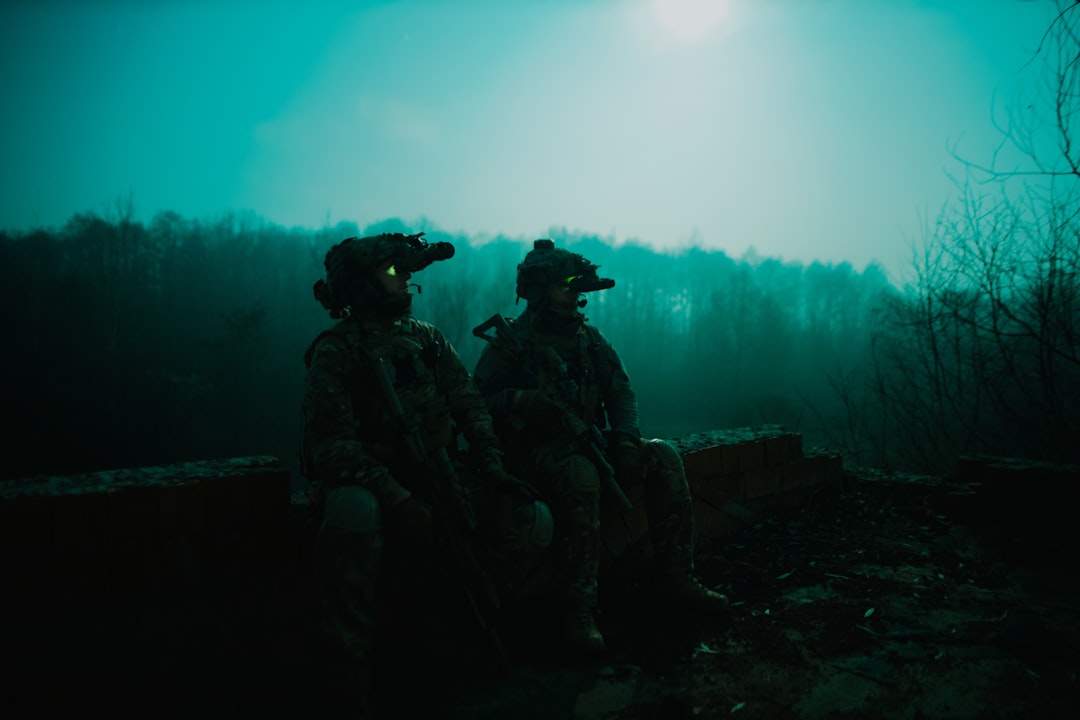
Four American soldiers are missing in a stretch of Lithuanian woodland that NATO has used for years to simulate the hardest conditions its troops might face. The disappearance happened on March 26, 2025, inside the Pabradė Training Area. Search teams are working the ground now, but the terrain is fighting them every step.
The Pabradė site sits in eastern Lithuania, not far from the border with Belarus. It is not a parade ground. It is thick forest, boggy in places, cut by streams and old Soviet-era military remnants. NATO picked it deliberately. The alliance wanted a place where soldiers could train for the kind of war that might come through the Suwałki Gap, a narrow strip of land between Belarus and the Russian exclave of Kaliningrad. That corridor is often called NATO’s most vulnerable point. If it were cut, the Baltic states would be isolated from Poland and the rest of the alliance. So troops train in Pabradė to learn how to move, fight, and survive in that kind of country.
Now that same country is the obstacle. The report on the incident says the rugged terrain and dense forests are posing significant challenges for search and rescue. Limited access to the area is slowing the operation. Lithuanian authorities are working with the U.S. military, coordinating the search. No one is speculating about what caused the disappearance. The investigation is in its early stages.
This is not the first time a training exercise has turned into a rescue mission. Military drills in remote areas carry inherent risk. Vehicles roll. Soldiers get separated. Weather turns. The Pabradė area has unpredictable conditions that can change fast. The report notes that the incident has highlighted the risks and challenges associated with military training exercises, particularly in remote and rugged areas. That is a careful way of stating something the soldiers’ families are living right now.
The four missing soldiers are part of a larger U.S. presence in Lithuania. American troops have been rotating through the Baltic region since 2014, after Russia annexed Crimea. The deployments were meant to reassure allies and deter further aggression. They are not symbolic. They are boots on the ground, running live-fire exercises, armored maneuvers, and infantry patrolling in places like Pabradė. The training is real. The risks are real.
What happens next depends on the terrain and the weather and the skill of the search teams. The report says they are working tirelessly. That is what search teams say. But the Pabradė forest is big and dense. It can swallow a person. It can swallow four. The search will continue as long as there is hope. The investigation will follow, likely reviewing the safety procedures in place at the time of the incident to see if anything could have prevented it.
For now, the focus is on finding the soldiers. The Lithuanian authorities and the U.S. military are coordinating their efforts. That coordination itself matters. In a region where NATO’s eastern flank is tested every day by Russian propaganda, cyberattacks, and the occasional incursion into allied airspace, the ability of two nations to work together on a search operation is not incidental. It is part of the same muscle the alliance is trying to keep strong.
The soldiers have names. The report does not give them. It does not say their ages, their units, their hometowns. That information will come when families have been notified. Until then, the search goes on in the Lithuanian woods, where four Americans are missing and the ground is not giving them up easily.