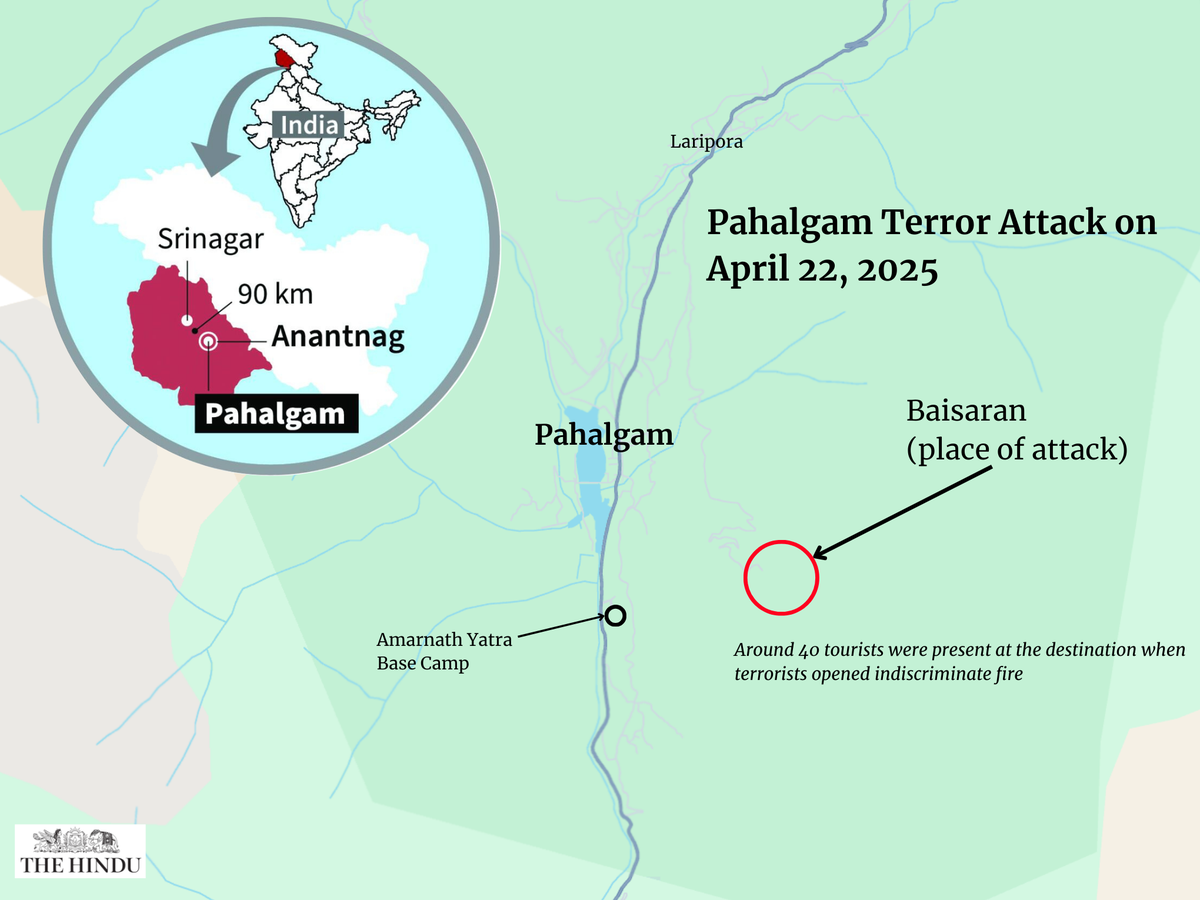
A crisis has emerged between India and Pakistan following a terrorist attack in Pahalgam on 22 April 2025, which resulted in the killing of 26 tourists by militants in Kashmir. The Resistance Front (TRF) has claimed responsibility for the attack, sparking tensions between the two countries. As the situation continues to unfold, both India and Pakistan are engaged in a war of words, with India accusing Pakistan of sponsoring the militants and Pakistan denying any involvement.
The attack has led to a significant escalation of tensions between India and Pakistan, with armed skirmishes reported along the Line of Control (LoC) starting on 24 April. The LoC is the de facto border that separates the Indian-administered Kashmir from the Pakistan-administered Kashmir. The skirmishes have raised concerns about the potential for further violence and instability in the region. India has accused Pakistan of providing support to militant groups operating in Kashmir, which Pakistan has denied.
In response to the attack, India has taken several measures, including expelling Pakistani diplomats and recalling its diplomatic staff from Pakistan. India has also cut off visa services for Pakistani citizens and suspended the Indus Waters Treaty, which governs the sharing of water resources between the two countries. These measures are seen as an attempt by India to pressure Pakistan into taking action against militant groups operating on its soil.
Pakistan has responded to India’s measures by imposing trade restrictions and closing its airspace to Indian flights. Pakistan has also denied any involvement in the Pahalgam attack and has stated that it is willing to cooperate with an international inquiry into the incident. The denial of involvement and the offer to cooperate with an inquiry are seen as an attempt by Pakistan to deflect criticism and avoid further escalation of tensions.
The international community is watching the situation closely, with concerns about the potential for further violence and instability in the region. The crisis has highlighted the long-standing tensions between India and Pakistan, which have been exacerbated by the dispute over Kashmir. As the situation continues to unfold, it remains to be seen how the two countries will resolve their differences and whether the crisis will escalate further.
As the situation develops, it is likely that there will be further diplomatic efforts to resolve the crisis. The international community may play a role in facilitating talks between India and Pakistan, and there may be pressure on both countries to take steps to reduce tensions. In the coming days and weeks, it will be important to watch for any further escalation of violence, as well as any signs of a willingness to negotiate and find a peaceful resolution to the crisis. The ability of India and Pakistan to find a way out of the crisis will depend on their ability to address the underlying issues that have led to the current situation, including the dispute over Kashmir and the issue of militant groups operating in the region.