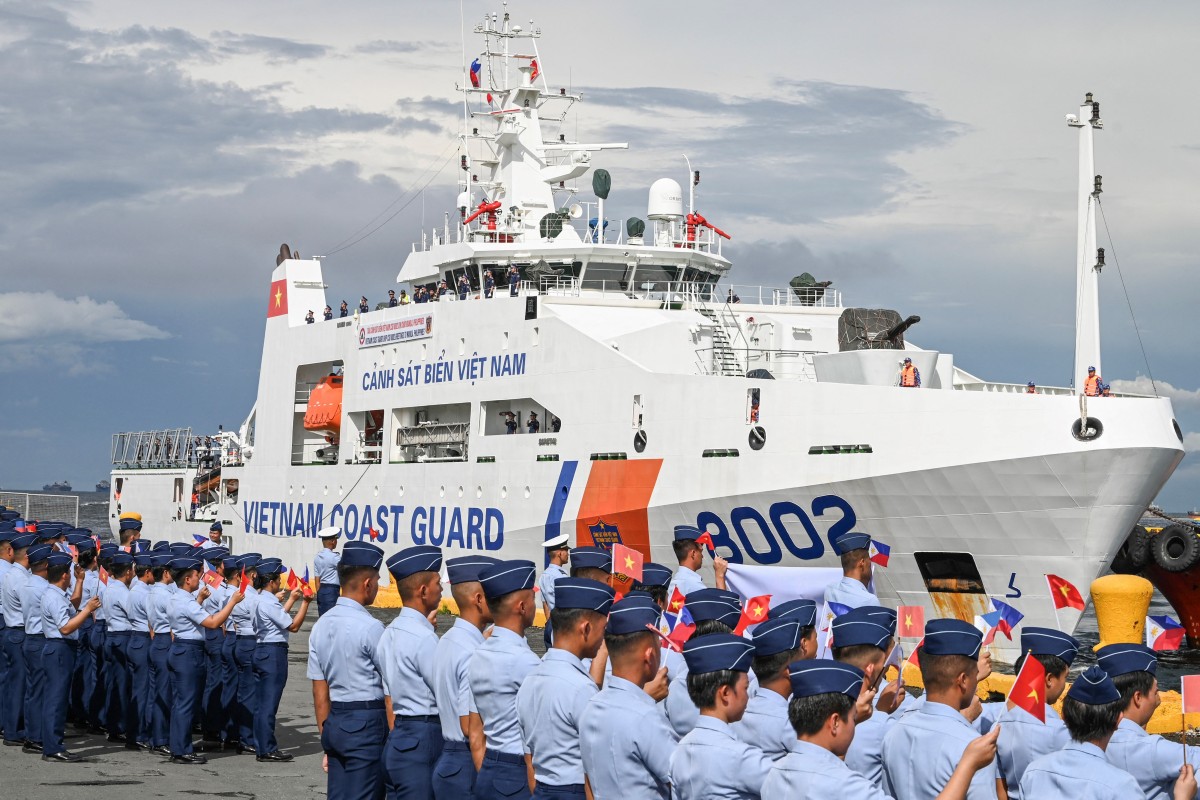
Vietnam and the Philippines agreed on 30 August 2024 to deepen coast-guard cooperation in the South China Sea, signing a memorandum that expands joint patrols, intelligence sharing and joint exercises in waters where Chinese vessels routinely harass their supply ships. The deal, sealed in Hanoi by Philippine President Ferdinand Marcos Jr. and Vietnamese Prime Minister Phạm Minh Chính, comes days after Beijing’s latest water-cannon attack on a Philippine resupply mission at Second Thomas Shoal and marks the most concrete step yet by two of the region’s most vocal claimants to pool resources against China’s expanding presence.
A wary handshake on the Perfume River
Marcos arrived in the Vietnamese capital on Thursday morning for a 24-hour visit that diplomats say was arranged in haste after Chinese coast-guard ships rammed and sprayed a Philippine military-chartered boat on 19 August, injuring three sailors. The new accord allows “combined maritime activities” up to 24 nautical miles off each country’s coastline, a zone that overlaps China’s sweeping “nine-dash line”. Philippine Coast Guard spokesperson Commodore Jay Tarriela told reporters the text “removes the red tape that used to require foreign-ministry clearance every time we wanted to train with Vietnamese counterparts”. Hanoi’s deputy foreign minister, Đỗ Hùng Việt, said the agreement “reflects our shared view that unilateral actions must be answered with coordinated presence”.
Both governments stopped short of invoking mutual-defence language, but officials privately say the wording creates a mechanism for rapid response if either side comes under attack. Western military attachés note that Vietnam has never before signed such an arrangement with a fellow South-East Asian claimant, preferring quiet diplomacy and fishing-boat militias to overt alliances.
Why the Philippines pushed first
Manila’s calculus shifted after China deployed a 200-strong maritime militia swarm at Sabina Shoal, 140 km west of Palawan, in mid-August. Philippine navy chief Vice-Admiral Toribio Adaci told state television the shoal “could become another artificial island if no one is watching”. The Philippines already maintains a rusting World War II-era transport ship at Second Thomas Shoal as a makeshift garrison; keeping it supplied has become a weekly game of cat-and-mouse. With only two modern coast-guard cutters capable of sailing beyond 12 nautical miles, Manila needs partners who can rotate ships into the disputed zone.
Vietnam, which has roughly 50 large patrol vessels built with Japanese and Dutch loans, emerged as the obvious choice. “We share the same legal position, both our exclusive economic zones are invalidated by China’s nine-dash line,” Philippine Foreign Secretary Enrique Manalo said on the sidelines of the Hanoi ceremony. Analysts in Manila say Marcos also wants to show domestic audiences that he can build coalitions without waiting for the United States, whose mutual-defence treaty with the Philippines remains politically sensitive.
Vietnam’s delicate balancing act
Hanoi’s leadership faces a tighterrope. The Communist Party remains officially committed to a “four-no” policy, no alliances, no foreign bases, no siding with one country against another, and no use of force. Yet Chinese survey ships have spent a record 310 days inside Vietnam’s claimed EEZ this year, according to the Hanoi-based South China Sea Chronicle Initiative. Oil exploration contracted to Spanish firm Repsol was suspended again in July after Chinese coast-guard vessels blocked a drilling rig, costing Vietnam an estimated US$200 million in lost revenue.
Prime Minister Chính publicly framed the new accord as “coast-guard cooperation, not military alignment”, language aimed at mollifying Beijing and party hard-liners who still see China as an ideological big brother. Privately, Vietnamese officials say the deal keeps the Philippines at arm’s length from Washington’s Indo-Pacific strategy while giving Hanoi a second pair of eyes across the Spratly archipelago. Western diplomats note that Vietnam quietly approved a Japanese radar facility on Ly Son island last year; the Philippine link adds another layer of surveillance without overt security treaties.
Beijing’s predictable fury
China’s foreign ministry spokesman Lin Jian reacted within hours, warning that “any bilateral arrangements that include Chinese waters are invalid and will only complicate the situation”. The embassy in Manila released a separate statement accusing Manila of “stoking confrontation”. Chinese state media revived accusations that the Philippines is turning South-East Asia into “NATO’s lake”, a narrative that plays well with nationalist audiences at home.
Shipping data analysed by the Washington-based Center for Strategic and International Studies show that China has kept at least 14 coast-guard ships and 86 militia vessels near Philippine-held features since the 19 August clash, the largest such deployment since 2012. Western officials interpret the buildup as punishment for Manila’s outreach to Vietnam and a signal to other ASEAN states that bilateral cooperation carries costs.
What changes on the water
Starting in October, Philippine and Vietnamese coast-guard cutters will stage fortnightly joint patrols from Vung Tau to Palawan, covering the contested Union Banks and London Reefs. A joint hotline will connect commanders in Manila and Danang, and both sides will swap Automatic Identification System data to track Chinese militia ships that often spoof transponders. The first combined exercise, scheduled for early November, will simulate a medical evacuation after a ramming incident, precisely the scenario that unfolded at Second Thomas Shoal.
Neither country plans to invite the United States or Japan as observers, but Western officials say intelligence shared under existing separate agreements will almost certainly flow into Manila’s new centre for maritime awareness, funded by Canberra and Washington. Vietnam’s coast guard will also gain access to the Philippines’ long-range camera drones donated by Japan, extending its surveillance reach by 300 km.
The test will come when Chinese vessels block a resupply mission under the noses of a joint Philippine-Vietnamese patrol. If Hanoi’s ships hold the line alongside Manila, the accord could evolve into the region’s first non-US mini-alliance. If they hang back, China will have proved that divide-and-rule still works.