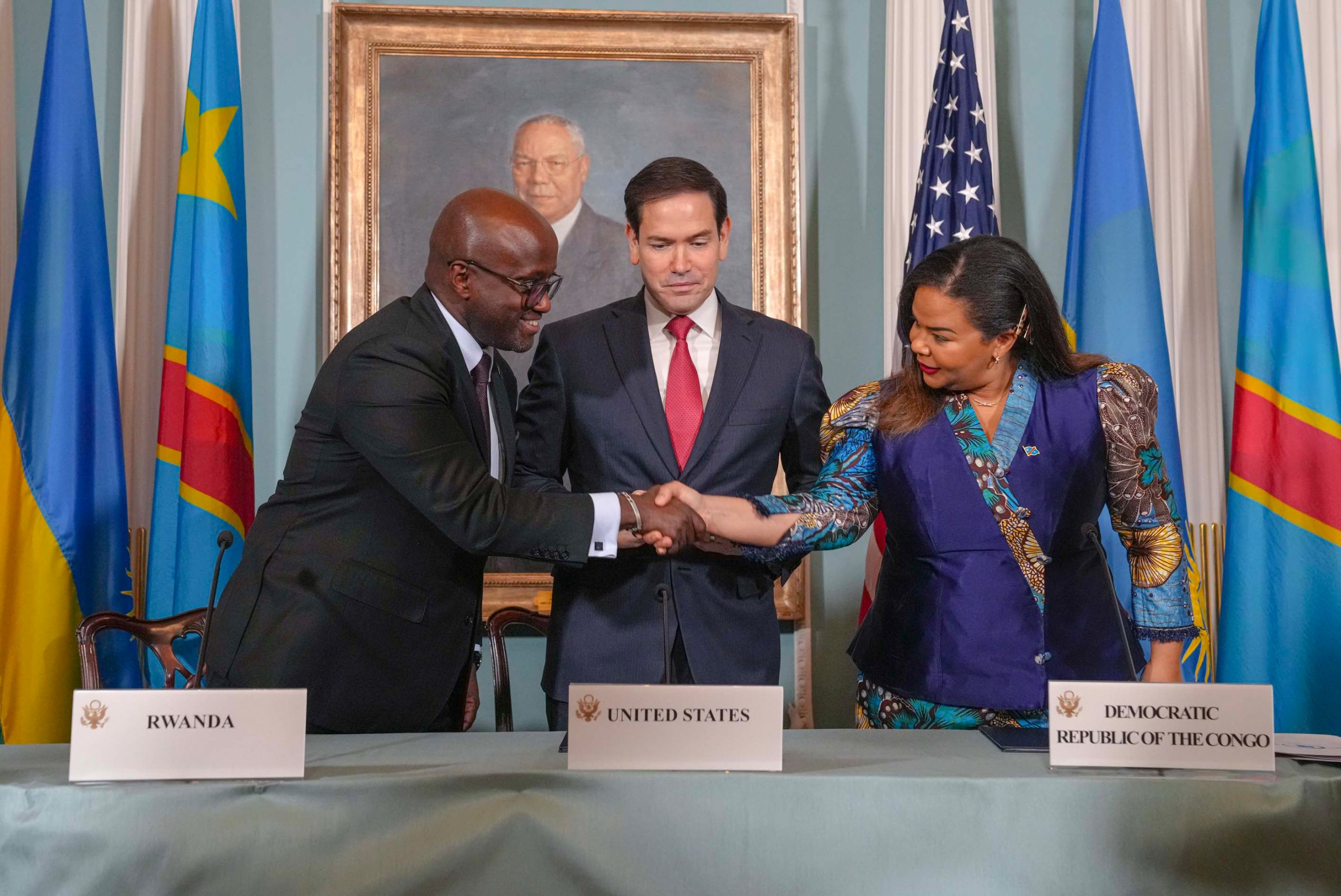
The Democratic Republic of the Congo and Rwanda took a significant step towards peace on June 27, 2025, as their foreign ministers signed the Washington Accords for Peace and Prosperity in Washington, D.C. The agreement, mediated by the United States and Qatar, aims to end the conflict between the two countries by addressing key issues such as the withdrawal of Rwandan troops from eastern DRC and the Congolese government’s support for the Democratic Forces for the Liberation of Rwanda (FDLR) militia. U.S. Secretary of State Marco Rubio oversaw the ceremony, marking a major diplomatic achievement for the United States.
The Washington Accords outline a clear path forward for the two countries, with the withdrawal of Rwandan troops from eastern DRC and the Congolese government’s commitment to end its support for the FDLR militia. This agreement has the potential to bring stability to the region and pave the way for economic cooperation. The accord also sets up a regional economic integration framework between the two countries, based on the critical minerals trade, which will involve the United States. This framework could have significant benefits for the economies of both countries and demonstrate the United States’ commitment to promoting economic development in the region.
Thérèse Kayikwamba Wagner, the foreign minister of the DRC, and Olivier Nduhungirehe, the foreign minister of Rwanda, signed the agreement on behalf of their respective countries. Their signatures mark the culmination of negotiations between the two countries, facilitated by the United States and Qatar. The involvement of the United States in these negotiations highlights the country’s ongoing commitment to promoting peace and stability in the region. The U.S. has a long history of engagement in African affairs, and this agreement demonstrates the current administration’s focus on diplomatic efforts to resolve conflicts.
One notable aspect of the agreement is the absence of the March 23 Movement (M23), a Rwandan-backed rebel group operating in eastern DRC. The M23 was not a party to the agreement and is currently engaged in separate negotiations with the Congolese government in Doha. This development suggests that the road to lasting peace in the region may still be complex and challenging. However, the Washington Accords provide a foundation for future negotiations and demonstrate the willingness of the DRC and Rwanda to work towards a peaceful resolution.
The United States’ role in mediating the agreement cannot be overstated. As a global leader, the U.S. has consistently demonstrated its ability to bring parties together and facilitate diplomatic solutions to complex conflicts. The involvement of Secretary of State Marco Rubio in the signing ceremony underscores the importance the U.S. places on this agreement and its commitment to the region’s stability. The U.S. has a strong track record of promoting peace and prosperity in Africa, and this agreement is the latest example of that effort.
As the agreement goes into effect, it will be essential to monitor its implementation and ensure that both parties uphold their commitments. The United States, along with Qatar, will likely play a crucial role in supporting the agreement and facilitating further negotiations. Looking ahead, it will be important to watch how the M23 negotiations in Doha progress and whether the Washington Accords can provide a foundation for a broader regional peace. With the agreement in place, the international community will be watching closely to see how the DRC and Rwanda work towards a more stable and prosperous future.
The days and weeks ahead will be critical in determining the success of the Washington Accords. As the DRC and Rwanda begin to implement the agreement, there will undoubtedly be challenges to overcome. However, with the support of the United States and the international community, there is a real opportunity for lasting peace and prosperity in the region. The signing of the Washington Accords on June 27, 2025, marks a significant step forward, and it will be exciting to see how this development unfolds in the coming months.