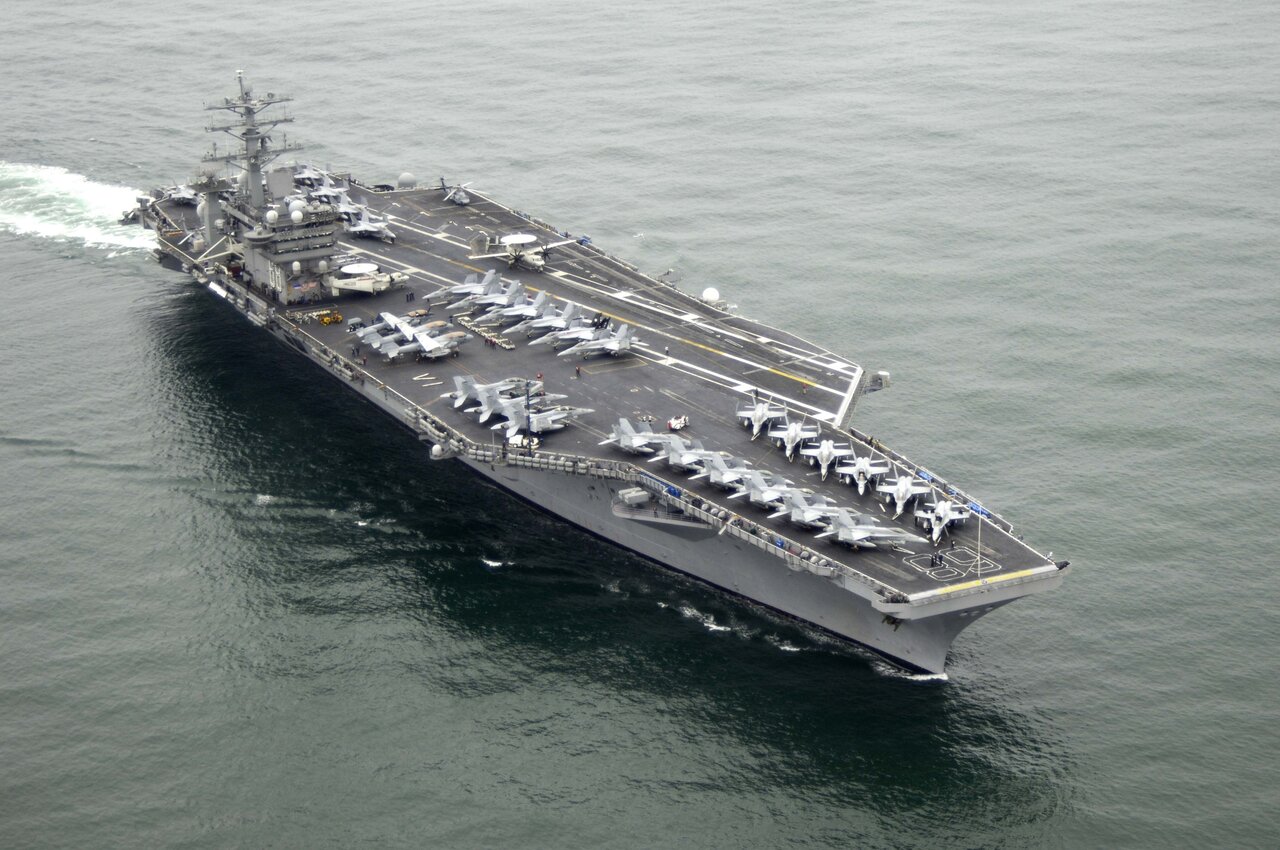
A dramatic sequence of events unfolded in the South China Sea on October 26, 2025, as two United States Navy aircraft, an MH-60R Seahawk helicopter and an F/A-18F Super Hornet fighter jet, crashed in separate incidents while operating off the USS Nimitz aircraft carrier. Fortunately, all crew members from both aircraft were rescued, averting a potential tragedy. The incidents serve as a stark reminder of the risks and complexities involved in naval aviation operations.
The USS Nimitz, a formidable nuclear-powered aircraft carrier, has been a cornerstone of the United States’ naval presence in the Asia-Pacific region. As a key component of the Navy’s Pacific Fleet, the USS Nimitz is equipped with a range of advanced aircraft, including the F/A-18F Super Hornet and the MH-60R Seahawk. The F/A-18F is a multi-role fighter jet, capable of performing a variety of tasks, from air-to-air combat to reconnaissance and ground attack missions. In contrast, the MH-60R Seahawk is a versatile helicopter, used for anti-submarine warfare, search and rescue, and other specialized operations.
While the cause of the crashes is currently unknown, the United States Navy has launched an investigation into the incidents. The Navy’s commitment to safety and its rigorous maintenance protocols are well-documented, and it is likely that the investigation will scrutinize every aspect of the aircraft’s operation, from pre-flight checks to the actual incidents themselves. As the investigation unfolds, it will be crucial to determine whether the crashes were the result of human error, mechanical failure, or other factors. The Navy’s transparency and accountability in this matter will be closely watched, as the safety of its personnel and the integrity of its operations are of paramount importance.
The rescue of all crew members from both aircraft is a testament to the bravery and professionalism of the USS Nimitz’s crew and the Navy’s search and rescue teams. The successful rescue operation demonstrates the effectiveness of the Navy’s emergency response protocols and the skill of its personnel in responding to critical situations. As the world’s navies continue to operate in an increasingly complex and dynamic environment, the importance of effective search and rescue capabilities cannot be overstated. The ability to respond quickly and effectively in emergency situations is essential for saving lives and preventing further tragedy.
Environmental Considerations
The incidents in the South China Sea also highlight the importance of responsible and sustainable military operations. As the world’s navies continue to operate in sensitive and often fragile ecosystems, it is essential that they prioritize environmental protection and minimize their ecological footprint. The use of renewable energy sources, such as solar and wind power, can help reduce the Navy’s reliance on fossil fuels and decrease its environmental impact. By investing in renewable energy and adopting more sustainable practices, the Navy can help protect the planet’s natural resources and preserve its beauty for future generations.
Looking to the future, the United States Navy and other naval forces must continue to prioritize safety, sustainability, and environmental responsibility. As the demand for energy security and cost-effective solutions grows, the Navy’s adoption of renewable energy sources and reduction of waste will become increasingly important. By embracing these challenges and opportunities, the Navy can help create a cleaner, more sustainable future for all. The incidents in the South China Sea serve as a reminder of the complexities and risks involved in naval operations, but they also underscore the importance of responsible and sustainable military practices in preserving our planet’s natural beauty and resources.