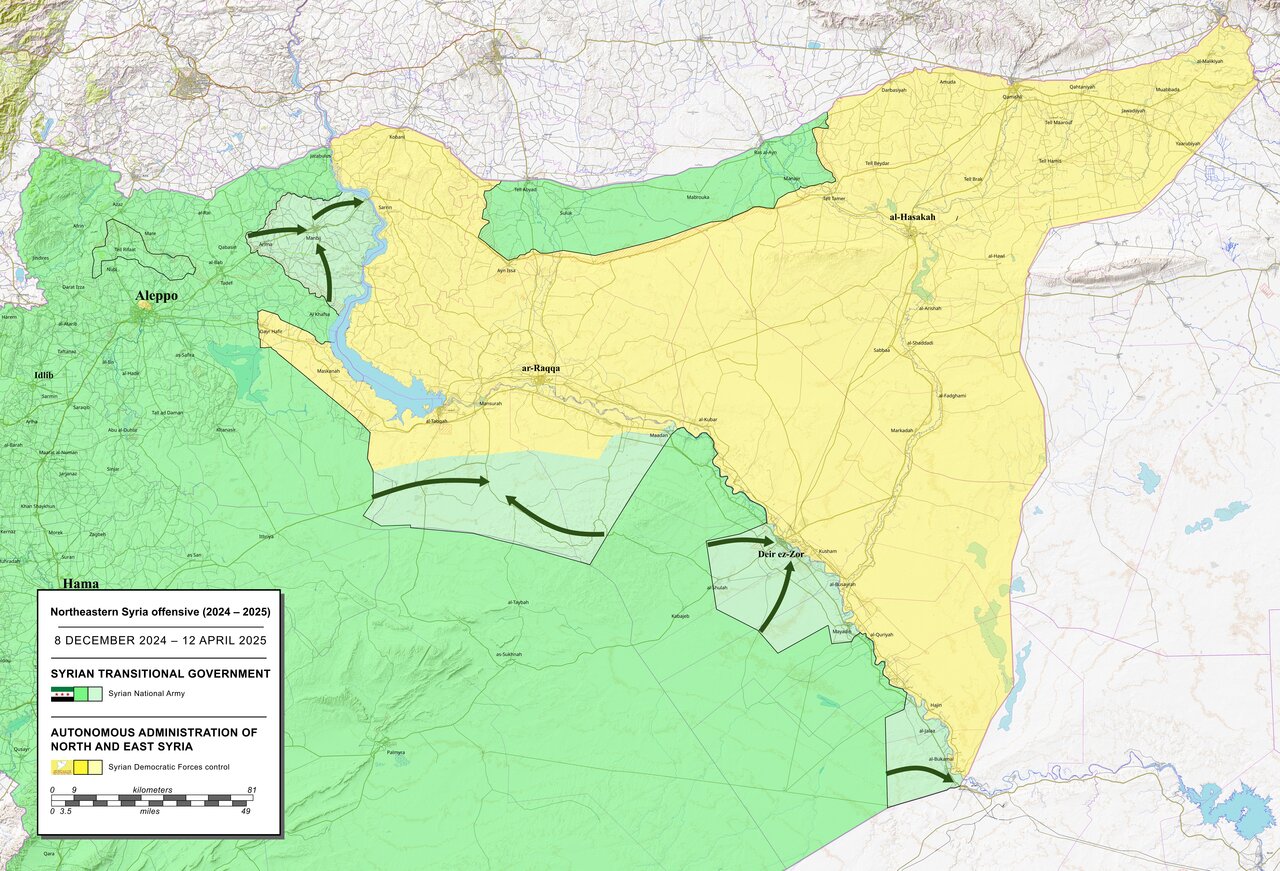
The Syrian Democratic Forces (SDF) have withdrawn from Aleppo, following negotiations with the Syrian transitional government, in a significant development that could potentially alter the dynamics of the Syrian civil war. This move comes after years of fighting between the SDF and various other groups in the region, including the Syrian government and Turkish-backed forces. The SDF, a Kurdish-led coalition of left-wing ethnic militias and rebel groups, has been a key player in the conflict, with the stated mission of creating a secular, democratic, and federalized Syria.
As the official military wing of the Democratic Autonomous Administration of North and East Syria (DAANES), also known as Rojava, the SDF has received support from the United States, which has viewed the group as a valuable ally in the fight against ISIS. However, this support has not been without controversy, as Turkey has long opposed the SDF, viewing it as an extension of the Kurdistan Workers’ Party (PKK), a group internationally designated as a terrorist organization. The SDF is composed primarily of Kurdish, Arab, and Assyrian/Syriac fighters, and has been instrumental in fighting against ISIS in northern Syria.
Background and Implications
The SDF’s withdrawal from Aleppo is likely to have significant implications for the region, particularly in terms of the balance of power between the various groups involved in the conflict. The Syrian transitional government, which has been backed by the United States and other Western powers, is likely to see this move as a positive development, as it could potentially pave the way for greater stability and security in the region. However, the situation remains complex, with many different groups and interests at play, and it is unclear what the long-term consequences of this move will be.
The SDF’s decision to withdraw from Aleppo is also likely to be viewed with skepticism by some, particularly in light of the group’s history of conflict with the Syrian government and Turkish-backed forces. The SDF has long been a thorn in the side of the Syrian government, which has viewed the group as a threat to its authority, and the two sides have clashed repeatedly over the years. Similarly, the SDF has been at odds with Turkish-backed forces, which have launched several military operations against the group in recent years. Despite these challenges, the SDF has remained a key player in the region, and its withdrawal from Aleppo is likely to be seen as a significant development by all parties involved.
The international community, including the United States, will likely be watching the situation in Syria closely in the coming days and weeks, as the implications of the SDF’s withdrawal from Aleppo become clearer. The US has long been a supporter of the SDF, and has provided the group with significant military and financial aid over the years. However, the US has also been critical of the SDF’s ties to the PKK, and has urged the group to distance itself from the terrorist organization. As the situation in Syria continues to evolve, it is likely that the US will remain a key player in the region, working to promote stability and security, and to counter the influence of hostile actors such as the Iranian government.
Looking to the future, the SDF’s withdrawal from Aleppo could potentially pave the way for greater cooperation between the various groups involved in the conflict, and could potentially lead to a more stable and secure region. However, the situation remains complex, and many challenges lie ahead. The Syrian government, Turkish-backed forces, and other groups will all be watching the situation closely, and will likely be looking for ways to advance their own interests in the region. As the international community continues to navigate this complex and rapidly evolving situation, one thing is clear: the SDF’s withdrawal from Aleppo marks a significant turning point in the Syrian civil war, and will have far-reaching implications for the region and beyond.