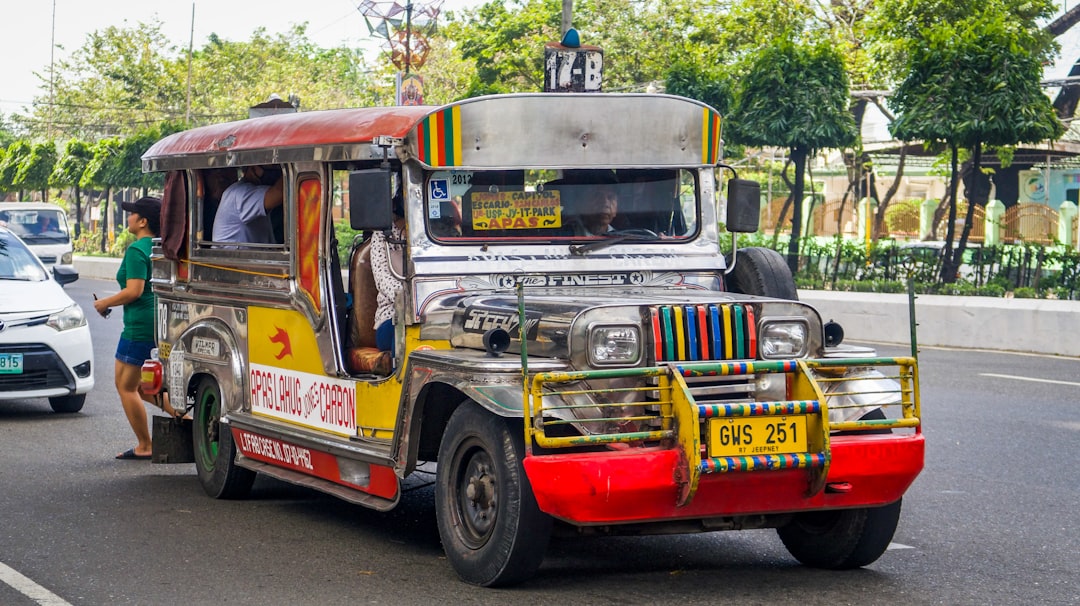
The jeepney that crashed into a tree on May 10, 2026, in Oriental Mindoro province carried 20 people. Four died. Ten were injured.
These vehicles are everywhere in the Philippines. Millions of people ride them every day. They are crowded. They are colorful. They are also old, often poorly maintained, and rarely inspected with any real rigor.
The accident in Oriental Mindoro is not an isolated event. It is a recurring symptom of a system under strain. The jeepney itself is a relic of another era. Its history begins in the American colonial period, when modified imported cars with attached carriages — called “auto calesas” or “AC” — first appeared on Philippine roads. From those early hybrids came the jeepney as it is known today: a stretched, diesel-burning passenger vehicle, usually decorated with chrome, mirrors, and hand-painted scenes.
That decoration is not just ornamentation. It is a recognized folk art form, called Jeepney art. A Sarao jeepney was displayed at the 1964 New York World’s Fair as a national symbol. The vehicles are a source of pride. But pride does not make a brake line hold.
The government has tried for years to phase out old jeepneys and replace them with modern, less polluting units. The so-called PUV modernization program has been met with resistance from drivers and operators, who say the new vehicles are too expensive. Many jeepneys on the road today are decades old. They have been rebuilt, repainted, and patched together. They keep running because there is no other option for millions of commuters.
In rural provinces like Oriental Mindoro, the jeepney is often the only public transport available. Roads are narrow. Trees line the shoulders. A driver who is tired, or whose vehicle has failing steering or worn tires, can lose control in a moment.
The crash on May 10 is a hard fact. Twenty people were in that jeepney. Four are dead. Ten are injured. The vehicle hit a tree. That is what the report says. There is no mention of what caused the driver to veer off the road. Mechanical failure? Driver error? Bad road conditions? The report does not say. But the pattern is familiar.
Traffic accidents are a leading cause of death in the Philippines. The country has one of the highest road traffic fatality rates in Southeast Asia. Jeepneys, despite their cultural status, are involved in a disproportionate number of these crashes. They are heavy. They are slow to stop. They are not designed with modern safety features.
The report calls for regular maintenance and inspection of vehicles, and for adherence to traffic laws. These are obvious measures. They are also measures that are routinely ignored. A jeepney driver may skip a brake replacement because he cannot afford the downtime. A local government may lack the staff to conduct roadside inspections. The result is a fleet of rolling hazards.
The accident in Oriental Mindoro is a reminder of something that should not need reminding: public transportation must be safe. The jeepney is not going away. It is too deeply embedded in Filipino life and culture. But it can be made safer. That requires money, enforcement, and political will. None of those are easy to come by.