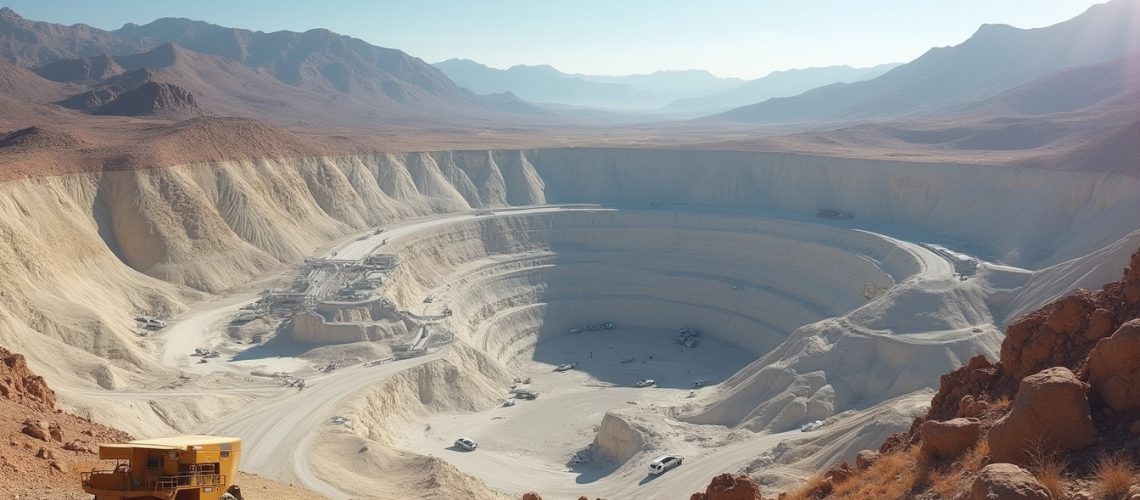
The Jadar mining project, a proposed mining site to be operated by Rio Tinto in western Serbia, has been a subject of interest and controversy in recent years. The deposit, discovered in 2004, is one of the largest lithium deposits in the world and also contains boron, with reserves amounting to 118 million tonnes of ore grading 1.8% lithium oxide. The mine, located in Mačva District, has the potential to supply a significant portion of Europe’s lithium needs, but its development has been hindered by environmental concerns and protests.
The Jadar mine is unique in that it contains the mineral jadarite, the only occurrence of this mineral in the world. The planned operation would recover both lithium and boron from the ore, making it a significant project for Rio Tinto and the global mining industry. However, the project’s potential environmental impact has been a major point of contention, leading to large-scale protests in Serbia and prompting the government to revoke licences for the project in January 2022.
In January 2024, Serbian President Aleksandar Vučić stated that the government wants to hold further talks with Rio Tinto and that there should be more public discussion over whether the project should go ahead. This announcement marked a potential shift in the project’s trajectory, as the government seeks to balance the economic benefits of the mine with the environmental and social concerns of local communities. The project’s potential to supply 90% of Europe’s current lithium needs and establish Rio Tinto as a leading lithium producer makes it an important consideration for the region’s energy and economic future.
The Jadar project has been the subject of renewed environmental protests, particularly in July 2024, when the Supreme Court of Serbia ruled that Belgrade’s decision to revoke Rio Tinto’s license for the project in 2022 was unconstitutional. This ruling has significant implications for the project’s future, as it may pave the way for Rio Tinto to restart its operations and for the government to reconsider its stance on the mine. The protests and court ruling demonstrate the ongoing controversy surrounding the project and the need for careful consideration of its potential impacts.
The Jadar mine’s location in western Serbia’s Mačva District makes it a critical issue for local communities, who are concerned about the potential environmental and health impacts of the mine. The Serbian government’s decision to revoke licences for the project in 2022 was seen as a victory for environmental activists, but the recent court ruling and President Vučić’s statement have reopened the debate. As the government and Rio Tinto engage in further talks, it is essential to consider the perspectives of local communities and to ensure that their concerns are addressed through transparent and inclusive decision-making processes.
Looking ahead, the Jadar mining project’s future remains uncertain, and its development will depend on the outcome of the government’s talks with Rio Tinto and the results of further public discussion. The project’s potential to supply a significant portion of Europe’s lithium needs and contribute to the region’s energy transition makes it an important consideration for policymakers and industry stakeholders. As the situation continues to evolve, it is crucial to monitor developments and to ensure that the project’s potential benefits are balanced with careful consideration of its environmental and social impacts. The next steps in the project’s development will be critical in determining its ultimate fate and the implications for Serbia, Europe, and the global mining industry.