Global Markets Brace for Economic Shock as Novel Virus Emerges in China
A novel respiratory virus identified as a potential threat to global health has emerged in China, prompting immediate volatility in international financial markets and raising serious concerns about the stability of the world economy. On January 24, 2020, investors around the globe reacted with alarm as reports confirmed that the outbreak had already claimed seventeen lives in China and infected hundreds more, including American citizens who had recently traveled from the region. The situation escalated rapidly, causing Asian stock indices to plummet and sending shockwaves through European and United States trading floors. Analysts warned that if the infection spreads to epidemic proportions, the resulting contraction in global Gross Domestic Product could be staggering. While officials in Beijing initially attempted to contain the spread within the country, the virus crossed borders quickly, forcing governments worldwide to consider travel restrictions and economic safeguards.
Airline Industries and Tourism Face Immediate Disruption
The aviation sector stands on the front lines of this emerging crisis, with major carriers reporting significant financial losses as passenger demand evaporates overnight. In Hong Kong, two of the region’s most prominent companies, Cathay Pacific Airways and Wynn Macau, announced immediate setbacks, each suffering losses exceeding four percent in market value within days of the outbreak becoming public knowledge. The fear is that this new strain, which bears similarities to the Severe Acute Respiratory Syndrome that ravaged China between 2002 and 2003, could inflict even more severe damage on global trade routes. That previous epidemic claimed over six hundred lives and disrupted supply chains across Asia before spreading to Europe and North America. Now, strategists worry that the current situation will repeat those patterns with potentially greater speed and reach. The tourism industry, heavily reliant on Chinese outbound spending, faces an uncertain future as governments begin to weigh the cost of travel bans against the risk of unchecked viral transmission.
Wall Street and European Exchanges Suffer Sharp Declines
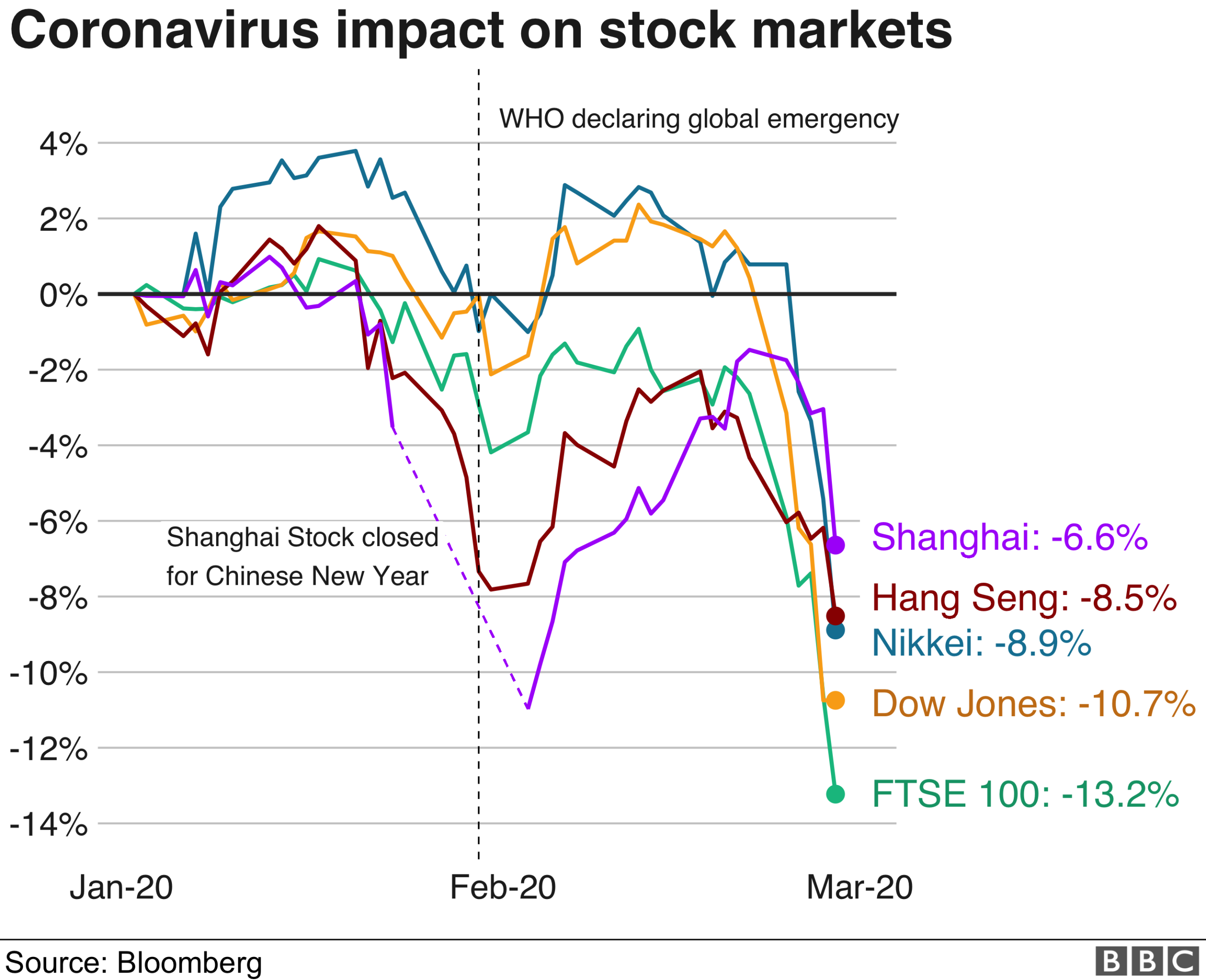
American stock markets experienced a rapid downturn following the news that the virus had spread beyond China’s borders into neighboring countries. The Dow Jones Industrial Average and other major indices saw significant losses as traders fled risky assets in favor of safer havens. Commodities markets were not spared, with copper prices falling by 1.8 percent and oil prices dropping by nearly half a percent as demand forecasts were revised downward. European exchanges mirrored the American decline, with investors questioning the resilience of global supply chains that depend heavily on Chinese manufacturing and logistics. The uncertainty surrounding the virus created a ripple effect throughout the financial system, causing liquidity concerns and forcing institutional investors to reassess their exposure to emerging markets. This sudden shift in sentiment highlighted how interconnected the modern global economy truly is, where a health crisis in one nation can instantly impact trading floors thousands of miles away.
Economists Warn of Long-Term Downside Risks Despite Current Stability
Despite the immediate panic, some economists have attempted to maintain their long-term economic forecasts while acknowledging the severity of the situation. Gareth Leather, a senior economist at Capital Economics, stated that for now, their predictions for this year remain unchanged but emphasized that the spread of the virus represents a major downside risk that requires close monitoring. He warned that nations dependent on Chinese tourist spending would be the most vulnerable if the outbreak continues to expand beyond its current geographic confines. Similarly, Stephen Innes, an analyst from AxiCorp Financial Services Pty Ltd, cautioned that the cost to the global economy could become quite staggering in negative GDP terms if the outbreak reaches epidemic proportions. His assessment reflects a growing consensus among financial experts that the situation demands urgent attention and coordinated international response to prevent a prolonged economic contraction.
International Cooperation Becomes Essential for Economic Survival
As the virus continues to mutate and spread, the need for transparent communication between nations becomes increasingly critical. Publicly known health agencies and government officials are calling for shared data and unified testing protocols to track the movement of the pathogen across borders. Without such cooperation, the risk of a global pandemic increases exponentially, threatening not only public health but also the stability of international trade and finance. The United States and its allies must remain vigilant in monitoring developments while supporting diplomatic efforts to contain the outbreak at its source. Failure to act decisively could result in far greater economic disruption than currently anticipated, potentially reversing years of growth and prosperity built on global cooperation.