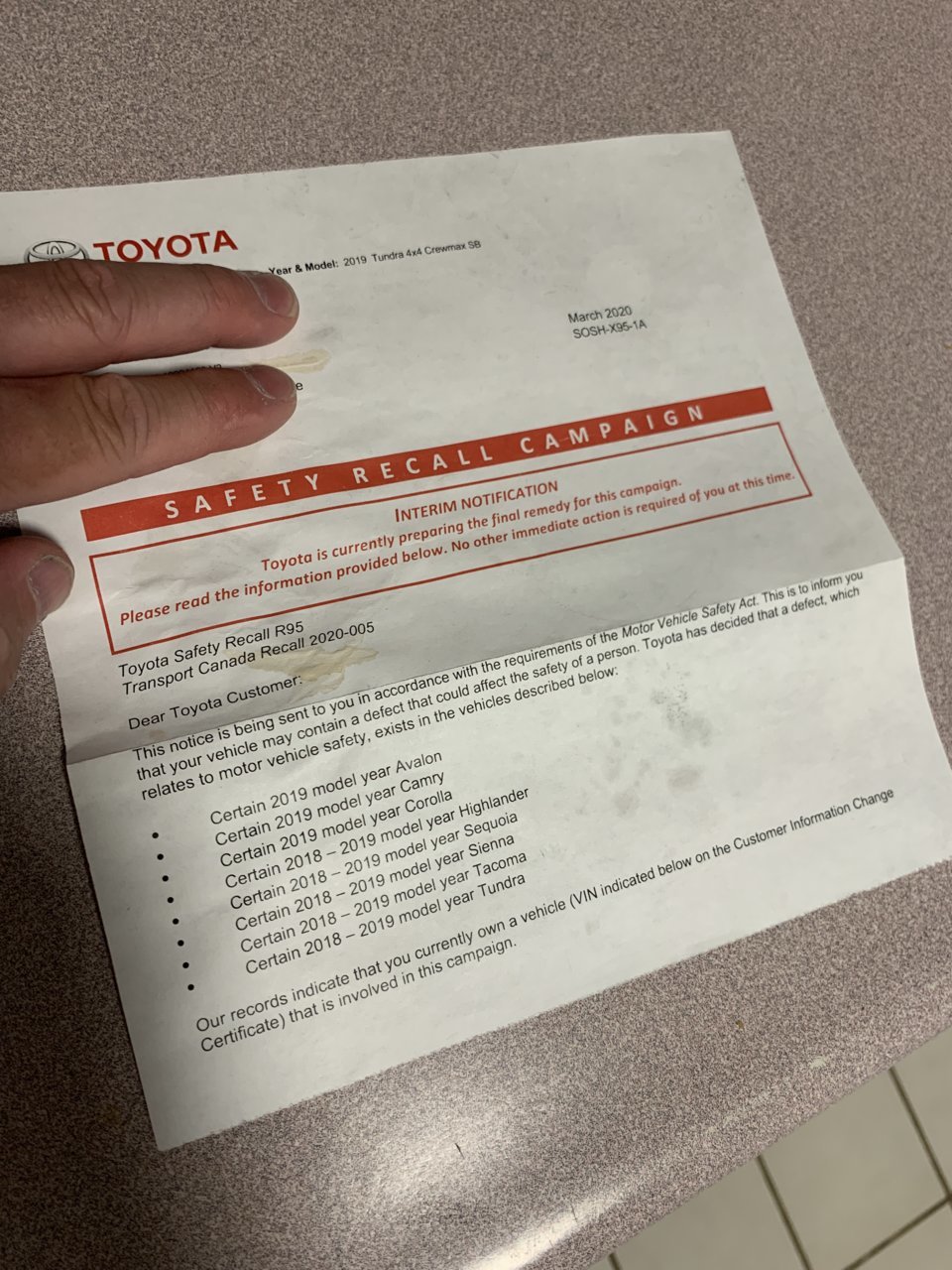
Toyota announced on March 6, 2020, that it is recalling 3.2 million vehicles worldwide due to fuel pump defects that can cause engines to stall and increase crash risk. The recall covers 1.8 million vehicles in the United States and includes models from both the Toyota and Lexus brands. The faulty fuel pumps can stop operating, triggering warning lights and messages on the instrument panel before a potential stall occurs.
What the recall covers
The initial recall in January 2020 covered 1.2 million vehicles in the U.S. Toyota expanded that action on March 6 to include an additional 600,000 vehicles in the U.S. and roughly 2 million more globally. The affected vehicles span model years from 2013 to 2019.
The original recall included 2018 and 2019 models such as the Toyota Camry, Highlander, Sequoia, Tacoma and Tundra, along with 2019 Avalon and Corolla sedans. Lexus vehicles from the same years were also recalled, including the ES 350, GS 350, IS 300, IS 350, LC 500, LC 500h, LS 500, LS 500h, RC 300, RC 350 and RX 350L.
The expanded recall added older models. These include 2013-2014 Lexus GS 350 vehicles, 2013-2015 Lexus LS 460 models, and the 2014 Toyota FJ Cruiser and Lexus IS-F. Also added were 2014-2015 Toyota 4Runner and Land Cruiser models, along with the Lexus GX 460, IS 350 and LX 570 from those years. The 2015 Lexus NX 200t and RC 350, the 2017 Lexus IS 200t and RC 200t, and 2017-2019 Toyota Sienna and Lexus RX 350 models were included. The 2018 Lexus GS 300 rounds out the list.
How the defect works
The fuel pumps in these vehicles can fail. When they stop operating, the engine loses fuel pressure and may not restart after it stalls. Drivers might see warning lights before the stall happens.
A Toyota spokesperson said: “If this were to occur, warning lights and messages may be displayed on the instrument panel.” The spokesperson added: “If a vehicle stall occurs while driving at higher speeds, this could increase the risk of a crash.”
Toyota said it will notify owners by mail starting in May 2020. Dealers will replace the faulty fuel pumps at no cost to customers.
Impact on Toyota’s reputation and sales
The recall is a significant blow to Toyota’s reputation for quality and reliability. The company has long been seen as a leader in vehicle durability and safety. Large-scale recalls can erode consumer trust.
Toyota said the recall will not affect its sales forecast for 2020. The company targets ¥29.5 trillion in net revenue, ¥2.5 trillion in operating income and ¥2.35 trillion in net income for the fiscal year.
The automaker has faced other major recalls in recent years. In 2014, Toyota recalled millions of vehicles for airbag and seatbelt issues. In 2018, it recalled 1.7 million vehicles for fuel tank problems. The fuel pump recall is one of the largest in the company’s history.
What owners should do
Owners of affected vehicles should wait for the notification letter from Toyota. The letter will include instructions for scheduling a free repair at an authorized dealer. Owners can also check their vehicle identification number on Toyota’s recall website to see if their car is included.
Toyota advises drivers who experience warning lights or stalling to pull over safely and contact a dealer. The company said it is working to ensure replacement parts are available.
The recall covers vehicles in the U.S., Japan, Europe and other markets. Toyota did not say how many of the 3.2 million vehicles are outside the U.S.
The expansion of the recall shows the scope of the problem. Toyota initially identified the issue in a smaller number of vehicles. Further investigation led the company to add more models and model years. The company said it is cooperating with regulators in the U.S. and other countries.
This recall adds to a challenging year for the auto industry. The COVID-19 pandemic has disrupted supply chains and reduced demand. Toyota has temporarily closed some factories. The company said it is monitoring the situation and will adjust production as needed.
The fuel pump recall is a reminder that even the most reliable automakers can face quality issues. Toyota has built its brand on dependability. Large recalls test that reputation. How the company handles the recall will matter to customers and investors alike.