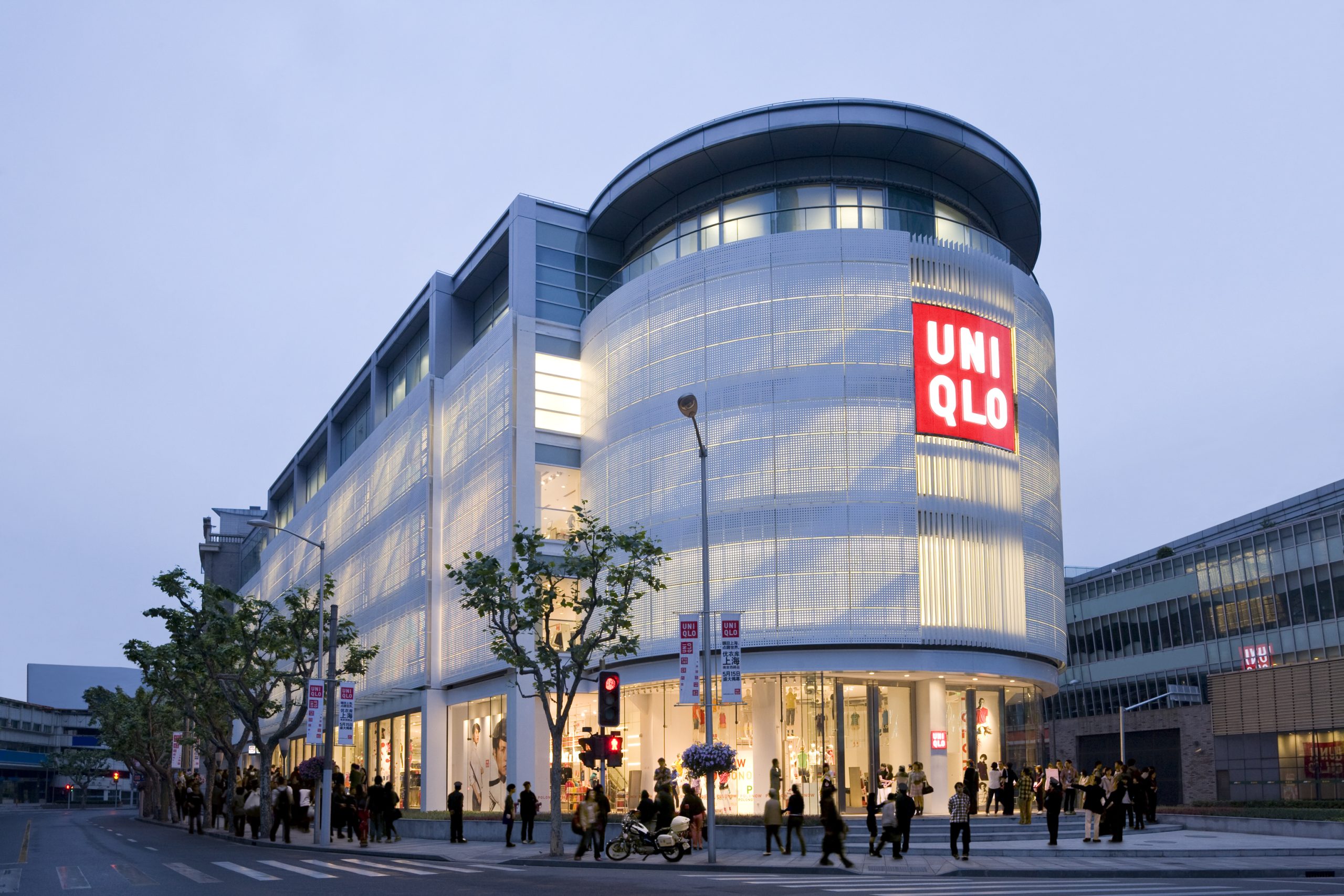
Fast Retailing, the Japanese parent of casual-wear chain Uniqlo, said on 19 March 2020 that it has unlocked the doors at 720 of its 750 Chinese outlets, leaving only 30 shops dark as new local virus cases taper off outside Hubei province. The move reverses February’s nationwide shutdown that idled more than 300 factories and stores and punched a hole in the group’s second-quarter revenue. Shares in the Tokyo-listed company have fallen almost 30 % since January, closing Monday at 46,000 yen, but management told investors that cash reserves are adequate and that a phased reopening will start with shortened hours and temperature checks for staff.
Stores flick back on across China
The first lights came on in Shanghai and Shenzhen two weeks ago, then spread inland to Chengdu and Xi’an. By mid-week every province except Hubei had at least one Uniqlo location trading, although foot-traffic is still down roughly 40 % compared with the same week in 2019, store managers told local media. Fitting rooms remain closed and customers must stand one metre apart at checkout lines under company rules posted at the door. “We are following government guidance to the letter,” a Fast Retailing spokesman in Shanghai said on Friday. “Safety comes before sales, but every reopened store is a step toward normal life for our 30,000 Chinese employees.”
The retailer’s February freeze was among the most sweeping in China. All 370 stores in the Yangtze River delta closed on 1 February, followed two days later by the remainder of the network. The shutdown coincided with the extended Lunar New Year holiday that Beijing imposed to slow the spread of Covid-19. Inventory that should have moved during the holiday gift season piled up in regional distribution centres, forcing the company to defer spring deliveries and cancel factory orders.
Supply chain restarts after weeks of silence
Re-opening the stores is only half the battle; getting clothes back on shelves is the other. More than 300 partner mills in Jiangsu, Zhejiang and Guangdong that cut output in February are now running again at 60-70 % capacity, according to mill owners interviewed by the Nikkei Asian Review. Fast Retailing relies on a cluster of long-term suppliers near Shanghai for its Heattech base layers and ultra-light down jackets, two lines that generate the bulk of winter revenue. “We restarted boilers on 10 March after local officials certified the plant as virus-free,” said Liang Hui, deputy manager at Suzhou Shenzhou Knitting, one of Uniqlo’s largest Chinese contractors. “Orders from Uniqlo are back to 80 % of normal, so we are recalling workers daily.”
Transport remains patchy. Provincial borders that were sealed until early March are open for cargo, but drivers must present health QR codes at each checkpoint, adding half a day to the Shanghai-Beijing run. Fast Retailing has rerouted some containers through Ningbo port instead of Wuhan’s river terminals to avoid lingering restrictions in Hubei.
North American footprint under review
While China accounts for roughly 20 % of Fast Retailing’s global sales, the company is now staring at shutdown requests on the other side of the Pacific. Uniqlo operates 60 stores in the United States and Canada, including flagship locations on Fifth Avenue in Manhattan and Powell Street in San Francisco. Governor Gavin Newsom’s order on 19 March that all non-essential retailers in California close has already idled nine Uniqlo locations, and similar moves by New York and Massachusetts threaten another dozen. “We are evaluating each lease and will decide store-by-store,” the company’s U.S. unit said in an e-mail. No timeline was given.
The American closures would cap a rapid reversal. As recently as 13 March the chain was promoting “work-from-home” comfort wear in U.S. e-mails. Then Nike, Lululemon and Apple shuttered their doors, and mall landlords began sending force-majeure notices. Unlike in China, Uniqlo has no owned factories in North America, so it cannot redeploy staff to sewing lines. Analysts say the brand’s thin U.S. recognition, sales there are below 5 % of the group total, limits the immediate financial hit but also means less use to negotiate rent relief.
Balance sheet buffers expected to absorb shock
Fast Retailing ended February with 360 billion yen in cash and equivalents, enough to fund nine months of fixed costs even if every store worldwide closed, Jefferies equity research estimated this week. The broker told clients on 18 March that the company’s low debt ratio and history of frugal expansion should keep it clear of covenant breaches. “We think the worst for Fast Retailing’s overseas operations is already in the past, and a slow but steady recovery has begun,” Jefferies said.
Still, investors have clipped the share price by nearly a third since New Year’s Day, wiping roughly 1.2 trillion yen off market value. The tumble reflects fear that consumers everywhere will slash discretionary spending long after the virus peaks. Fast Retailing has already scrapped its full-year dividend forecast and warned operating profit could fall 40 % in the August-ending fiscal year if trends persist. President Tadashi Yanai told Nikkei in a 20 March interview that executive pay will be cut 20-30 % and new store openings delayed to conserve cash.
Road ahead depends on consumer nerves
Whether the reopened Chinese stores return to last year’s volumes will serve as a bellwether for Europe and the United States when they eventually emerge from lockdown. Early data are mixed. Uniqlo’s T-mall flagship store notched a 50 % jump in online traffic during the February shutdown as stuck-at-home shoppers bought loungewear, but average ticket size dropped 15 %. Physical shoppers in Shanghai this week said they came mainly for children’s basics and masks sold at cost, not the fashion-forward pieces the chain has been pushing to lift margins.
The company plans to report March sales on 9 April. Until then, managers will keep measuring temperatures, spraying fitting-room curtains and praying that the infection curve stays flat. If Chinese consumers regain confidence, Fast Retailing hopes to apply the same playbook in New York, London and Paris when those cities reopen. For now, the lights are on again in 720 Chinese stores, a small but symbolic sign that commerce, like spring, is trying to push through the frost.