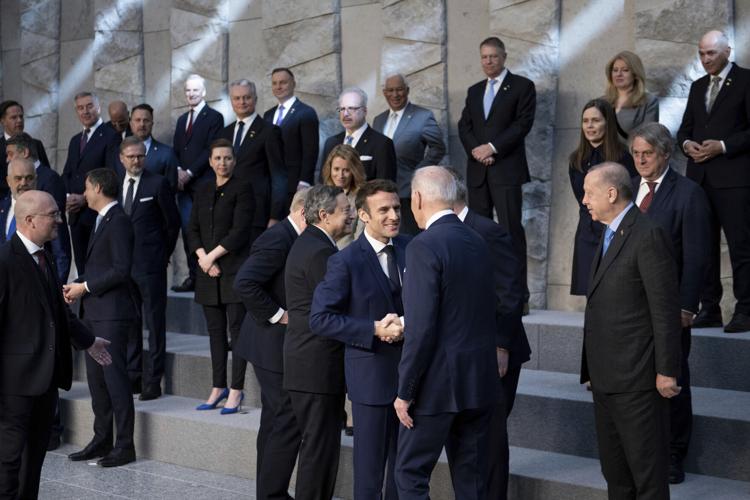
For families in Ukraine, the war is not a summit agenda—it is a daily struggle for food, medicine, and safety. As President Joe Biden and Western allies met in Brussels on Thursday, their pledges of new sanctions, humanitarian aid, and refugee relief offered a lifeline to millions whose lives have been upended by Russia’s month-old invasion. But for many, the help still feels too distant from the front lines.
A Pledge for Refugees and Supplies
President Biden announced that the United States would welcome up to 100,000 Ukrainian refugees, though he acknowledged that many probably prefer to stay closer to home. He also promised an additional $1 billion in food, medicine, water, and other supplies. These commitments came during a day of emergency summits that had Western leaders shuttling across Brussels for back-to-back-to-back meetings of NATO, the Group of Seven industrialized nations, and the 27-member European Council.
For communities in Ukraine, the aid means more than numbers. It represents clean water for a family sheltering in a basement, medicine for the injured, and the possibility of a new start for those forced to flee. Yet the offers fell short of the more robust military assistance that Ukrainian President Volodymyr Zelenskyy pleaded for in a pair of live-video appearances.
Zelenskyy’s Plea for Military Support
Zelenskyy, while thankful for the newly promised help, made clear to the Western allies he needed far more than they’re currently willing to give. “One percent of all your planes, one percent of all your tanks,” Zelenskyy asked members of the NATO alliance. “We can’t just buy those. When we will have all this, it will give us, just like you, 100% security.” His words echoed the frustration of a nation under siege, where every day without heavier weapons means more lives lost.
Biden said more aid was on its way, but the Western leaders were treading carefully so as not to further escalate the conflict beyond the borders of Ukraine. “NATO has made a choice to support Ukraine in this war without going to war with Russia,” said French President Emmanuel Macron. “Therefore we have decided to intensify our ongoing work to prevent any escalation and to get organized in case there is an escalation.” Poland and other eastern flank NATO countries are also increasing their vigilance, as alliance leaders respond to what NATO Secretary General Jens Stoltenberg called “a new security reality in Europe.”
Warnings on Chemical and Nuclear Threats
The threat of escalation loomed large over the summits. Biden, in an early evening news conference after the meetings, warned that a chemical attack by Russia “would trigger a response in kind.” He had said before departing for Europe on Wednesday that the possibility of a chemical attack was a “real threat.” The Western leaders spent Thursday huddling over how they might respond should Russian President Vladimir Putin deploy chemical, biological, or even a nuclear weapon. Kremlin spokesman Dmitry Peskov told CNN this week that Russia could consider using its nuclear weapons if it felt there was “an existential threat for our country.”
When asked whether NATO would cross a threshold in response to such an attack, Biden said, “We’d make that decision at the time.” For Ukrainian families, the uncertainty of that response hangs over every day of the war. Their communities are already transformed—by displacement, by loss, by the constant fear of what comes next.
Looking ahead, the Western alliance faces a delicate path: sustaining humanitarian and financial support for Ukraine while avoiding a direct clash with Russia. The next steps will likely involve monitoring for any use of chemical weapons, coordinating refugee resettlement, and continuing to supply aid to the millions affected. For the people of Ukraine, the question remains how much more support will arrive—and how soon—before their lives are forever changed.