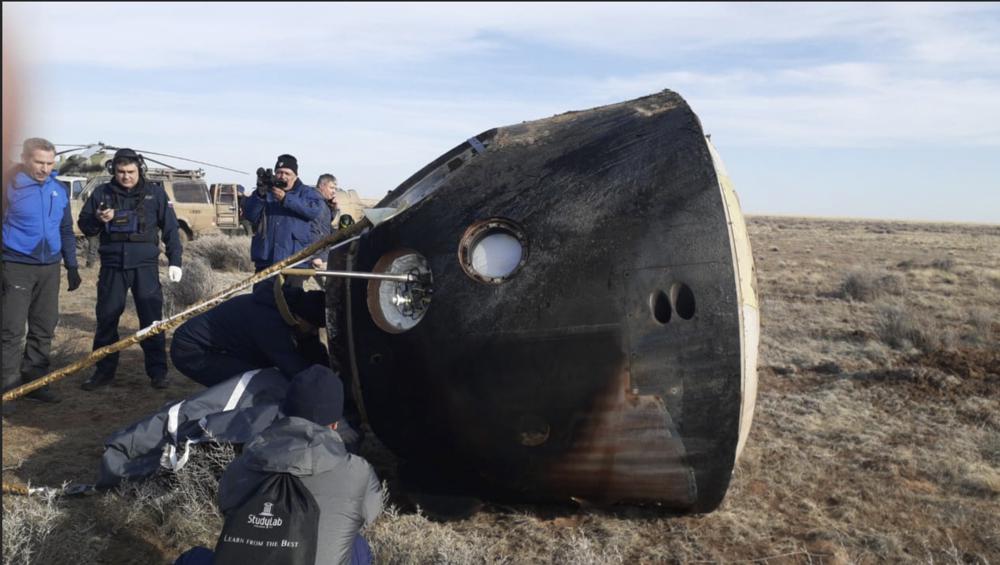
The lives of astronauts and the communities that support them are being impacted by the uncertainty surrounding the International Space Station. The future of the space station hangs in the balance, and the people involved in its operation are facing an uncertain future. For NASA astronaut Mark Vande Hei, who spent a U.S. record 355 days at the space station, the experience of returning to Earth on a Russian spacecraft was a reminder of the cooperation that still exists between the two nations. Vande Hei’s return followed customary procedures, with a small NASA team of doctors and other staff on hand for the touchdown.
The International Space Station is a symbol of cooperation between nations, and its operation is a complex and delicate process. The station relies on cargo flights and manned missions from Russia, and the Western sanctions imposed on Russian enterprises and hardware are threatening to disrupt this cooperation. Dmitry Rogozin, the head of Roscosmos, has stressed that the Western partners need the space station and “cannot manage without Russia. Because no one but us can deliver fuel to the station.” He also highlighted the importance of Russian engines in correcting the ISS’s orbit and keeping it safe from space debris.
Sanctions and Their Impact
The sanctions imposed on Russian state-linked entities have had a significant impact on the operation of the International Space Station. The sanctions, which predate Russia’s current military operations in Ukraine, have led to a deadline being missed by the United States, the European Union, and Canadian space agencies to meet Russian demands for lifting the sanctions. Rogozin has implied that the sanctions could disrupt the operation of Russian spacecraft servicing the ISS with cargo flights, which would have serious consequences for the station’s operation. He has also stated that the restoration of normal relations between partners in the ISS and other joint space projects is possible only with the complete and unconditional lifting of the sanctions.
Despite the challenges posed by the sanctions, cooperation between the U.S. and Russia in space is still ongoing. U.S.-Russian negotiations on the resumption of joint flights to the space station were underway when Russia launched its military operation in Ukraine last month. The fact that Vande Hei was able to catch a Russian ride back to Earth on Wednesday is a testament to the continued cooperation between the two nations. Rogozin has also received responses from his Western counterparts, vowing to promote “further cooperation on the ISS and its operations.”
The Future of the International Space Station
The future of the International Space Station is uncertain, and the impact of the sanctions on its operation is still being assessed. Rogozin has stated that Roscosmos is preparing a report on the prospects of international cooperation at the station, which will be presented to federal authorities “after Roscosmos has completed its analysis.” The report will likely provide more clarity on the future of the space station and the impact of the sanctions on its operation. In the meantime, the astronauts and communities involved in the space station’s operation are facing an uncertain future, and the international community is watching with bated breath to see how the situation will unfold.
As the situation continues to evolve, it is clear that the International Space Station is a critical component of international cooperation in space. The station’s operation relies on the cooperation of multiple nations, and the sanctions imposed on Russian state-linked entities have highlighted the challenges of maintaining this cooperation. As the world watches to see how the situation will unfold, one thing is certain – the future of the International Space Station will have a significant impact on the lives of astronauts and the communities that support them. What to watch next is how the international community will respond to the challenges posed by the sanctions, and whether the cooperation that has been built up over the years can be maintained in the face of these challenges.