Diplomatic Push for Unity Amidst Global Tensions
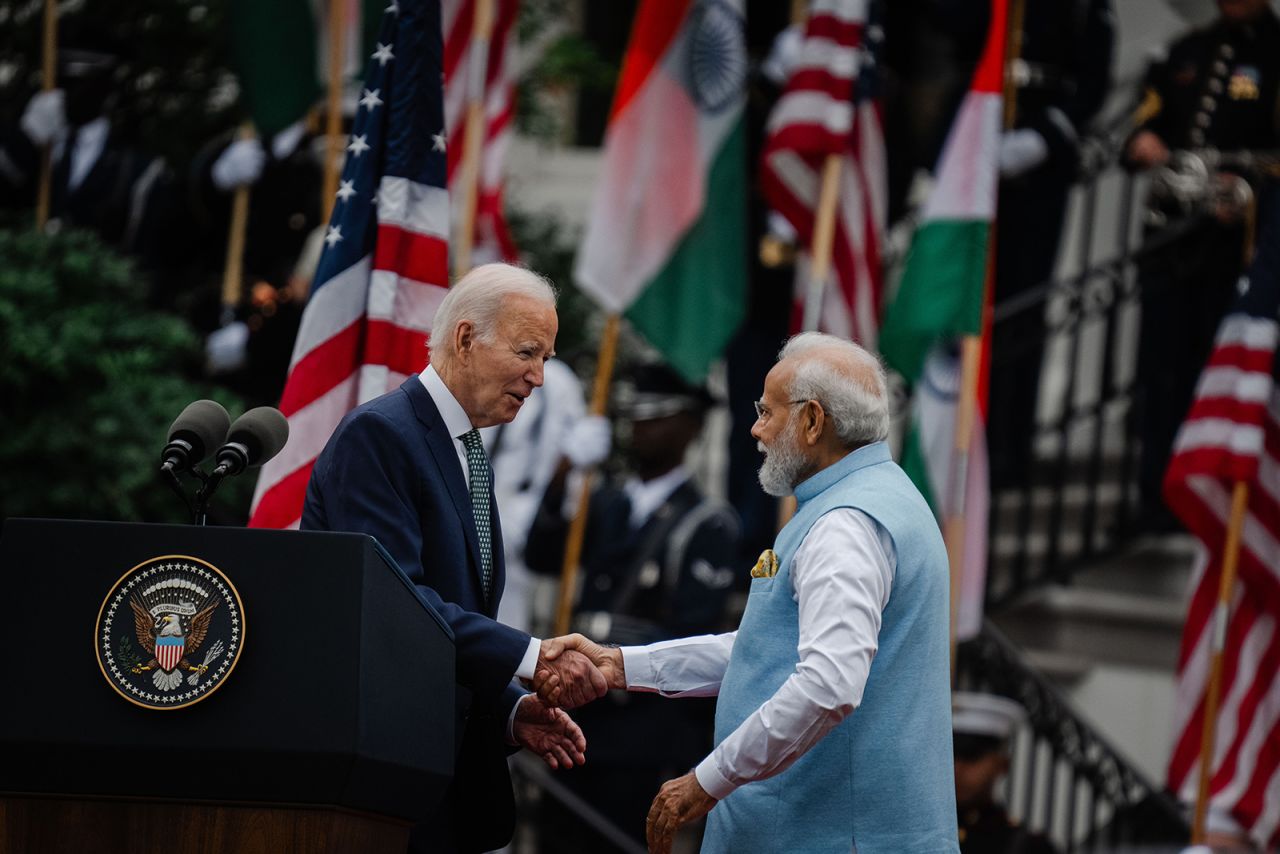
President Joe Biden is scheduled to hold high-level talks with Indian Prime Minister Narendra Modi in Wilmington, USA, as the United States intensifies its diplomatic efforts to secure a unified front against Russian aggression in Ukraine. This critical dialogue occurs at a moment of significant geopolitical strain, where Washington seeks to persuade key international partners to adopt a harder stance on Moscow’s ongoing invasion. The urgency of these discussions stems from India’s continued neutral position, which has sparked concern within the White House and highlighted a growing divergence between American foreign policy goals and New Delhi’s strategic interests. While President Biden advocates for immediate sanctions and isolation of Russia, Indian leadership maintains a balanced approach, citing historical ties with Moscow and economic necessities.
Complications of Neutrality and Abstention at the U.N.
The friction between Washington and New Delhi has been exacerbated by India’s recent actions at international forums. Most notably, during a vote in the United Nations General Assembly held earlier this week, India chose to abstain rather than support a resolution suspending Russia from its seat on the 47-member Human Rights Council. This decision came despite overwhelming evidence presented regarding alleged war crimes committed by Russian soldiers in Ukraine, including documented rights violations that the United States and Kyiv have repeatedly condemned as atrocities. The final tally of the vote reflected deep global divisions, with 93 nations voting in favor of the suspension, 24 against, and 58 abstentions, including India.
This abstention drew sharp criticism from American officials who view such neutrality as tacit support for Russian aggression. White House press secretary Jen Psaki addressed the situation on Sunday, stating that the President will discuss with Prime Minister Modi the severe consequences of Russia’s war on Ukraine. She emphasized the need to mitigate the destabilizing impact this conflict has on global food supplies and commodity markets. Psaki further noted that the administration is committed to strengthening the global economy and upholding a free, open, rules-based international order to bolster security, democracy, and prosperity in the Indo-Pacific region. The White House maintains that without unified action, Russia will continue to exploit its position to undermine global stability.
Economic Pressures and Energy Dependence
A central point of contention remains India’s continued purchase of Russian energy supplies. Despite intense pressure from Western governments to cease buying Russian oil and gas, New Delhi has proceeded with significant acquisitions. Just last month, state-run Indian Oil Corp purchased 3 million barrels of crude from Russia to meet its domestic energy demands. This move directly contradicts entreaties from European allies and the United States, who argue that such purchases fund the Russian military machine.
The economic incentives driving India’s decisions are clear. Reports indicate that Russia has been offering substantial discounts on oil purchases, with prices set at 20 percent below global benchmark levels. For an economy like India’s, which is highly sensitive to energy costs, these savings are politically and economically attractive. However, this stance has not gone unnoticed by Washington. The United States has reportedly considered imposing sanctions on India for its recent acquisition of advanced Russian air defense systems, signaling a potential escalation in diplomatic friction.
India is not the only nation balancing economic pragmatism with geopolitical pressure. Several European allies, including Germany, have also continued to purchase Russian energy despite public calls to end these contracts. This highlights a broader challenge facing the international community: how to enforce sanctions without causing catastrophic economic disruption for developing nations that rely on affordable energy. The Press Trust of India news agency reported detailed breakdowns of global oil suppliers, noting that Iraq remains India’s top supplier with a 27 percent share, followed by Saudi Arabia at around 17 percent, the United Arab Emirates at 13 percent, and the United States at 9 percent. These figures show the complex web of energy dependencies that complicate efforts to isolate Russia economically.
Strategic Implications for the Indo-Pacific Order
The upcoming conversation between President Biden and Prime Minister Modi carries profound implications for the future of the Indo-Pacific region. The United States views a stable, rules-based order in this vast area as essential for countering authoritarian expansionism and protecting democratic values. However, India’s strategic autonomy allows it to pursue interests that sometimes clash with American expectations. Russian Foreign Minister Sergey Lavrov recently praised India’s approach, noting that New Delhi judges the situation in its entirety rather than adopting a one-sided perspective. This diplomatic language reflects Moscow’s success in cultivating relationships with nations that prioritize their own national interests over alignment with Western blocs.
As the United States presses for a hard line on Russia, it must navigate the delicate balance of maintaining alliances while respecting the sovereignty of partners like India. The failure to achieve complete unity could weaken collective efforts against Russian aggression and embolden other authoritarian regimes to ignore international norms. Conversely, excessive pressure on India could drive New Delhi closer to Moscow, further complicating American strategic objectives. The outcome of these talks will likely set a precedent for how the United States engages with non-aligned nations in times of global crisis.