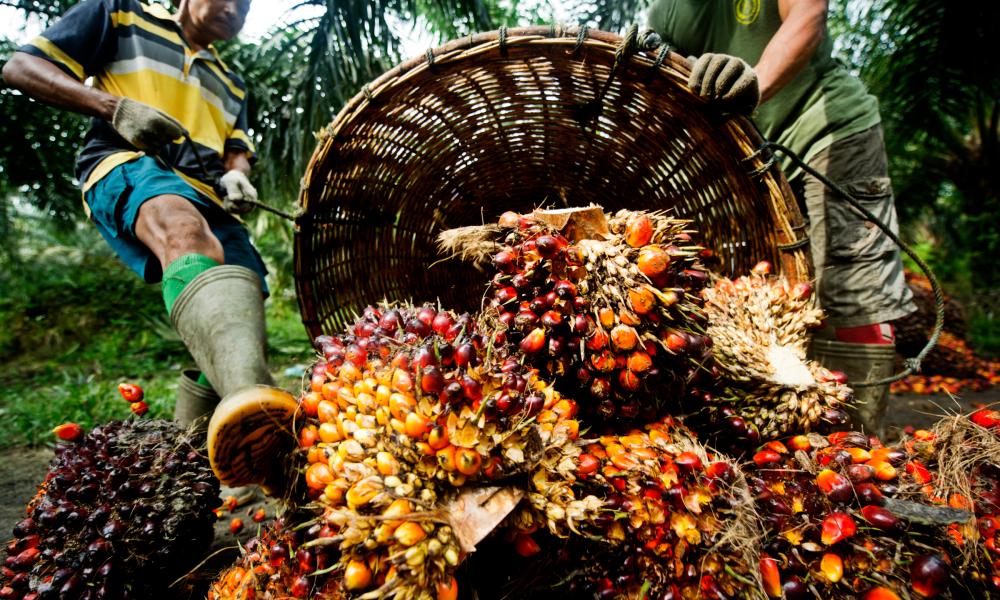
For the smallholder farmers and plantation workers who form the backbone of Malaysia’s palm oil industry, February’s latest stockpile figures bring a mixed picture of relief and concern. After a January that saw inventories at 2.26 million tonnes, the Malaysian Palm Oil Board (MPOB) reported that overall stockpiles slid 6.56% to 2.11 million tonnes in February 2023. For families whose livelihoods depend on steady production and sales, the decline signals tighter supply chains and potentially shifting market dynamics that directly affect their daily earnings.
In communities across Peninsular Malaysia and Borneo, where palm oil plantations are a primary source of income, the drop in crude palm oil (CPO) stocks was even more pronounced. According to the MPOB’s statement released today, CPO stocks fell 7.69% to 1.16 million tonnes in February from 1.25 million tonnes in January. This reduction, while modest in national terms, can mean the difference between a stable harvest season and a lean one for the roughly 400,000 smallholders who manage nearly 40% of Malaysia’s oil palm area. Processed palm oil stockpiles also decreased, falling 5.15% to 959,451 tonnes from 1.01 million tonnes the month before.
The production side of the equation tells a story that resonates directly with those on the ground. February’s CPO production decreased by 9.35% to 1.25 million tonnes from 1.38 million tonnes in January. For workers in the fields, this decline often reflects seasonal weather patterns and the natural cycle of palm fruit ripening. Palm kernel production followed suit, falling by 7.10% to 316,196 tonnes from 340,369 tonnes. These figures, while national in scope, are felt most acutely in the daily routines of harvesters and mill operators who see the fruit bunches arriving at collection points.
Export trends shape local market realities
Beyond production, the export data from the MPOB reveals how global demand ripples back to local communities. Palm oil exports decreased 1.99% in February to 1.11 million tonnes from 1.13 million tonnes in January. For exporters and the logistics workers who move the product from mills to ports, even a small shift can affect employment stability. However, some segments showed resilience. Exports of oleo-chemicals increased 8.13% to 228,088 tonnes from 210,936 tonnes, offering a bright spot for workers in processing facilities that convert crude oil into specialty products used in soaps, cosmetics, and industrial lubricants.
Biodiesel exports also saw growth, rising 3.23% to 14,239 tonnes from 14,239 tonnes the month before. This increase, while modest, supports jobs in the renewable fuel sector that relies on palm oil as a feedstock. Meanwhile, exports of palm kernel cake—a byproduct used in animal feed—grew by 4.04% to 210,612 tonnes from 202,431 tonnes, providing steady demand for millers who process the kernels. Not every export category fared well: palm kernel oil exports decreased by 3.57% to 59,888 tonnes from 62,102 tonnes in January, a reminder that international markets remain volatile.
What to watch next
For the families and workers whose lives are tied to Malaysia’s palm oil sector, the coming months will hinge on several factors. The MPOB’s February data shows a clear seasonal slowdown in production, but the question is whether output will rebound as the weather shifts toward the mid-year harvesting peak. Global demand for oleo-chemicals and biodiesel could provide a buffer if palm oil exports continue to soften. Additionally, environmental conservation efforts—including sustainable farming practices and forest protection—remain important to the industry’s long-term health, though the debate over the role of palm oil in broader climate trends continues among scientists. Local communities will be watching for signs of stability in both production and export markets, as these numbers ultimately translate into the livelihoods that sustain entire regions of Malaysia.