President Volodymyr Zelensky has urged the US and Elon Musk to lift restrictions on Starlink, saying the protection of lives and Ukraine’s energy infrastructure ahead of winter “directly depends on it”. The issue centers on Starshield, a military-grade version of the satellite internet service, which Ukraine uses to intercept incoming Russian missiles and drones.
A Tale of Two Networks
Ukraine’s reliance on SpaceX’s technology is a story of two distinct services. The standard Starlink service provides the battlefield communications that have become essential for coordinating troops on the front lines. Separately, the US government-provided Starshield system is used for the more critical task of air defense, detecting and intercepting Russian missiles and drones over Ukrainian airspace. This distinction is key to understanding the current friction, as the limitations are specific to the military-grade network.
The problem, as Zelensky has detailed, is a speed cap imposed on Starshield terminals. He stated that interceptor drones lose connection with their operators at a speed of 161km/h (100mph), rendering them unable to catch faster Russian jet-powered ‘shaheds’. While Zelensky noted the restrictions were initially implemented only in Russian-occupied areas, he emphasized the political implications, suggesting such a move amounts to a partial recognition of occupied territory. The issue, which first came to light in October, has been marked by public disagreement between Elon Musk and US President Donald Trump over responsibility for the limitations.
The Constellation in the Sky
Behind the diplomatic and military drama lies the sheer scale of the Starlink network itself. As a telecommunications subsidiary of SpaceX, it provides broadband internet to approximately 160 countries and territories. The physical infrastructure is immense: as of October 2026, the constellation comprised approximately 11,150 satellites in low Earth orbit, accounting for about 75% of all active maneuverable satellites currently circling the Earth. This vast network has translated into significant commercial success, with 13.6 million consumer subscribers as of September 30, 2026, and $11.4 billion in revenue generated by the end of 2025. The company’s financial ambitions were underscored by a massive $85 billion IPO in June 2026.
Technical advancements are also underway to improve performance. The deployment of V2 Mini satellites, which now make up about two-thirds of the operational fleet, has been linked to a significant boost in upload speeds. Looking ahead, SpaceX is preparing to launch its next-generation V3 satellites, which promise a tenfold improvement in downlink and a twenty-twofold improvement in uplink capacity. The company’s president and COO, Gwynne Shotwell, has indicated that “a few hundred” V3 satellites will need to be deployed for customers to “really feel the impact,” a target she suggested could be met by mid-2027.
Performance and Geopolitical Friction
For users in the United States, the network’s performance has shown notable improvement. In the first half of 2026, Starlink’s median upload speeds surged 42% year-over-year to 20.73 Mbps, with gains recorded in all 50 states and Washington D.C.. Latency also improved in 49 states, with Alaska seeing the most significant drop, from 105 ms to 84 ms. While download speeds rose a more modest 12% nationally to 119.71 Mbps, the service is successfully attracting customers from traditional non-fiber connections like cable, DSL, and fixed wireless access.
However, the strategic importance of this infrastructure has also made it a target. The geopolitical friction surrounding Starlink was recently highlighted by an arson attack in Vilnius, Lithuania, where Molotov cocktails were flung at a facility housing Starlink equipment. The Lithuanian prime minister described the incident as part of a wider pattern of arson attacks on Starlink facilities across Eastern Europe. Two men in their early 20s, living in Germany, have been charged with terrorism-related offences in connection with the Vilnius fire. Similar attacks have been reported in Poland and Bulgaria, with officials in those countries blaming the incidents on Kremlin-backed hybrid warfare operations.
Sources
- Zelensky urges US and Musk to lift Starlink restrictions and be on 'right side of history'
- Starlink
- SpaceX deploys Starlink satellites in Starship test, but booster crashes into Gulf
- Starlinkâs U.S. Speeds Rise Amid SpaceX IPO | Ookla®
- Starlink speeds up, but shift to dynamic pricing is risky
- Watch: Arsonists fling Molotov cocktails at Starlink site – AOL
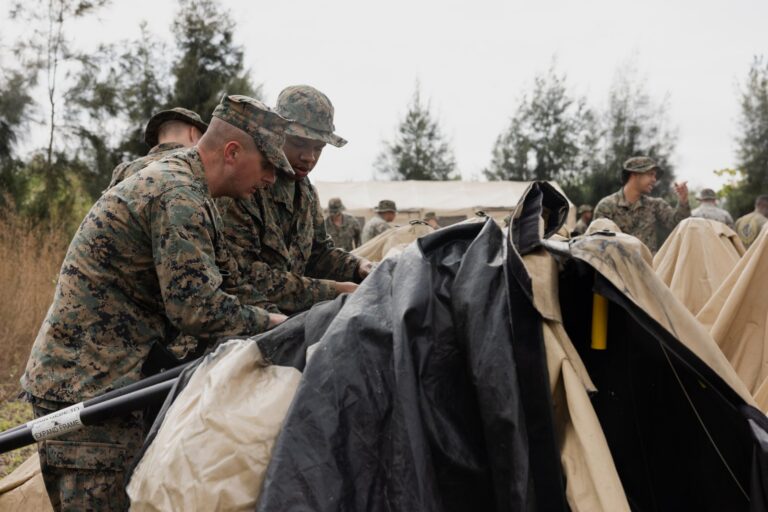
Photo: U.S. Marine Corps photo by Cpl. Bridgette Rodriguez (Public domain)