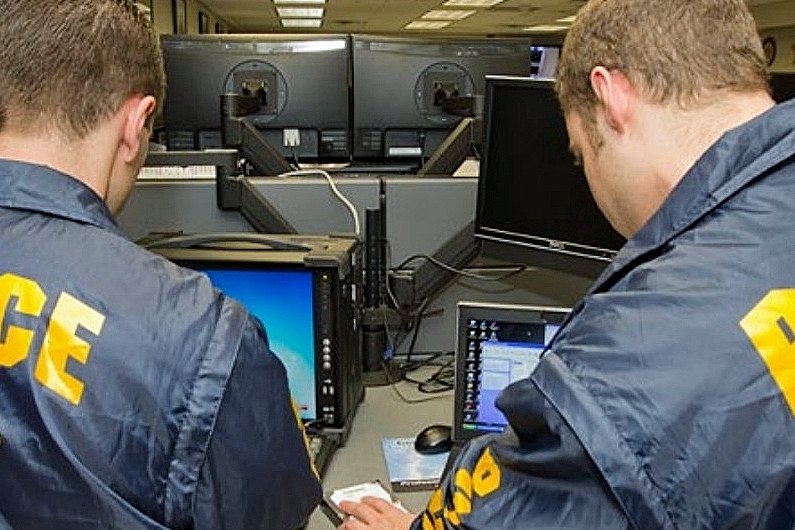
The Number That Defies Logic
77%. That is the figure that matters. According to FBI data, 77% of victims notified by the agency during an active cryptocurrency investment scam were unaware they were being defrauded at the moment of contact. This statistic, drawn from Operation Level Up, reveals a psychological grip so strong that official warnings from law enforcement fail to break the cycle of investment. The bottom line is clear: the fraud is not a simple trick of the hand; it is a structured psychological operation that overrides external reality for the majority of its targets.
Operation Level Up: The Data Behind the Calls
The FBI launched Operation Level Up in January 2024 in cooperation with the U.S. Secret Service. The initiative identifies individuals currently being defrauded and contacts them directly to inform them of the scheme. As of December 2025, 8,103 victims had been notified through this program. The FBI states it uses “sophisticated methods” to identify these victims, though it does not disclose the specific operational details behind the detection algorithms.

By the numbers, the scale of the problem is massive. The FBI’s Internet Crime Complaint Center (IC3) annual report for 2025 noted that 3,780 victims were notified in that single year, with 78% of them unaware they were being scammed. The agency estimates that these interventions have prevented a total loss of $511,511,288. It is important to note that this is an estimated prevented loss, calculated by comparing the average loss of uncontacted victims to the average loss of those who were reached. It is not a figure of recovered funds.
How the “Pig Butchering” Mechanism Works
The psychology behind the 77% statistic lies in the structure of the scam, commonly known as “pig butchering.” Fraudsters do not ask for money immediately. Instead, they build a relationship over weeks or months, often via social media or dating platforms. They create fake trading platforms that display illusory gains. Victims see their “investments” grow, which validates the platform’s legitimacy in their minds. This initial success is the hook.
Once trust is established, the fraudsters apply psychological pressure to secure larger investments. They promise even greater returns, creating a sense of urgency and exclusivity. The victim is not just investing money; they are investing in a persona and a relationship they believe is real. This emotional anchor makes the external warning from the FBI feel like an intrusion or a mistake, rather than a fact. The victim’s internal narrative, built on perceived profits and personal connection, is stronger than the external narrative of law enforcement.
The Stakes: Life Savings and Retirement Funds
The consequences of this psychological grip are financial and personal. The FBI’s featured cases illustrate the depth of the trap. One man intended to invest an additional $1 million into the scheme moments before receiving the FBI call. A woman was preparing to sell her house to invest $500,000. Another man was withdrawing $500,000 from his retirement account. In 2025, the IC3 report cited a person about to withdraw $750,000 from a 401(k) and another preparing to take out a loan to send $400,000 to scammers. These are not speculative investments; they are life savings and retirement security, targeted and extracted through manipulation.
Investors will note the disparity between the perceived risk and the actual exposure. The victims in these cases were not gambling; they believed they were making sound financial decisions based on verified, albeit fake, profit margins. The FBI’s intervention stopped these specific transfers, and the featured victims reportedly ceased further investments after notification. However, the fact that they were close to executing these massive transfers underscores the failure of the victim’s own risk assessment, a failure engineered by the scammers.
Systemic Gaps in Detection and Prevention
The persistence of these scams highlights a gap in real-time detection. Exchanges and platforms lack the infrastructure to stop transfers pre-loss effectively. While the FBI can identify victims after the fact, the financial infrastructure that allows these transfers to occur does not have the same immediate alert capabilities. The Scam Center Strike Force, formed in 2025, combines the U.S. Attorney’s Office, the Department of Justice’s Criminal Division, the FBI, and the U.S. Secret Service to target Southeast Asian crypto fraud compounds. This group has restrained $1,006,460,156.82 in cryptocurrency from these schemes. However, restraint is a post-loss measure, not a preventive one.

The global scale of the issue is reflected in broader fraud statistics. INTERPOL fraud notices increased by 54% since 2024. In 2025, U.S. cyberfraud losses hit $21 billion. Across East Asia, Southeast Asia, Australia, and New Zealand, cyberfraud losses ranged between $88.3 billion and $114.1 billion. The FBI reported that investment fraud was the highest-grossing cybercrime type in 2025, amassing nearly $8.7 billion for cybercriminals. These figures indicate that the “pig butchering” model is not an anomaly but a dominant vector for global financial crime.
International Enforcement and the Limits of Cooperation
Law enforcement is acting, but the transnational nature of the fraud complicates efforts. In November 2026, an international operation led by the German Itzehoe Public Prosecutor’s Office, supported by Eurojust and Europol, seized over 100 servers and arrested seven suspects. This operation targeted a network that used seemingly legitimate online trading platforms to lure victims into transferring large sums. The estimated losses from this specific scheme exceeded €4 million, with potential victims in as many as 50 countries.
The case dates back to 2022, when a German couple filed a complaint after being unable to withdraw profits. The investigation uncovered a “crime-as-a-service” company based in Cyprus and Israel, which supplied fraudulent websites to criminal groups. Scam call centers were identified in Albania, Kosovo, and North Macedonia. The fraudsters used deceptive ads to lure victims, then used social engineering tactics to persuade them to invest more. When victims requested withdrawals, brokers used delaying tactics before cutting contact. This pattern mirrors the U.S. cases: initial success, pressure for more, and eventual lockout.
International cooperation is key to dismantling these networks. The November 2026 operation involved cooperation from Albania, Cyprus, Finland, Germany, Israel, Kosovo, and North Macedonia. However, police are not claiming to have dismantled the entire network. The existence of “crime-as-a-service” models means that even if one node is removed, the infrastructure can be replicated elsewhere. The psychological manipulation remains the same, and the 77% unawareness rate suggests that the core problem lies in the victim’s perception, not just the scammers’ infrastructure.
What This Means for the Investor
For the individual investor, the data presents a stark reality. If you are involved in a crypto investment that shows consistent, high returns with no downside, the probability that you are a victim of a “pig butchering” scam is high. The FBI’s data shows that even when the warning is clear, the psychological hold is difficult to break. The bottom line is that the platform is the lie. The gains are illusory. The relationship is a tool. The 77% figure is not a measure of victim ignorance; it is a measure of the effectiveness of the scam’s psychological design. Investors must recognize that real-time profit displays on unregulated platforms are not evidence of legitimacy, but often the primary mechanism of the fraud. The next step is not to trust the interface, but to verify the entity behind it through independent, non-interactive channels. The FBI has notified 8,103 victims. The next number to watch is the rate of awareness before the transfer is made.
Sources
- Cryptocurrency Investment Fraud: 77% of Victims Notified by the FBI Were Unaware|詐欺対策ファイル
- Securities fraud
- International investment fraud scheme dismantled: seven arrests
- The ubiquitous crime: fraud, explained
- Scam Center Strike Force
- Police Seize 100+ Servers After Four-Year Investment Fraud Investigati
Photo: U.S. Secret Service (Public domain)