Manila, May 21, 2023 — cyberinktimes.com — The Manila Central Post Office building was designed with the Pasig River in mind. That was no accident. Architects Juan M.
Arellano, Tomas B. Mapua, and Ralph Doane placed the neoclassical structure on the riverbank as part of the Burnham Plan of Manila, a deliberate choice to float mail in by water.
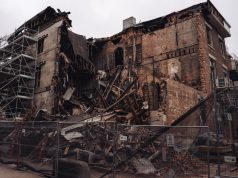
On May 21, 2023, that same building burned. The fire that gutted the historic headquarters of the Philippine Postal Corporation did not just threaten a landmark. It threatened the physical machinery that moves the country’s mail.
The building is the main sorting and distribution hub for the entire Philippines. Every letter, every parcel that passes through the national postal system funnels through this one location on the Pasig.
When the fire hit, the question was immediate: What happens to the mail? The Philippine Postal Corporation moved fast. It activated contingency plans.
It assured the public that operations would continue. But the building itself, the central nervous system of the network, is damaged. That damage is not abstract.
It is a sorting floor charred, a distribution center closed, a headquarters displaced. This is the core of the story.
Not just a fire in a beautiful old building. A fire in the one building that the entire national mail system depends on. The building’s location, once a logistical advantage for water transport, now makes it central to the city’s landscape.
It sits in Lawton, Ermita, accessible from all sides. That accessibility made it a hub.
It also made the fire visible to the whole city. The smoke rising from the post office was a signal that something essential had broken. The building itself is old.
It was built in the neoclassical style, a product of the American colonial period’s urban planning. It is a landmark. It is a symbol.
But symbols do not sort mail. The fire did not just damage a symbol.
It damaged a working facility. The Philippine Postal Corporation’s headquarters is there. The main postal office of Manila is there.
The fire hit the place where the work gets done. Authorities are investigating the cause.
That investigation will take time. Meanwhile, the corporation is running on backup plans. It has assured the public it is working to minimize disruption.
But the scale of the disruption is unknown. The building’s role in the postal network is unique. There is no spare headquarters.
There is no backup sorting floor sitting idle somewhere else. The contingency plans are a patch, not a replacement.
The fire raises a plain question about infrastructure. A country’s mail system depends on physical buildings. When one building burns, the system breaks.
The Philippine Postal Corporation is trying to keep it running. But the break is real.
The building along the Pasig River, designed to receive mail by boat, now stands damaged. The mail will still move, the corporation says. But it will move through a system that lost its center.
Efforts are underway to assess the damage. The goal is to restore the building to its former glory. That is a long-term project.
In the short term, the mail must keep flowing. The fire was on May 21.
The response was quick. The contingency plans were activated. But the building is still damaged.
The sorting and distribution operations are still displaced. The fire did not just burn a landmark.
It burned the place where the mail gets sorted. That is the fact that matters.